Why do we argue so much about raising the children?
Very few things touch our identity the way parenting does. When my partner disagrees with the way I respond to the child, I can hear much more than a different opinion about parenting.
The sentence “I think we need to set a boundary for her” might sound inside me like “You don’t know how to set boundaries.” The sentence “We should listen to him before we decide” can sound like “You don’t see your own child.”
A practical disagreement can very quickly become a struggle over our worth as parents. At this stage we’re less curious about what our partner sees and more occupied with proving our way is right.
I can think the child needs a boundary right now and hear that my partner sees a different need in her. I can believe our teenager needs more independence and make room for the fact that my partner is worried. I can hold my position and see that facing me stands another parent, equally valid, who sees things differently than I do.
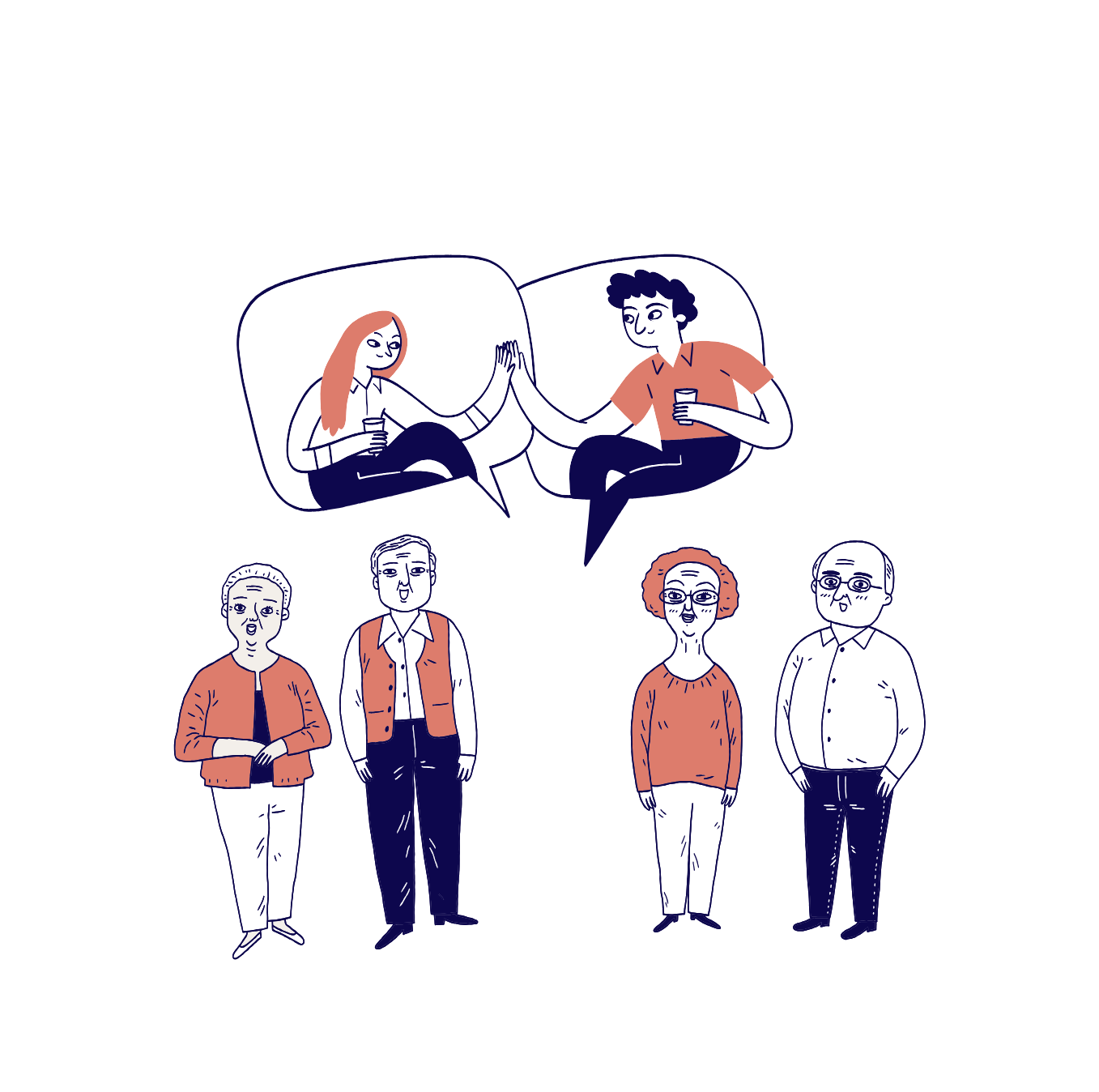
Two parents who love the same child can see him differently
Every parent is a person in their own right. Each of us has a different temperament, different sensitivities, different life experience, and different relationships with each of the children. A mother can see an overwhelmed child who needs flexibility right now. A father can see capability to cope in that same child and think another concession won’t serve her. It’s possible both are seeing something important.
The difficulty begins when my partner’s way becomes evidence in my eyes that he doesn’t see the child correctly or isn’t a good enough parent. At that moment we may stop thinking together about the child and start conducting a struggle over the question of which of us is the parent who knows what’s right for him.
Shared parenting is also measured by our ability to stay a parenting team when we see the child and his needs differently.
This ability allows me to hold my position in the presence of another parent, equally valid, who sees things I may not see.
You’re not returning to routine alone, your families of origin are returning with you too
When two people become a couple, two family stories also meet. When they become parents, this meeting takes on very concrete daily expression.
One grew up in a rigid home and promised herself her children would be able to talk to her about everything. The other grew up in a home where boundaries were blurred and wants his children to feel there are adults in the house capable of holding a framework. One grew up with parents who demanded he manage on his own, so it’s important to him to teach the children independence. The other remembers how alone she felt when she had to manage by herself, so it’s important to her that her children know they can always ask for help.
Both love the children. Both want what’s best for them. Both also arrive at this moment from a different home.
The family story can add a layer to the intensity with which we respond to a parenting disagreement. We bring to parenting things we received and want to continue, and also experiences we’re asking not to repeat. The internal promise “In my home it will be different” can take on very significant place in how I respond to my partner.
When he suggests a way that reminds me of something from the home I grew up in, I may already be reacting to more than the disagreement happening between us now. You can stop and ask: “When I’m fighting now for what’s right for my child, what belongs to the child in front of me and what is meeting something in me from the child I was?”
The past can help me understand the intensity of my reaction. The choice of how to act with it today belongs to me.
The more I take an extreme position, the more my partner may take the opposite one
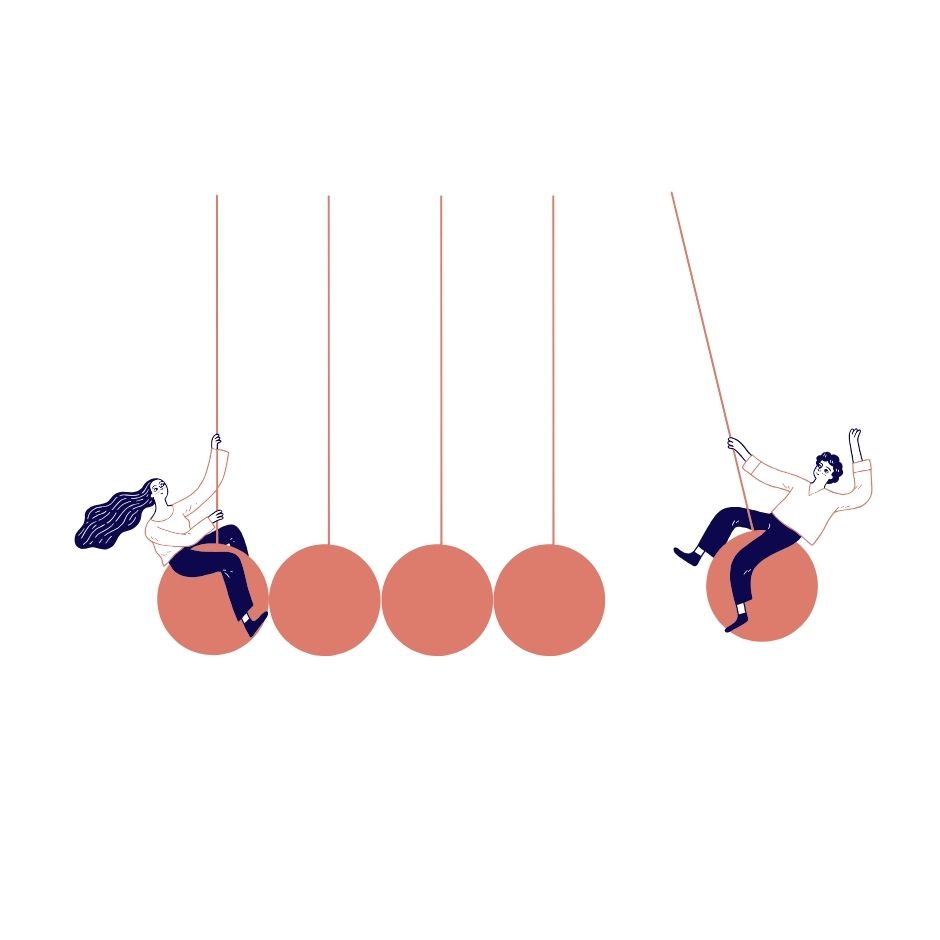
In work with couples I encounter again and again a similar movement: the more rigid one parent becomes, the softer the other becomes. The more one protects the children, the more the other feels he must set boundaries. The more he insists the child needs to learn to cope, the more she feels she must protect him from his rigidity.
Each is certain he’s reacting to a problem he sees in the other. Within the couple system, each one’s reaction begins to reinforce the other’s reaction.
Over time partners can divide the roles between them without having decided to do so. The more I hold the softness, the more my partner may hold the boundary. The more he holds the boundary, the more I feel a need to bring more softness. This way each of us may become more extreme within the role he received in the system, even though in other situations he’s capable of being both soft and authoritative.
She says: “If you were a little more sensitive to him, I wouldn’t have to protect him all the time.” He says: “If you set boundaries for him, I wouldn’t have to be the bad guy all the time.” Each explains his behavior through the other’s behavior.
I want to return the gaze to myself: How am I participating in creating this dynamic, and what from my part am I willing to change even if my partner doesn’t change?
I’m responsible for my position, for the words I choose, for how I speak about my partner in front of the children, and for the way I behave when he doesn’t agree with me. This responsibility allows me to choose who I want to be within the relationship even when I have no control over his choices.
Are you still arguing for the child’s benefit?
At the start of the argument I may have genuinely tried to protect something important to me for my child. Ten minutes later something else can already be happening between us. It’s important to me to prove I’m right. I want my partner to admit he was wrong. I collect examples from the past that prove his way doesn’t work and wait for the moment when it turns out what I said from the start was right.
The child is still at the center of the conversation, yet at the same time the struggle has also become a struggle between us.
This is a point where it’s worth asking: “Am I still fighting for the child’s benefit, or have I started fighting for my victory over my partner?”
Love for the children can live inside us alongside the need to be right, to receive recognition, or to win a couple’s struggle. The ability to identify the moment I moved from concern for the child to struggle with my partner allows me to stop and choose how I want to continue.
Who’s the “good parent” and who’s the “bad parent” in your home?
In couple polarization around the children, fixed roles can form. One is the tough one and the other is the soft one. One is responsible and the other goes with the flow. One sets boundaries and the other understands the feeling. One “sees the child” and the other “sees reality.”
As these roles become fixed, partners may start to believe they truly describe them. Instead of meeting a parent who’s currently holding a certain position, we start to see “soft parent” versus “tough parent,” “responsible parent” versus “parent who gives in.”
The children also learn this family map. They know whom to approach when they want approval, who’s likely to say no, who might convince whom, and when it’s worth trying again with the other parent. Children live within a family system and learn how it operates.
The child responds to each of his parents and also to the relationship between them. He learns the distance and closeness, the polarization, the division of roles, and the places where it’s possible to move between the parents. The responsibility for this structure remains with the adults.
When the child becomes the place through which the partners conduct their struggle, it’s worth returning the conversation to where it belongs: to the couple.
The children don’t need to decide which of you is right
Our children can live with two parents who have different styles, different boundaries, and different sensitivities. The situation becomes more complex when the child is required to choose a side, protect one parent from the other, serve as messenger between them, or become the arena in which they try to settle the couple’s struggle.
The responsibility for the relationship between the parents and for managing the disagreement belongs to the adults. The child can remain outside the need to determine which of them is right or to choose one of them over the other.
You can disagree even in front of the children without canceling each other. You can say: “Dad and I think differently about this and we’ll talk between us.” This sentence leaves the disagreement with those responsible for managing it.
When the parents return to themselves the responsibility for the disagreement, the child can return to his place: to be their child.
Couple exercise: Before the next argument about the children
Choose one disagreement around raising the children that recurs between you: screens, homework, bedtime, boundaries, money, friends, studies, independence, or household chores.
Before you try to reach agreement, take a few minutes separately. Each of you is invited to reflect on four questions.
1. What do I really want for our child?
Try to get to what lies beneath the solution you’re proposing. If it’s important to you to set a boundary, what are you hoping the child will receive or learn from it? If you want to give more space, what’s important to you to allow him?
Formulate for yourself in one sentence what you’re trying to protect for the child.
2. What about my partner’s position triggers me so much?
Pay attention to the body too. What happens to your breathing when your partner presents his position? Does the body contract? Does an urge arise to interrupt him, explain again, or immediately bring an example that proves he’s wrong?
Ask yourself: “What am I afraid of if this time we do things his or her way?”
3. What from this intensity is familiar to me from the home I grew up in?
Check whether something in the disagreement is familiar to you from earlier relationships. Perhaps you know a very rigid home, a home without clear boundaries, expectation of early independence, or a feeling there was no one to help when things were hard.
Ask yourself: “What do I want to take with me from the home I grew up in, and what do I want to do differently in the family I’m building today?”
4. Who do I want to be within this conversation?
Think about the way you want to speak and listen, about the things it’s important for you to stand on, and about the places where you’re willing to examine yourself.
Ask: “When I look tomorrow at the way I behaved in this conversation, what behavior will allow me to respect myself?”
After each of you has answered for yourself, come back to talk.
Instead of opening with a sentence like “You always give in to her,” you can say: “I’m worried that we’re struggling to set a boundary for her around the screen. It’s important to me that we think about this together.”
Instead of “You just don’t understand what she’s going through,” you can say: “I see how much she’s struggling during this period, and it’s important to me that her difficulty be part of our decision.”
Try to understand what each of you sees in the child, what he fears, what he’s asking to protect for him, and what part he’s willing to take responsibility for. From there you can return to the practical decision.