Family patterns begin as a way to manage within a relationship
As children, you learn the system you were born into. You learn what brings you closer and what creates distance, what you can say and what you stay silent about, who needs help, what happens when people get angry, how much space you can take up, and how you return to connection after hurt. Within the family, you develop ways to be in relationship with the people you depend on and to whom you belong.
If you grew up with a parent whose mood shifted quickly, you may have developed very high sensitivity to changes around you. You notice the tone of voice, the look, the way a door closes. If you grew up in a home where there wasn’t much room for your needs, you may have learned to manage on your own, to ask for little, and to find solutions yourself. And if you experienced more closeness when you were pleasant, considerate, and successful, you may have discovered that this was a safer way to be in relationship.
These ways made sense within the system where they developed. They helped you find a place, maintain closeness, reduce tension, or protect yourself. Years later, you may find that you continue to use them even within a completely different relationship.
What did you learn to do to stay connected?
Belonging is one of the central concepts in family constellation. You are born into a system you didn’t choose, and the relationships within it are your first encounter with closeness, separateness, dependence, anger, love, and reconciliation.
In the article “Who taught you this is what love looks like?” I expand on the messages you received at home about love. In this article, I’m interested in the action: What do you do when the relationship feels threatened?
If you keep checking whether he’s angry at you, it’s worth exploring what happens to you when you don’t know for certain what he’s feeling. If you disappear into yourself every time there’s conflict between you, you can look at what happens to you when the relationship becomes charged. If you take responsibility for everyone and struggle to accept help, you can examine the connection between your ability to hold everything and your sense of security or place. And if you quickly give up what you want so that someone you love won’t be unhappy with you, it’s worth seeing what happens inside you when she’s not pleased.
In constellation work, I don’t need historical proof to explain every response. The picture that emerges allows us to look at what has become familiar within relationship and to see how that same movement shows up in your partnership today.
The familiar way meets a new relationship
Your partner is not the family you grew up in. Within a close relationship, precisely because it matters so much, responses you knew long before you met each other can be triggered.
You can live with your partner for twenty years and still feel great panic when he shuts down after a fight. You can experience your partner’s question as criticism and immediately defend yourself. You can know that he loves you and at the same time experience his silence as a threat to the relationship.
The past can show up in your relationship as sensitivity, as expectation, as interpretation, or as a way of acting. You move closer, check, try to please, shut down, over-explain, give in, take control, or avoid asking.
What’s interesting is not only where it came from, but what happens to you, to your partner, and to the relationship between you when you act this way today.
When two family patterns meet in a relationship
Both of you come to the relationship with history, sensitivities, and familiar ways of acting within relationships. The meeting between them can create a cycle that begins to feed itself.
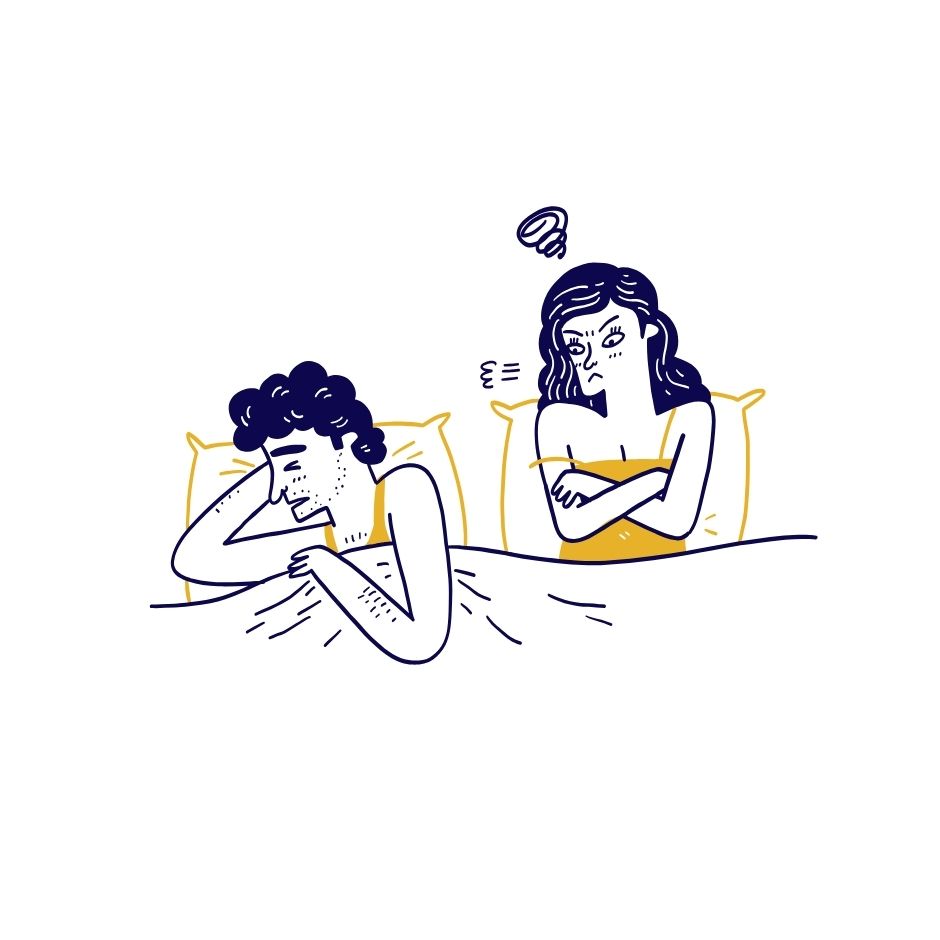
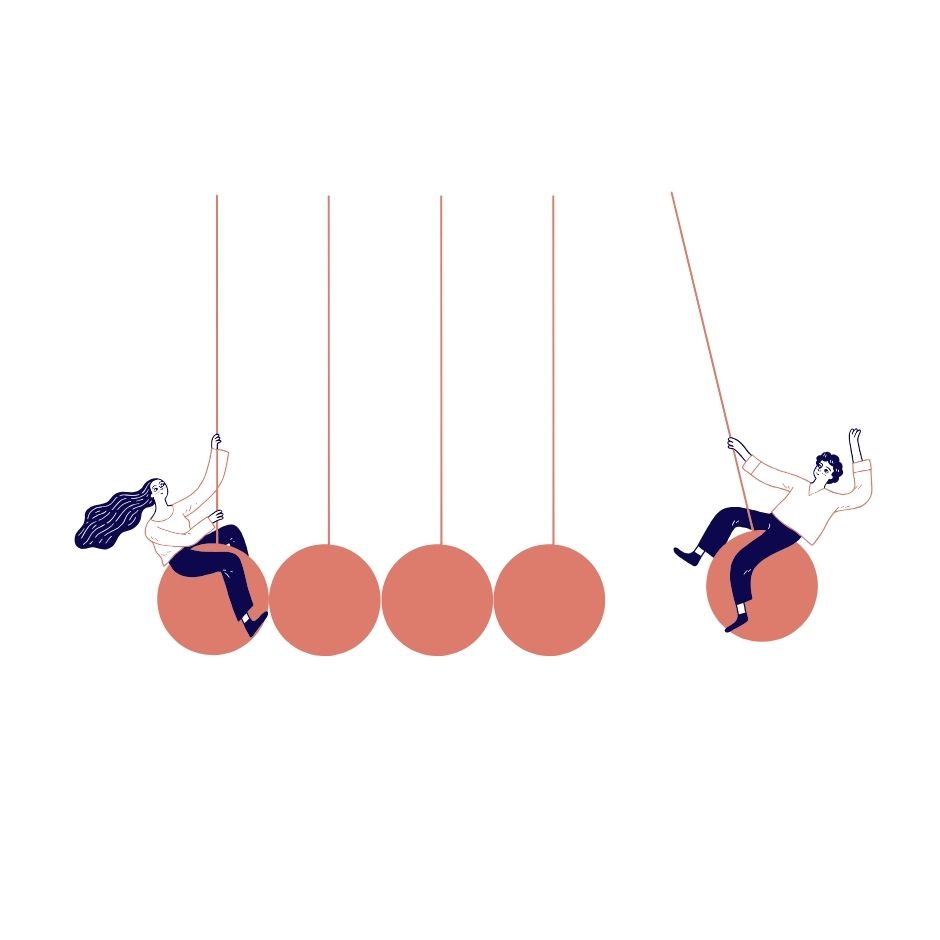
You feel him pulling away and try to move closer to him faster. He experiences your moving closer as pressure and needs more distance. His distance increases your anxiety, so you ask more, explain more, and demand an answer now. The more you press, the less room he feels to breathe and the more he shuts down.
Within a short time, each of you seemingly gets proof of what you were already afraid of. You see him pulling away and tell yourself: “I’m not really important to him.” He sees you continuing to press and tells himself: “I have no space in this relationship.”
In couples constellation therapy, I pause with partners on the difference between what you’re feeling, the meaning you give to the other’s behavior, and what you do as a result. The fear you feel is real. So is the pain. The thought that you’re not important to him is already your interpretation of what’s happening between you.
When you experience his distance as abandonment, you may press him to come closer. When he experiences your pressure as an attempt to control him, he may pull away even more. Each of you reacts to the other while simultaneously reinforcing what the other fears.
Looking at the couple’s cycle allows each of you to identify the part that’s in your hands. Responsibility isn’t measured in percentages and doesn’t erase real differences in behavior or severity of hurt. It invites you to see the interpretation, the response, and the possibility of choosing another response.
Understanding where you came from and choosing how you act today
Understanding your family of origin can bring a lot of compassion. When you understand why silence activates you so strongly, the intensity of your response gains a broader context. When you understand why criticism makes you shut down immediately, you can recognize that your response is connected to what’s happening inside you and not only to the sentence your partner just said.
For me, this is where family constellation and differentiation meet. The systemic view helps you see where you came from and what has become familiar to you within relationship. Differentiation invites you to meet the person in front of you as they are, even when their experience differs from yours and even when their response isn’t what you hoped to receive.
You want to be important to him. You want her to see you. You want to feel desired, loved, and secure within the relationship. These are human needs within a close partnership. The work becomes especially interesting at the moment when your partner cannot or does not want to respond to the need in exactly the way you asked.
You can say you’re hurt by his distance and ask for closeness. You can ask for a break when you’re flooded and return to the conversation later. You can very much want to be understood and still remain curious about how the person in front of you experiences the same event. Worthiness gives space to your need, and differentiation leaves room for your partner’s separateness as well.
If your partner gradually becomes the one who is supposed to carry what was missing in your family of origin, I expand on this in the article “My partner can’t be the family I didn’t have.”
Not every family pattern is trauma
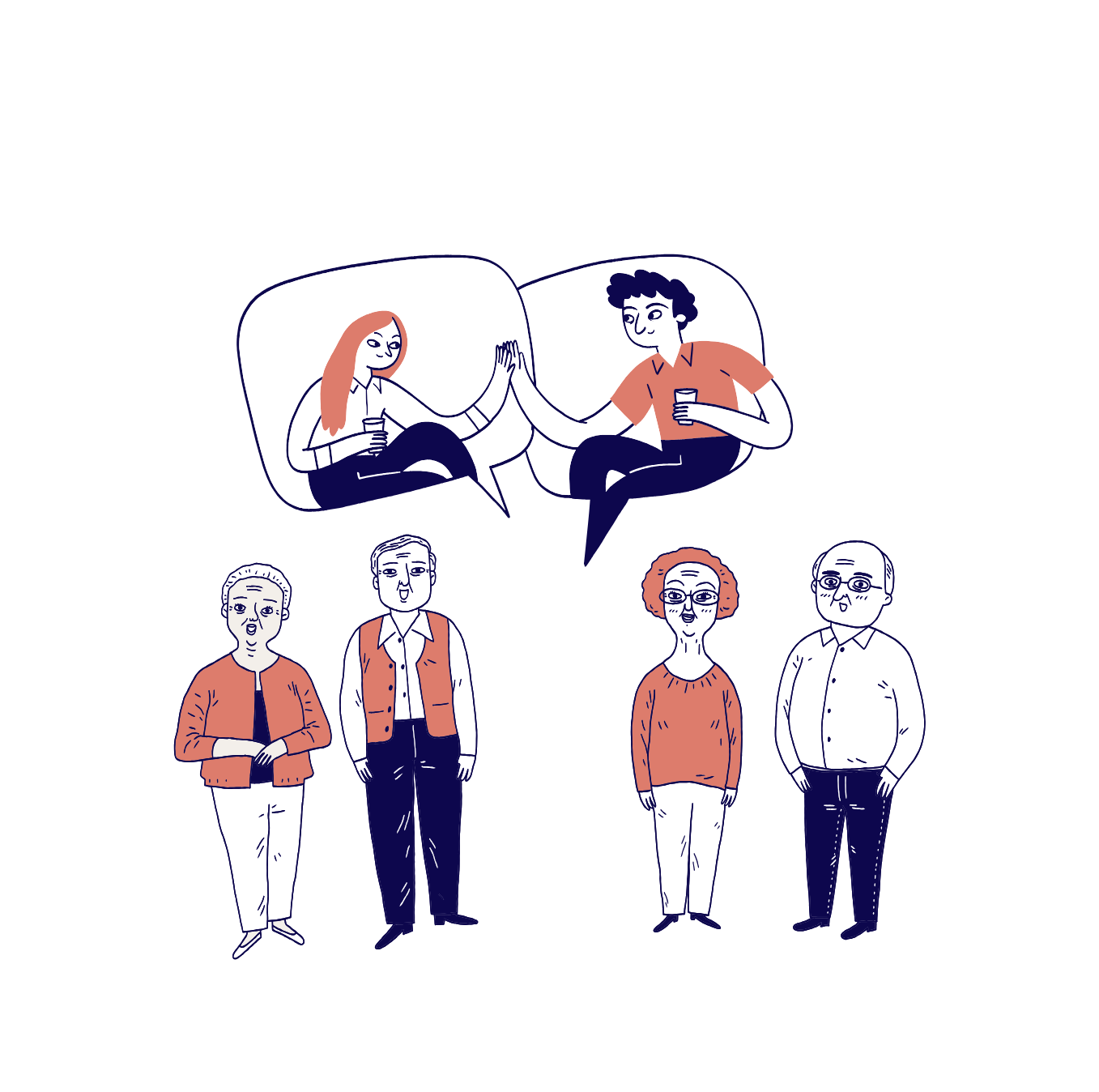
The families you grew up in passed on to you much more than trauma. You received from them language, values, ways of loving, beliefs about relationship, forms of giving, and attitudes toward anger, closeness, and separateness. Some of what you received is a resource you want to take with you, and some fit the family you grew up in but fits less well with the family you’re building.
Pain can also pass and echo between generations. You can read more about intergenerational trauma here. What matters to me here is to leave room for the wide range of things you take with you from one family to the family you’re creating. Each of you learned to be in relationship within a particular family. In your partnership, you meet a person who learned to be in relationship within a different family.
Seeing the pattern without turning it into identity
Labels like “I’m anxious,” “He’s avoidant,” “I’m a pleaser,” or “She’s controlling” can describe something you do or experience. When they become a complete explanation of a person, it’s harder to see the movement within them.
I suggest getting curious about what actually happens: When you’re afraid of losing connection, you start checking on him. When he feels he has no space, he shuts down. When you worry you’ve disappointed, you quickly give up what you wanted. Looking at the action allows you to also see its cost for you and for the relationship.
The sentence “It is what it is, that’s just how I am” closes off many possibilities. When you recognize a way that becomes available to you in certain situations, you can begin to develop another way alongside it.