Home / Differences in a Relationship: Why Couples Who Love Each Other Deeply Start to Feel Alone Side by Side
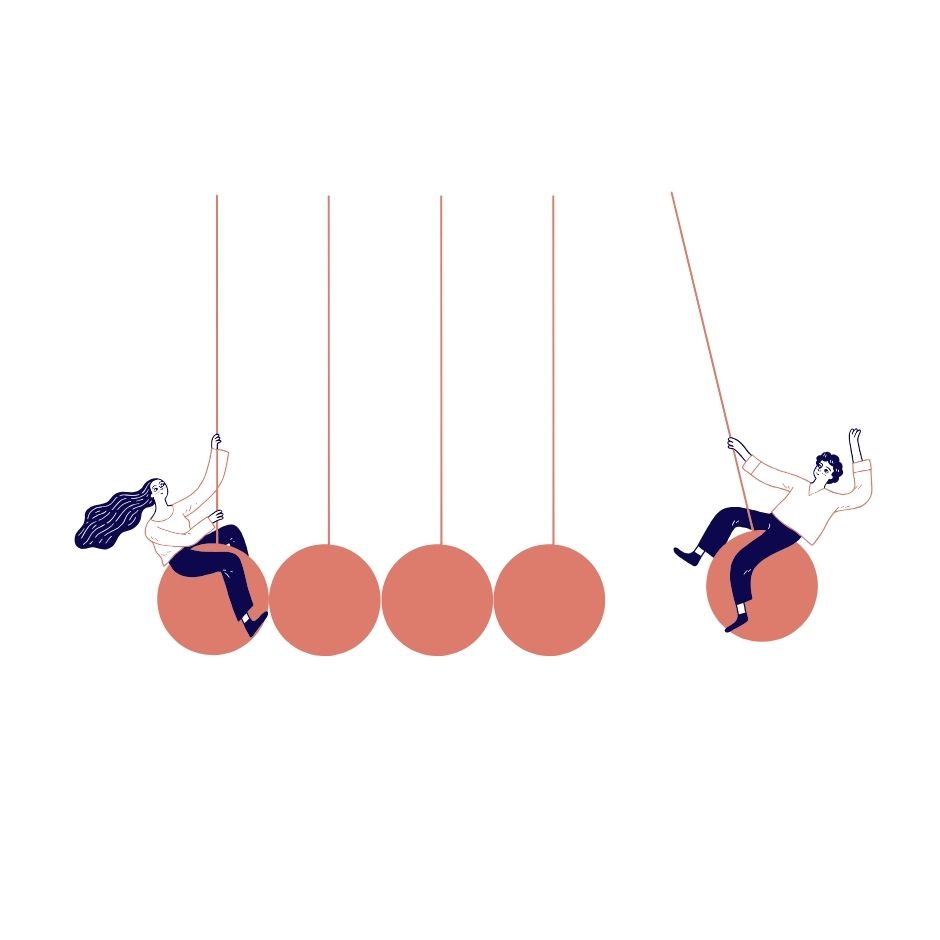
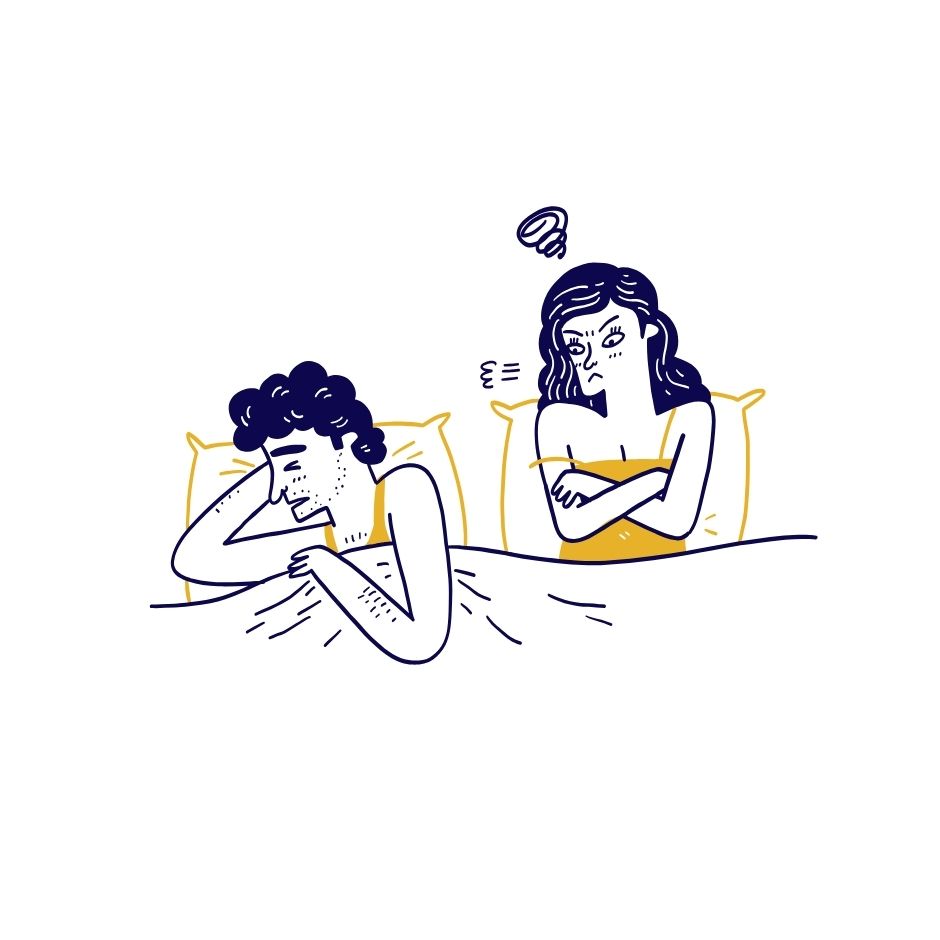
Differences in a relationship can appear even in couples who love each other deeply. They sit in the same living room, sleep in the same bed, and together manage a home, children, and entire lives. From the outside, everything can look normal. Inside the relationship, something becomes more tense. Conversations get shorter, silences grow longer. One feels like they’re fighting for the relationship, and the other feels like there’s no air left.
This distance doesn’t necessarily indicate a decline in love. Precisely in deep, long-term relationships we encounter the fact that the person we chose is a separate person from us. They want differently, need different things, and respond differently to pressure. Even in areas like money, sexuality, parenting, free time, family, closeness, and space, we may discover significant differences.
At the beginning of the relationship, it’s easier to see this difference as part of the person we fell in love with. Over the years, and especially in matters that are very important to us, the difference can take on a different meaning. If you don’t want what I want, what does that say about us? If you need less closeness than I do, what does that say about my place with you?
Differences in a relationship confront us with one of the most complex tasks of an intimate relationship: to stay close to someone who is not us.
A couple’s difference becomes especially difficult when it stops being just a difference between two people. Now it starts to tell me something about my place in the relationship.
“If you want more space, maybe you’re distancing yourself from me.”
“If you don’t want to talk now, maybe I’m no longer important to you.”
“If you don’t need closeness as much as I do, maybe I want this relationship more than you do.”
The feeling that arises in the face of the difference is real. However, the interpretation we give it is not necessarily fact. I can feel unloved when you distance yourself from me, without that meaning you don’t love me. I can feel suffocated when you ask to talk now, without that meaning you’re trying to control me.
This distinction is very important to me in couples therapy. I want to understand what’s happening to me in the face of your behavior, without immediately turning my experience into a definition of you.
From here we can ask a different question. Alongside “Why are you doing this to me?” we can also check: What’s happening to me in the face of the fact that you want something different from me?
It’s relatively easy to feel close when we want the same thing. The encounter becomes more complex when I want to talk and you need quiet. You want change and I’m satisfied with the situation. One wants more closeness and the other more space. Similar differences can appear around money, parenting, sexuality, family, and the way our lives will look.
In these moments my desire can gradually turn into a demand from you. I explain again, persuade, criticize, get hurt, or shut down. Maybe I increase the pressure. At this stage I’m no longer just saying what I want. I’m trying to make you want the same thing.
A client of mine once said in the clinic: “When you’re silent, I feel like I’m disappearing.” Her partner replied: “When you talk to me like that, I feel like I don’t even have room to breathe.”
Both of their experiences are real. She really does feel like she’s disappearing when he shuts down. He really does feel like he has no air when she pressures him to talk. The difficulty grows when each of them hangs on the other the possibility of returning to themselves. If he would just talk, she could calm down. If she would just stop asking, he could breathe.
Here lies, in my view, one of the most important questions in couples therapy: Can I remain myself when you want differently from me?
I can say: “It’s important to me that we talk now.” You can say: “I need time before I can talk.” We’ve both said something true about ourselves. The difference between us is still there.
I can ask you for something and explain how important it is to me. At the same time, I can listen to what’s important to you and negotiate with you. I can try to influence you and also be disappointed by your answer.
My ability to bring my desire fully does not give me control over your response.
The American psychiatrist Murray Bowen, one of the fathers of systemic family therapy, gave this ability a name: differentiation of self. Bowen was interested in our ability to stay connected to the people important to us while at the same time holding our own position, thought, and desire. This ability becomes especially significant when the relationship is under tension.
The more we depend on the other’s approval to feel stable, the greater the chance we’ll try to adapt ourselves to them. Another option is to pressure them to adapt themselves to us.
In couples therapy I encounter this idea in a very everyday place. Can I say what’s important to me without demanding that you want the same thing? Can I hear that you’re disappointed in me without rushing to change myself so the disappointment will disappear?
To deepen understanding of the concept and its meaning within a couple relationship, I recommend also reading “The Complete Guide to Differentiation in Relationships”. To deepen understanding of the theoretical source of the concept, you can also read about Differentiation of Self on The Bowen Center for the Study of the Family website.
Differences in a relationship also touch on our worth. If you don’t want what I want, maybe I’m not important to you. If you’re disappointed in me, maybe I’ve failed as a partner. If you don’t want me now, maybe I’m not desirable.
We can feel this pain without letting it define who we are. My desire can remain important even when you don’t respond to it. Similarly, your disappointment in me can be real without making me a less worthy person.
It’s hard to stay connected to myself when my body already feels threatened. Even before the argument develops, my chest can tighten. My throat can close, my stomach can harden, and my breathing can change. Following this sometimes comes the urge to explain, defend, attack, go silent, or leave the conversation.
Each of us comes to the relationship with different life experience. Therefore, what one experiences as natural space can be experienced by the other as distance. What one experiences as an attempt to get closer, their partner can experience as pressure.
The past can help me understand why this difference activates me with such intensity. The present, however, brings me back to the question of what I do with what arises in me.
My body carries my history. My behavior within the relationship is still my responsibility.
For couples living without family support, differences within the relationship can take on additional weight. In such cases the relationship sometimes carries a larger share of the sense of home, belonging, and support. I expanded on this dynamic in the article “Why Couples Without Family Support Fight Differently”.
I want more time together. You want more time alone. I explain why my need is more justified. You explain why my demand is excessive. At some point we’re no longer talking about shared time. Now we’re occupied with the question of which of us is right and who needs to change.
As the struggle continues, partners can get stuck in fixed positions. For example, one pushes and the other distances. One blames and the other defends. I expanded on the way such patterns begin to manage the relationship in the article “Getting into the Same Fight Again and Again? The Drama Triangle Managing Your Relationship”.
In this article I’m interested in a different question: What do I do when I can’t get you to change?
Some differences can be resolved. For example, we can divide household tasks differently, make a financial decision, or set aside couple time. We can also reach an agreement about boundaries with family.
Other differences accompany couples for years. One needs more time alone. One needs more words of closeness. One is more spontaneous, and the other feels safer when there’s planning. Even after years together we may think differently about money, order, leisure, sexuality, or the degree of contact with family.
The very existence of the difference doesn’t mean the relationship has failed. It confronts us with the separateness that exists even within a close and loving relationship.
Instead of investing all our energy in the question “How do I make you understand that I’m right?” or “How do we make this difference disappear?”, we can ask:
How do I want to be in this relationship in the face of the fact that you want differently from me?
There’s a difference between a difference we can learn to live with and a disagreement that touches on fundamental decisions of shared life.
A difference around free time is different from a difference around the question of whether to bring children into the world. Also, a different preference regarding order at home is different from a deep disagreement about money, fidelity, place of residence, religion, or lifestyle. Such choices directly affect shared life. Therefore they may require negotiation, a boundary, and sometimes also a decision.
I can see you as you are and hear what you want. At the same time, I can stop conducting a struggle whose purpose is to turn you into the person I want you to be. And then the responsibility returns to me: in the face of who you are and the choices you make, how do I want to live?
This is not a position of surrender. There is in it recognition of reality, of myself, and of the person with me.
Choose one difference that recurs between you. Start with a topic you’re able to talk about and remain present with each other.
Before you explain your position, spend a few moments on what’s happening in your body. Notice your breathing. Do pressure in your chest, tightening in your stomach, heat, trembling, or an urge to get up and leave appear? Notice what happens when you encounter the fact that the person in front of you wants something different.
Then each person in turn completes:
Pause after each sentence. The person listening doesn’t need to defend, agree, or offer a solution. Instead, try to listen to what the person in front of you is telling about themselves.
The differences between us reveal something that’s harder to see in periods when everything flows: love does not cancel separateness.
The person with me can love me very much and still want something different. They can be committed to the relationship and still not agree with me. They can be disappointed in me without their disappointment defining my worth. I too can want, choose, and set a boundary. I can stay in contact with myself even when my partner doesn’t give me the answer I hoped to receive.
The difference remains between us, and within it a different way of being together can be created. Deep intimacy is created when there is enough room in the relationship for two separate people: me, you, and the space created between us.

+
For people without a supportive family network.
We will reveal how the lack of a family network challenges and strengthens the couple's relationship, the high prices it exacts from you and your relationship.
Couples therapy will strengthen your sense of security and belonging, so you can be close without losing yourselves along the way.
Online / In-person clinic

+
Individual therapy is a safe space where you will rediscover your strengths, build inner confidence, and create a whole and meaningful life for yourself, just as you dream.
Online / In-person clinic

+
You are invited to enter a unique space: an interactive conversation with special GPTs I created – a first-of-its-kind tool that looks inward with you in the language and frequency of the systemic constellation.
If there is something unresolved in your relationship, family, or heart – the chat will gently meet you without trying to fix it, inviting a different, slow, precise, and quiet perspective. There is no need to understand, just to see and let it work.
Expert in couples therapy for relationships without a supportive family safety net.
Developer of the Couples Constellation approach: a systemic-emotional therapy that brings the couple’s relational dynamics into contact with unspoken family patterns, alongside practical tools that enable movement, connection, and the creation of a deep partnership.







Let’s start with a brief introductory call, free of charge and commitment.
Sometimes, this small step changes everything.
The sessions take place
online via Zoom / face-to-face in Tivon, according to your choice