Home / Between the Safe Room and the Kitchen: Existential Anxiety During War
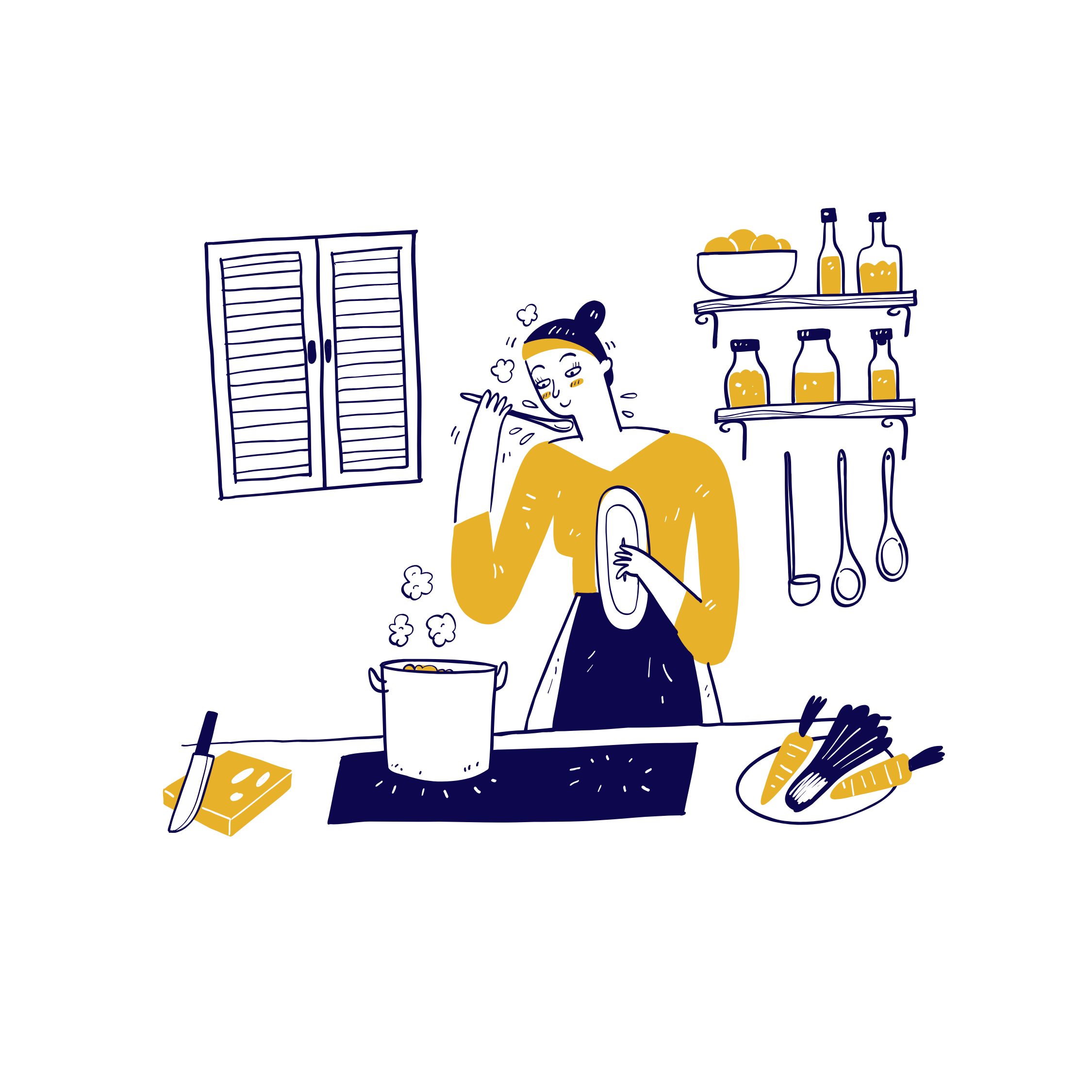
Existential anxiety during war meets me in a very physical place. I find myself moving between the safe room and the kitchen, between the sirens and the need for food in the house, between the fear and the hands searching for something to do.
I wrote this text in real time, from inside the safe room, during Operation Lion’s Roar.
I move between the safe room and the kitchen,
between siren and pot,
between alertness and the smell of something cooking.
The early warning siren sends me to open the refrigerator door.
Grabbing something quickly to eat,
fruit, bread, cheese
I’m not picky
hearing an ancient voice inside me telling me to eat now because who knows what will happen later.
This voice is older than me.
It is not interested in balance—
it is interested in life.
In survival.
It has a European melody.
Good morning Sion, your anxiety is back.
Anxiety sends me to the refrigerator.
My existential anxiety is the need to do something to feel I have control—
to move.
To organize.
To cook.
To eat.
I cook a lot during the war.
Pots on the stove give me a sense of control.
Chopping vegetables gives me rhythm.
The smell fills the house and calms something I didn’t know how to calm with words,
creates a sense of order for me.
Noticing that I am overwhelmed, choosing to stay.
A small movement from flooding back to the body.
One deeper breath.
One hand on the chest and the other on the belly.
Recognizing what is: there is fear in me now.
What will help me now?
Another bite, another pot, remembering to breathe?
Sometimes I eat,
sometimes I stand in the kitchen and breathe deeply,
feeling the cold floor beneath my feet
another deep breath
another slow exhale
entering the safe room
regulating.
During war, fear is not necessarily a sign that something has gone wrong inside us. Reality itself is frightening. There are sirens, there is uncertainty, there are people we worry about, and there are many things we have no way of knowing or controlling.
The attempt to calm ourselves through the thought that everything will be okay does not always hold up against such a reality. We don’t really know that everything will be okay. The body knows this, and so do we. When activation becomes so strong that it’s hard to think, feel, or return to ourselves, we may also encounter emotional overwhelm. For me, the interesting question begins precisely there: how do I live when I cannot receive the certainty I seek from reality?
Anxiety seeks certainty. It sends us to check, to stay updated, to prepare, to think ahead, and to try to reduce what we don’t know. During danger, these actions also have an important function. The difficulty begins when the attempt to achieve certainty becomes the only place where we can feel safe. Because there is a limit to what can be known, prepared for, and controlled.
This boundary invites me to distinguish between what is my responsibility and what is not in my hands. I can enter a protected space, care for my people, choose how much news I consume, ask for closeness, rest, work, cook, go for a walk. I cannot promise myself what will happen tomorrow. This distinction does not erase the fear. It returns to me my part within reality.
Emotional resilience during war is not a constant state of calm. A person can be resilient and also afraid, cry, get tired, struggle to concentrate, or need others.
I think of resilience as the ability to move. To contract when reality is frightening and to expand again when it allows. To enter the safe room and leave it. To be with the news and then put down the phone. To worry about the children and also laugh with them. To be afraid and on the same day continue to work, love, eat, sleep, create, and plan. Life does not wait for fear to end in order to continue, and the longer the threat persists, the more significant the ability to return to it becomes.
During a long period of uncertainty, I am less looking for a way to feel safe all the time. I am looking for the things that help me stay connected to myself, to my people, and to the life I want to live.
For one person it will be routine. For another it will be movement. Connection with close people, work, prayer, tending a garden, a family meal, creating, humor, or the possibility of planning something for next week can be anchor points within a period that holds little certainty. The ability to receive help is also part of this. We are not supposed to carry such a period only from our internal resources. For those living without family support, a period of war can highlight even more the question of who are the people we can lean on, and how we build around us a network of connections that does not depend only on the family we came from.
Resilience is not measured by how little reality affects me; it is built in my ability to recognize that it does affect me, to identify what I need, and to turn toward what holds me.
Perhaps this is the question that occupies me more than any other after such a long period of war: how do I continue to be on the side of life within a reality that brings me face to face again and again with the possibility of loss?
I don’t have one answer.
There are the small things I continue to choose: the people I love, my work, home, the body, food, plans for the future. Things I want to learn, do, grow, and create.
Fear does not need to disappear for all of these to exist. I can be afraid and continue to live. For me right now that is resilience.

+
For people without a supportive family network.
We will reveal how the lack of a family network challenges and strengthens the couple's relationship, the high prices it exacts from you and your relationship.
Couples therapy will strengthen your sense of security and belonging, so you can be close without losing yourselves along the way.
Online / In-person clinic

+
Individual therapy is a safe space where you will rediscover your strengths, build inner confidence, and create a whole and meaningful life for yourself, just as you dream.
Online / In-person clinic
+
You are invited to enter a unique space: an interactive conversation with special GPTs I created – a first-of-its-kind tool that looks inward with you in the language and frequency of the systemic constellation.
If there is something unresolved in your relationship, family, or heart – the chat will gently meet you without trying to fix it, inviting a different, slow, precise, and quiet perspective. There is no need to understand, just to see and let it work.
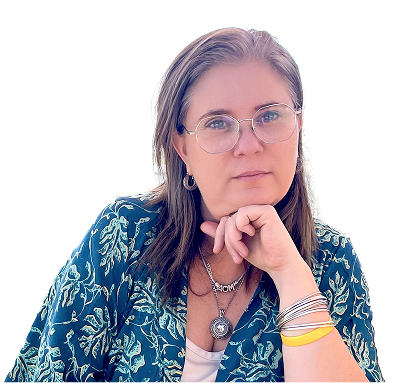
Expert in couples therapy for relationships without a supportive family safety net.
Developer of the Couples Constellation approach: a systemic-emotional therapy that brings the couple’s relational dynamics into contact with unspoken family patterns, alongside practical tools that enable movement, connection, and the creation of a deep partnership.



Let’s start with a brief introductory call, free of charge and commitment.
Sometimes, this small step changes everything.
The sessions take place
online via Zoom / face-to-face in Tivon, according to your choice