Why are you running from the love you most desire? Fear of intimacy in relationships

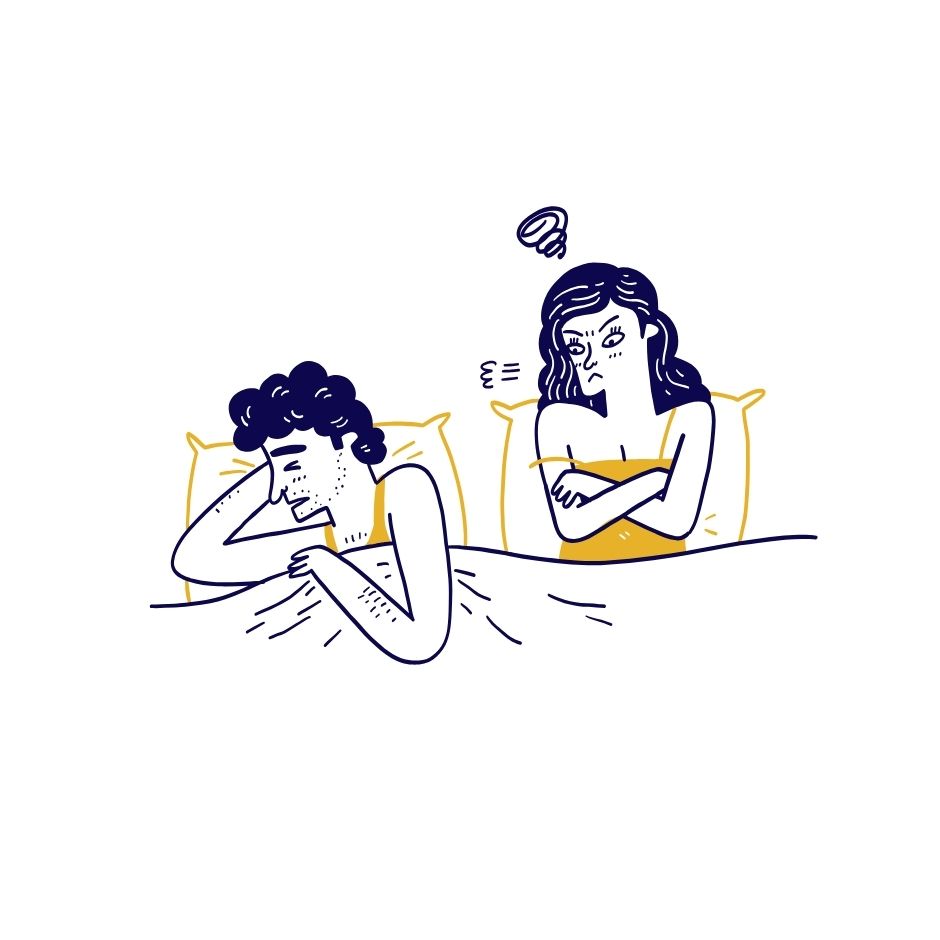
Precisely when he draws near, something in you wants to pull away. Precisely when the relationship becomes more secure, you begin to look for what’s wrong. Suddenly you need space, something about him starts to bother you, and you’re less certain of what you feel. Even the thought that this relationship simply isn’t right for you can arise.

It’s confusing, because you wanted love. You wanted a person you could trust, lean on, and feel at home with. So why is it that precisely when closeness arrives something inside you tenses?

Fear of intimacy in relationships doesn’t necessarily mean you’re afraid of love. It can tell the story that you learned over the course of life that closeness is also bound up with pain, disappointment, abandonment, or giving up yourself. For someone who has lived without a family support system, closeness has an additional meaning. When there’s no family behind you to lean on, the relationship can become the place where nearly all your sense of home rests. You want to draw very close, and in the same breath you know how much it will hurt you to lose this connection.

Article Navigation

Why do I pull away precisely when someone draws near to me?

We arrive at relationships with everything we learned about love, trust, dependence, conflict, and belonging. If you grew up in a place where it wasn’t always safe to need, you may have learned to manage alone. If a request for closeness was met with criticism, silence, or withdrawal, you may have learned to minimize your needs. If you had to be very sensitive to the mood of the people around you, you may have developed an exceptional ability to read others even before they say a word.

These abilities helped you. They allowed you to manage, to hold yourself, and to keep going.
A meaningful relationship invites a different experience: to lean on someone, to ask, to receive, to let another person see how important he is to you, and to agree that your love for him also makes you vulnerable. It is precisely this closeness that can trigger tension.

Even before you manage to understand what happened, the body may already be reacting. The chest contracts, the belly tightens, the throat closes, and the breath changes. You shut down, become critical, have difficulty responding to a message, or begin to look for reasons why the relationship isn’t suitable. The response you feel is real, and it’s worth being curious about what it’s telling you: What is happening in your relationship now? What emotion is arising in you? What about this experience is familiar to you from other places in your life? This inquiry is important, because not every impulse to pull away means you want to leave.

Perhaps you’re not running from closeness, but from the emotion it stirs

When a person becomes dear to us, closeness to him stirs much more than love. Longing, need, fear, pain, anger, sadness, and shame can arise. The exposed recognition of how important this person is to me, how much I want him in my life, and how much I have to lose can also arise.

There are people who know how to bear pain with far greater ease than they know how to bear love. Pain is familiar to them, independence is familiar to them, and the habit of managing alone is also familiar to them. It is precisely the encounter with the intensity of love, desire, and need for another person that can be exposed and unsettling.

The impulse to pull away can reduce the intensity of emotion. The need to resolve a fight immediately, to get an answer, or to make sure everything is okay can also serve the same purpose. If I can get the person facing me to reassure me now, I won’t have to stay any longer with the fear, longing, or uncertainty. Alongside the question of why I’m pulling away, it’s worth asking another question: What emotion has become too difficult for me to bear at the moment when I want to pull away?

Fear of intimacy can also look like chasing after closeness

You want to talk now. You need to know everything is okay. You explain again and again what happened and why you were hurt, send another message, listen for a small change in the tone of his voice, and have difficulty letting the fight go until you feel the connection between you again.

From the outside, withdrawal and clinging look like two opposite movements. From the inside, both can be connected to the same question: What will happen to me if the person I love pulls away from me? It is possible to pull away from the relationship in order to protect ourselves from hurt. It is also possible to chase after closeness in order to ensure they won’t leave us.

The possibility of choosing differently begins with the ability to recognize the movement before it runs us. Our history can explain how this movement developed, and understanding it allows us to take responsibility for what we do with it today. When I shut down to protect myself, the person with me may remain outside the door. When I demand that he immediately calm my fear, I may make him responsible for my sense of security. I can understand why I react this way, and at the same time ask myself: How do I want to act now?

When there’s no family support system, the relationship holds much more than a relationship

For women who live without a family support system, the romantic relationship sometimes has a weight that’s hard to understand from the outside. When there’s no mother you can call after a fight, no sister you can go to on a difficult evening, no family table you can return to, or knowledge that there’s a system behind you that will pick you up when things are hard, the partner can be much more than a partner. He is your person, your family, the home you built.

Therefore a fight can feel bigger than a fight. Distance of a few hours can touch a much deeper place. Beneath the anger, hurt, or fear a very basic question may arise: If even here it won’t be safe for me, where is my home?

This is one of the reasons it’s important to me to look at the relationships of people without a family support system from an understanding of the unique reality in which they live. When there’s no family network behind you, the relationship carries great emotional weight. We ask of it love and intimacy, and in parallel also belonging, family, security, help, witness to our lives, and a place to return to.

That is a great deal to place on one relationship. The goal is not to need less. The goal is to gradually expand the sources of belonging and support in life, so that the relationship can be a meaningful home without being the only pillar on which the entire home stands.

Perhaps it’s not hard for you to love. Perhaps it’s hard for you to lean

I meet in the clinic very independent women, women who know how to hold home, work, children, and crises. They make decisions, function, organize, solve, and keep going. For some of them, this independence began long before it was a conscious choice. When there’s no one to lean on, you learn to stand alone.

A meaningful relationship offers an experience that part of you longs for and another part is still learning to know: the possibility of placing a bit of the weight with someone else. The leaning itself can be frightening. When I lean on you, you become important to me. The more important you are to me, the more significant the possibility of losing you becomes. When there’s no family support system behind me to hold me, the possible loss takes on enormous weight.

Therefore the question that interests me is not only why you’re running from love. I want to ask: What happens to you in your body and emotion when you allow yourself to need someone?

Differentiation is the ability to draw near without leaving myself

Differentiation is one of the central ways in which I look at relationships. Differentiation is not an attempt to need less and is not an aspiration to absolute emotional independence. It is the ability to be with you and also remain with myself.

I can love you very much and know what I think. I can need you and remain connected to my value. I can be hurt by you and continue to hold myself. I can ask for closeness without making your response a measure of how worthy I am of love. I can hear that you need time, feel the disappointment that arises in me, and clarify what I need, without rushing to interpret your need for space as abandonment.

This ability also requires the capacity to bear emotion. The more I can stay with the fear, pain, anger, or longing that arise in me without rushing to get rid of them, the greater the space created within me to choose how I want to act. I don’t have to push you away in order to stop feeling, and I also don’t have to change you in order to calm down. I can feel, remain connected to myself, and choose.

Worthiness is also the question of who I want to be within the relationship

Beneath the fear of intimacy sometimes lies a question of worthiness. Am I worthy of love when I’m needy? When I’m angry? When I ask? When I set a boundary? When I’m not the strong, managing woman?

Someone who learned that a relationship is maintained through adapting to others can become an expert at reading the room. She knows how to identify a mood, sense a small shift in atmosphere, and orient herself accordingly. Within all this attentiveness to the other a very important question can disappear: And what about me?

For me, worthiness doesn’t end with knowing I have value. It is also connected to the way I choose to be within the relationship. Who do I want to be when I love? How do I want to speak when I’m angry? How do I ask for what I need? How do I set a boundary and preserve my dignity and that of the person facing me? Can I take responsibility for the way I behaved even when I was hurt? Does my behavior align with the woman I want to be?

My pain is worthy of space. The person facing me also has space. My worthiness is also expressed in the way I choose to meet both.

The story of closeness began long before your relationship

In family constellation work we expand the view beyond what happens between the two partners and are also curious about the families from which they came. What did love look like in the home where you grew up? Who could lean on whom? What happened when someone needed help? How did you deal with anger, fights, and separations in your family?

It is possible to look at who was forced to manage alone, who stayed in relationship at a heavy price, who left and who was left. It is possible to ask about losses, disconnections, and separations that were hard to talk about, and about what you learned from the women and men in your family about love, dependence, loyalty, and freedom.

The goal is not to find in the past an explanation for everything that happens in the present. The systemic view reminds us that we learned how to love within a family. We arrive at our relationships with the experiences we ourselves lived and with the stories, values, and patterns we absorbed in the system in which we grew up. When we see them, the possibility opens to examine what we want to take with us and what no longer fits the life we are building today.

Even when there’s no contact with the family, it remains your family of origin

When there’s no contact with the family of origin, a wish can arise to build a new life far from everything that was there. There are situations in which distance is vital. There are relationships in which clear boundaries protect you, and there are situations in which disconnection allows you to live a safer and healthier life.

The constellation view does not demand a return to a relationship that harms you. It invites recognition that this is the family from which you came. You received life through it. What you do with this life is yours.

This distinction is also important for relationships. Your partner cannot be the mother you didn’t have, the father who couldn’t protect you, the sister you missed, or an entire family that will fill all the places that remained empty. He can be your partner, and that is a large place in itself.

The more we stop asking the partner to complete everything that was missing in the system from which we came, the more we can see him as he is: not as a substitute for family, but as a person we chose to love and live alongside.

Do I see my partner as he is?

This is a question I love to bring to couples work. When you look at the person with you, ask yourself whether you see him as he is now or whether you also meet in him other people and stories.

Is his silence his silence, or does it meet within you old silences you already know? Does his need for space stir in you a familiar experience of withdrawal? Are you asking of him something he can give you as a partner, or are you longing to receive from him what you needed to receive from an entire family?

These questions do not diminish your needs. They help you see them with clarity. When you know what you truly need, it’s easier to understand what you want to ask of your partner, what you can give yourself, and what additional sources of connection and belonging it’s worth building in your life.

How will you know if it’s an old fear or if something truly doesn’t suit you?

Not every fear of intimacy is connected to the past. Something occurring in the relationship in the present can truly not suit you. A boundary can be crossed, mutuality can be absent, and you can identify something worthy of listening to.

The goal is not to convince yourself that every strong reaction is trauma. The goal is to create enough internal space so you can listen to yourself before you act.

Instead of rushing to decide whether to stay or pull away, it is possible to clarify:

  • What actually happened here?
  • What did I feel?
  • What emotion is hardest for me to bear right now?
  • Where do I feel it in my body?
  • What meaning did I give to what happened?
  • What is familiar to me in this experience?
  • What belongs to the person facing me and to what is happening between us now?
  • What belongs to the story I bring with me?
  • Who do I want to be in the face of all this?

The past can help you understand the intensity of the response. The choice of what to do with it occurs in the present.

Somatic exercise: staying with the emotion without letting it run you

The next time you feel a strong impulse to pull away, shut down, end the conversation, or on the contrary to resolve everything immediately, try to give yourself a few minutes before you act.

Place both feet on the floor, feel their contact with the ground, and look around you.

Let your eyes rest on a few things that are pleasant for you to see.

Notice the room you’re in and the present moment.

Now return to what happened between you and ask yourself:

“What emotion is arising in me?”
Try to give it a name: fear, pain, anger, longing, loneliness, shame, or another emotion. It is possible there is more than one emotion there.

Notice where in your body you feel the emotion most clearly: in your chest, belly, throat, face, hands, or another place.
Stay with it for a moment, to the extent that is comfortable for you.

Instead of trying to make the sensation disappear, check whether it can receive a bit more space in the body.
If it is felt in the chest, check whether it is possible to sense something of it also in the shoulders or hands.
If it is in the belly, check whether you can also feel your legs and the ground while you stay with it.
There is no need to intensify anything by force.
The goal is not to flood yourself, but to find the measure at which you can feel a bit more and remain present.

Ask yourself:

  • “What am I feeling now?”
  • “What about this emotion is hard for me to bear?”
  • “What arises in me when I give it a bit more space?”
  • “What do I truly want?”
  • “Who do I want to be in this moment?”

Notice whether something changes when you manage to stay with the emotion for a few more moments.
The impulse to flee may weaken a bit.
It is possible you will still want distance, and now it will be clearer to you why.
You may discover that beneath the anger there is pain, that beneath the fear there is longing, or that the person facing you is simply very important to you.

Before you return to your partner, ask one more question:

  • “Am I now seeing the person facing me, or am I asking him to be someone else for me?”

The goal is not to always choose closeness. The goal is to gradually increase your capacity to feel what arises in you, to bear a bit more of it, and to remain present enough to choose the next step.

It is possible to feel a great deal and to stay

This is the deep movement this article seeks to offer: not to stop needing, not to stop fearing, and not to become so independent that no one can hurt you anymore. It is possible to expand the capacity to be within love.

It is possible to feel how important the person facing you is to you, to bear more of the fear, longing, anger, and pain that closeness stirs, to listen to what you learned in the family from which you came, and to choose what you want to create in the family you are building. It is possible to recognize that your fear is worthy of understanding and to know that your behavior remains your responsibility. It is possible to lean without handing another person the responsibility to hold all of you.

For someone who lives without a family support system, this is an especially deep movement. You can build belonging within yourself, within friendships and connections you choose to cultivate, within your community, and within your relationship.

Your partner does not need to be the family you didn’t have. He can be the person with whom you create a new family.
You can stand before him as the adult woman you are today, with the story from which you came, with the body that reacts, with the emotions that arise, and with the growing capacity to choose.

This is one of the deep meanings of home: a place where it is possible to need without disappearing, to lean without losing yourself, to feel a great deal and to stay.

טיפול זוגי
Couples Therapy
Reconnect

+

Couples Therapy

For people without a supportive family network.
We will reveal how the lack of a family network challenges and strengthens the couple's relationship, the high prices it exacts from you and your relationship.
Couples therapy will strengthen your sense of security and belonging, so you can be close without losing yourselves along the way.
Online / In-person clinic

טיפול פרטני
Individual Therapy
Loving yourself

+

Individual Therapy

Individual therapy is a safe space where you will rediscover your strengths, build inner confidence, and create a whole and meaningful life for yourself, just as you dream.
Online / In-person clinic

chat pic yellow
Constellation Chat
A space for self-exploration and precision

+

Constellation Chat

You are invited to enter a unique space: an interactive conversation with special GPTs I created – a first-of-its-kind tool that looks inward with you in the language and frequency of the systemic constellation.
If there is something unresolved in your relationship, family, or heart – the chat will gently meet you without trying to fix it, inviting a different, slow, precise, and quiet perspective. There is no need to understand, just to see and let it work.

Nice to meet you, I'm Sivan Avni

Expert in couples therapy for relationships without a supportive family safety net.
Developer of the Couples Constellation approach: a systemic-emotional therapy that brings the couple’s relational dynamics into contact with unspoken family patterns, alongside practical tools that enable movement, connection, and the creation of a deep partnership.

You might also be interested in

Ready to begin?
Let’s start this journey together.

Let’s start with a brief introductory call, free of charge and commitment.
Sometimes, this small step changes everything.
The sessions take place
online via Zoom / face-to-face in Tivon, according to your choice

Your journey begins here.

A few details before we move on to WhatsApp

Your journey begins here.

A few details before we move on to WhatsApp