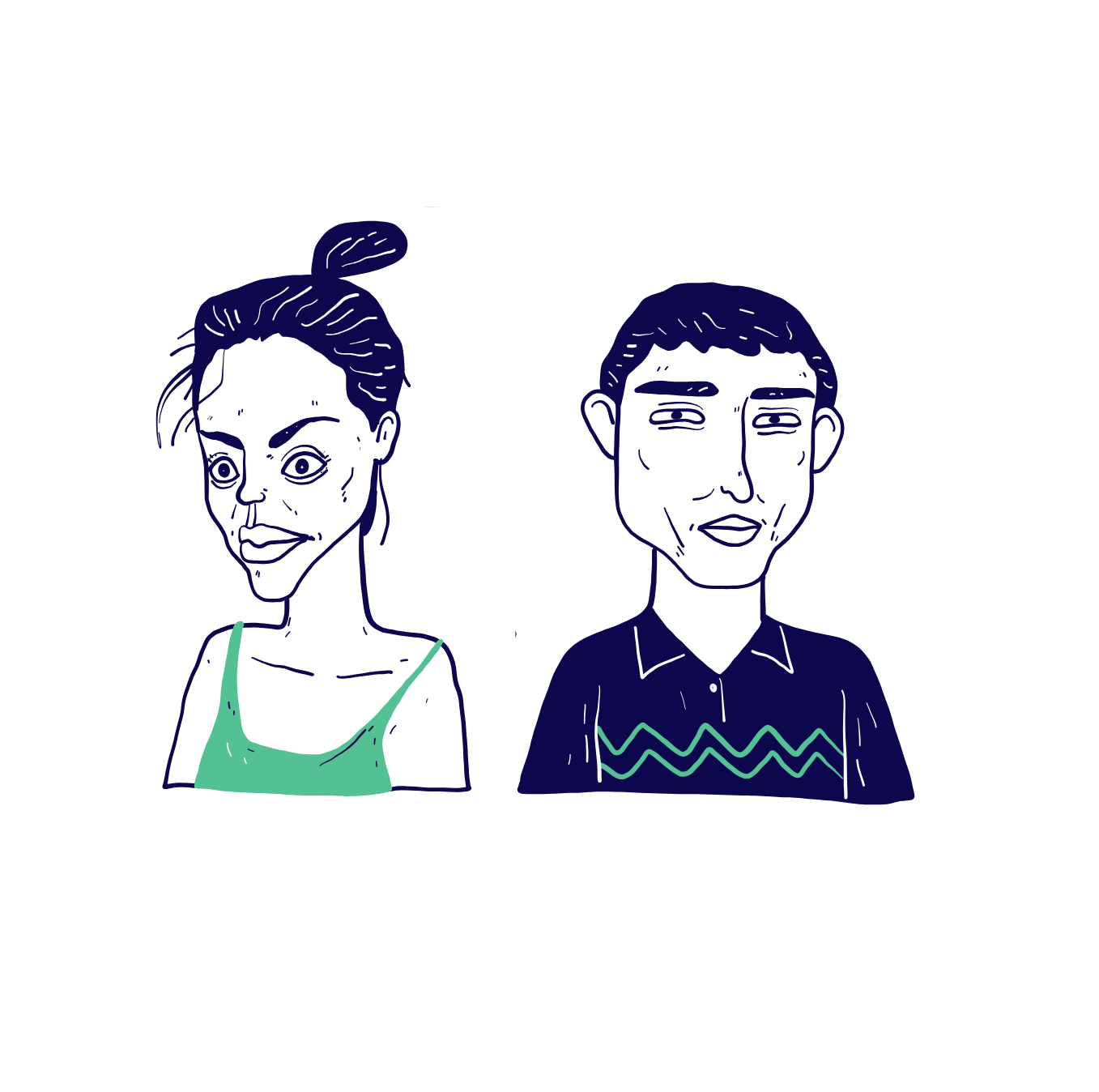
Do you change yourself to avoid losing the connection? Do you feel that you cannot be authentic when you are together? Does the connection cause you to disappear or take up space that is not really yours?
What is differentiation-based couples therapy?
Differentiation is the ability to be who I am even when I am in a relationship. This is a developing ability, which is influenced by our emotional history, the parental models we absorbed, and our ability to maintain warmth and closeness even in the face of friction.
Emotional differentiation (Differentiation of Self) teaches us how to maintain a deep connection without losing ourselves in it. Working with this approach assumes that within each person there is an inner essence (Self) wrapped in personality structures built from adapting to the environment. Differentiation-based emotional therapy helps peel away the automatic layers and return to deep emotional authenticity.
The four foundations of the emotional differentiation method:
- True self and separation within a relationship – Practicing distinguishing between the adapted self and the authentic self.
- Regulating emotional anxiety while maintaining connection – The ability to remain present even in the face of difficult emotions – without disconnecting.
- Living emotional boundaries – A boundary that protects me without disconnecting, and allows me to choose how present I am.
- Presence within conflict – The ability to hold a couple’s space even when emotions are turbulent – without running away or attacking.
What does emotional therapy in the differentiation approach look like?
This is a process where:
- You learn to distinguish between emotional anxiety and authentic emotion.
- You develop a stable inner root – so as not to be shaken by every stimulus or reaction of the other.
- You identify when you are reacting out of survival – and when out of choice.
- You learn to feel yourself – even in the emotional presence of another person.
Therapy as a space for practicing self-standing:
- How to be in a relationship without losing presence.
- How to endure conflict without collapsing into it.
- How to get closer without negating the self.
Who is the method suitable for?
- For those who feel that the connection undermines their sense of self.
- For couples who move between merging and distancing – without safe closeness.
- For those who want a relationship based on truth, not on emotional survival.
- For those who are willing to meet themselves – even when the other’s gaze is different.
When should you seek treatment in the differentiation approach?
- When you feel that the connection is based on need and not on a deep connection.
- When you experience difficulty staying in disagreement without arguing or distancing.
- When you feel a sense of suffocation or disappearance within the connection.
- When the conflicts between you turn into disconnections, silences, or repeated explosions.
How will you know the process is working?
- You experience more calm even in disagreement.
- Your emotional boundaries feel alive, not like walls.
- You do not need constant approval to feel safe in the relationship.
- You feel like you are coming back to yourself – even in a relationship.