Home / Your family is always there. Mine isn’t: the couple gap no one talks about
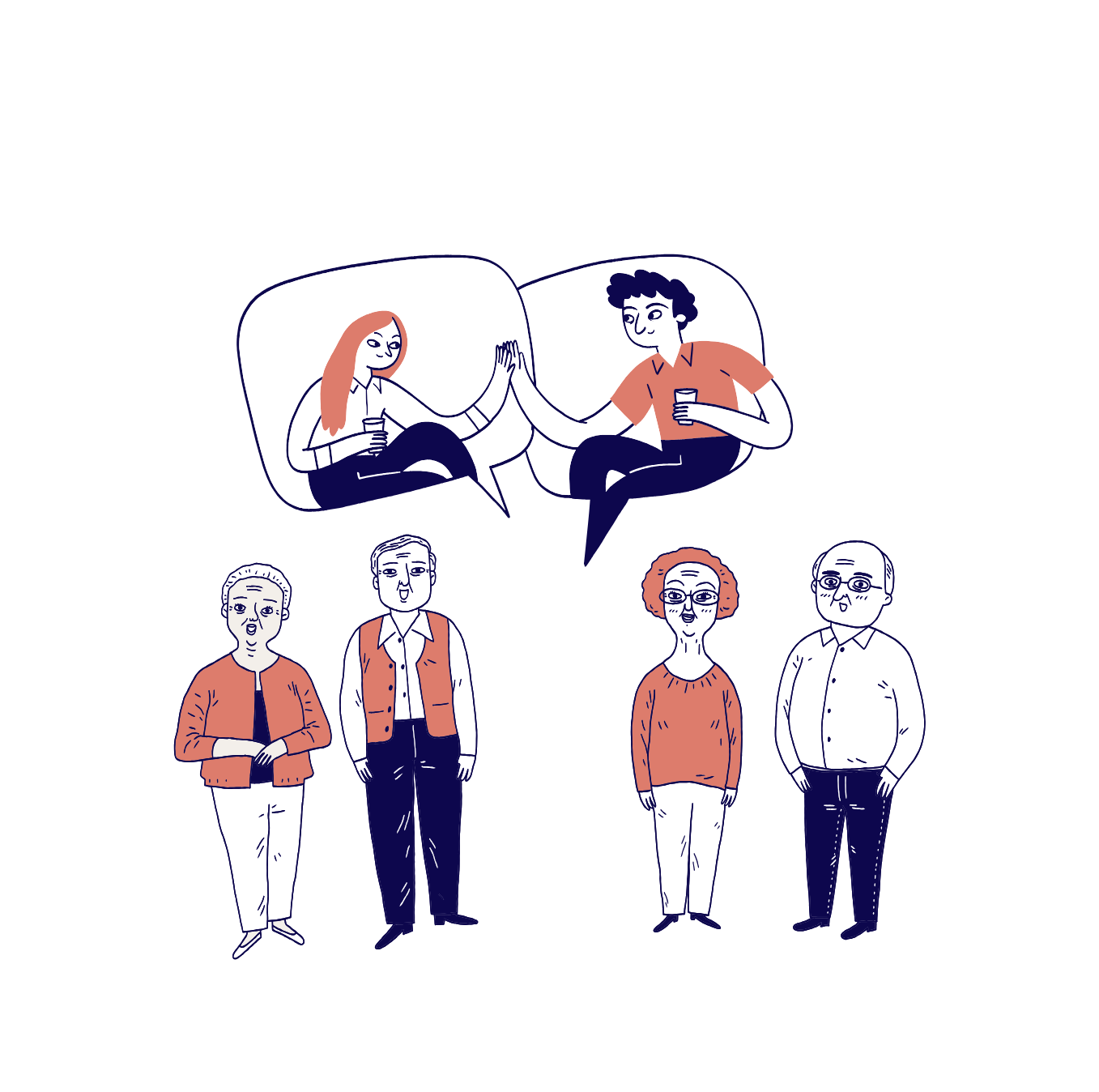
“Of course we’ll do the holiday at my parents’ place. Where else would we do it?”
It’s a logical question. Your family is in contact with you, your partner’s family isn’t. Your parents invite you, your siblings show up, the kids know their cousins, and there’s a table you can sit around. So you go to your family.
The next holiday, you’ll probably go to them again. And on the birthday. And when you need help with the kids, you’ll call your parents. Slowly, without either of you deciding it, your family becomes the family around which your shared life organizes itself.
It’s a natural movement. Life gravitates toward the place where connection exists, and this is an enormous gap within a relationship.
When you’re disconnected from your family of origin and your partner is connected to his, you bring into the relationship two very different family realities. On one side there are people who call, invite, help, celebrate, and want to see the grandchildren. On the other side there’s disconnection.
Your shared life naturally gravitates toward the side where connection exists. That’s where the holiday meal is, that’s where grandma and grandpa are, that’s where someone can watch the kids, that’s where family gatherings happen. What starts as a natural, convenient solution can over the years become an entire structure of life.
No one decided that his family would be the central family. It’s simply the family that’s present.
The family that’s present becomes the default.
And when the family that’s present becomes the default, it starts to shape the home you’re building together.
It’s possible his parents truly love you. His mother might call you even when he’s not around, his father might come help you, his siblings might see you as a sister. Your children might be wrapped in grandparents, aunts and uncles, and cousins that you’re very glad they have.
All of this can be real, and at the same time you can sit at Friday dinner and feel a pang when you see your partner walk into his parents’ house without knocking. It’s the house he came from. When he and his sister remember something from childhood, you can laugh with them and know you’re sitting beside a history that isn’t yours. When his mother hugs him, you can be happy for him and ache for yourself.
Being loved in his family and being a daughter to that family are two different things.
This difference can remain almost invisible. Precisely because they accept you, precisely because they’re good people, and precisely because there’s so much to be grateful for, it’s harder to say that it also hurts.
Envy of the family of the person you love isn’t easy to admit. It’s easier to be angry about the number of gatherings, about his mother’s phone calls, about the connection with his siblings, or about the fact that you’re going to them again on Saturday.
Beneath the anger can be a much simpler pain: you want what he has.
You see that he can be annoyed with his mother and still call her the next day. He can fight with his brother and remain his brother. Your children know the house where he grew up and his family stories. He has a family past he can still step into in the present.
You don’t want to take these connections away from him. You might even protect and encourage them. And still, his closeness to his family brings you face to face with what you don’t have.
His family doesn’t create this pain. It can illuminate it.
The pain doesn’t always arrive in the couple conversation by its real name.
Instead of saying “It’s hard for me to see how much you belong and how much I feel I don’t have that,” you might say “We’re always at your parents’ place.” Instead of saying “It hurts to see your relationship with your mother,” you might ask why she needs to call every day.
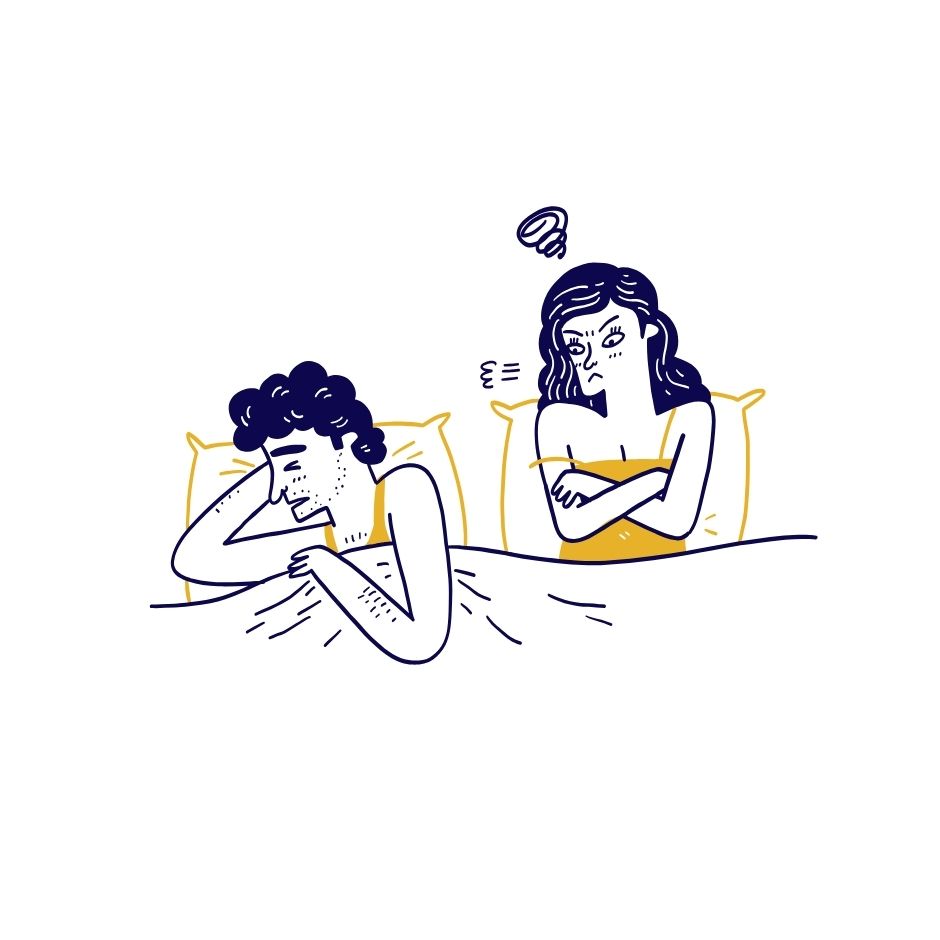
Your partner hears criticism of the people he loves and starts defending them. The more he defends them, the more you can feel he’s choosing them over you. The more you attack his connection with them, the more he feels he’s being asked to choose between his relationship and his family.
Inside this cycle it’s already hard to see what started it.
Your experience is real. If you feel on the outside, the pain of being on the outside deserves space. That feeling still doesn’t prove your partner is leaving you on the outside. If his closeness to his mother stirs loneliness in you, the loneliness is real. It doesn’t necessarily mean his relationship with her comes at your expense.
This distinction changes the conversation. It allows you to bring your pain to your partner without immediately turning it into an indictment against him or his family.
It’s the same distinction I expand on in the article about fear of intimacy in relationships: recognizing what’s stirred in me without turning the other person’s response into a measure of my worth or proof of their intentions.
His family can have habits that don’t suit you. Parents can be too involved, siblings can enter places that aren’t theirs, and you might truly be spending more time with his family than fits the life you want to build.
Boundaries are an important part of the relationship with family of origin. And within this gap it’s worth checking one more thing: are you asking for a boundary, or do you need proof that he’s choosing you?
You might want to see him tell his mother “no” so you can feel he’s said “yes” to you. You might want him to skip a family gathering so you know you’re more important. The argument about Friday dinner might hold within it a much deeper request: “Tell me I’m your family now.”
This request is understandable. It also places on your partner a task that can’t truly be completed. No number of times he chooses you over his family will be able to give you retroactively the family you didn’t have.
I wrote extensively about this weight—created when a partner becomes a primary source of belonging and security—in the article My partner can’t be the family I didn’t have. Here I’m interested in a different question: what happens to the relationship when one side still has an active, present family, and the other lives disconnected from theirs?
If you’re in good contact with your family of origin, it’s very easy not to see the advantage you have. You’re used to your mother calling, your parents inviting you for the holiday, having someone to turn to when you need help, and having people who’ve known you since before you met your partner.
When your family is the only active family in your lives, its habits can imperceptibly become the habits of your relationship. Its holidays become your holidays. Its schedule enters your schedule. Its traditions become the traditions your children know.
“Where else would we do the holiday?” can sound like a technical question. Beneath it lies an assumption worth checking: if your family has a table and hers doesn’t, of course you’ll sit around your table.
It doesn’t have to be obvious.
The fact that your partner is disconnected from her family doesn’t automatically grant your family the space that’s been vacated. That space also belongs to the home you’re building.
Your connection with your family isn’t an obstacle to differentiation. The question is how you hold that connection now, when you’re also a partner and have built your own home.
You can love your parents and choose with your partner what your holidays will look like. You can be close to your siblings and set a boundary when something that belongs to your relationship goes outside. You can be grateful for the help you receive from your family without turning that help into a right to interfere in your decisions.
And within all this, you can hear your partner’s pain without rushing to explain how much your family loves her. Their love for her doesn’t cancel her loss.
You also don’t need to apologize for what you have or shrink your connections to protect her from the pain. You’re called to see it and stay beside her in it, without handing it the steering wheel of your lives.
When one side is missing, there’s a natural tendency to let the existing side expand. Another holiday at their place. Another Saturday. Another tradition. Another bit of help. Another decision that organizes itself around that family.
Over the years you can discover that the family you’ve built has taken on, almost without noticing, the shape of one of your families of origin.
This is a point worth pausing at. Your home also needs things that have no history with either of you. A tradition you create. A holiday you choose to celebrate at home. People you invite because they’re part of the life you’ve built. Your own way of being a family.
Not every space left by the absent family needs to be filled by the present family. Part of that space can become a place where something new is created.
In my view, this is one of the most meaningful tasks for a couple living with this gap.
You don’t need to turn his family into your family. He doesn’t need to distance himself from his family so you’ll be equal. You also don’t need to build your lives around the absence.
You can create a third home.
Part of it will carry good things he brings from his family. Part of it will carry what you want to bring, even if there’s no current connection with the family you came from. Part of it will be entirely new.
You’ll decide what a holiday looks like at your place, how much space the extended family gets, where the line is between help and involvement, which traditions you want to pass to the children, and who the people are you want around your table.
This home doesn’t need to choose between two families of origin. It needs to be yours.
If you’re disconnected from your family of origin, it’s natural that your partner’s connections will also give you a sense of family. There’s a lot of good in that. The difficulty starts when your family and social world passes almost entirely through him.
Then your partner holds both the relationship with you and a large part of your path to a sense of belonging. His family becomes a place you lean on, and at the same time a place that hurts because it reminds you of what you don’t have.
Your responsibility is to gradually expand that world. Cultivate friendships, build community, deepen meaningful connections, and create around you people who are part of your life because of their connection to you. People you can invite to the holiday table because you chose them and they chose you.
They won’t replace the family you came from. They can be part of the support system you’re building for yourself today.
If you’re disconnected from your family of origin, write for yourself in which places your partner’s family has become the default of your shared life: holidays, Saturdays, help with the kids, events, traditions, vacations, money, or decision-making.
Now mark what among these things is truly good for you and you want.
Then ask yourself where within this structure you’re missing your own space, and where your pain about what you don’t have turns into anger about what he has.
If you’re in contact with your family of origin, check what space your family has taken in your relationship simply because it’s the family that’s present. Which things that seem natural to you have become taken for granted for both of you without you truly choosing them together?
And finally, choose one thing you want to create yourselves: a tradition, a meal, a holiday, a connection, or one family decision that doesn’t arise from the need to distance from one family or compensate for the absence of the other.
Something that belongs to you.
This gap won’t disappear because we love each other.
You can love his family and ache that you don’t have what he has. You can be close to your family and see that this closeness brings your partner face to face with loss. Both things can live in the same home.
When the pain gets a name, it no longer has to disguise itself as a fight over another Friday dinner or about mom’s phone call. And when the family that’s present stops being the automatic default, you can start choosing what from it enters your home and what you want to create yourselves.
“Of course we’ll do the holiday at my parents’ place. Where else would we do it?”
Now you can hear within that question another question:
“How do we want our family to look?”
That question no longer has an answer that either family of origin can give in your place.

+
For people without a supportive family network.
We will reveal how the lack of a family network challenges and strengthens the couple's relationship, the high prices it exacts from you and your relationship.
Couples therapy will strengthen your sense of security and belonging, so you can be close without losing yourselves along the way.
Online / In-person clinic

+
Individual therapy is a safe space where you will rediscover your strengths, build inner confidence, and create a whole and meaningful life for yourself, just as you dream.
Online / In-person clinic
+
You are invited to enter a unique space: an interactive conversation with special GPTs I created – a first-of-its-kind tool that looks inward with you in the language and frequency of the systemic constellation.
If there is something unresolved in your relationship, family, or heart – the chat will gently meet you without trying to fix it, inviting a different, slow, precise, and quiet perspective. There is no need to understand, just to see and let it work.
Expert in couples therapy for relationships without a supportive family safety net.
Developer of the Couples Constellation approach: a systemic-emotional therapy that brings the couple’s relational dynamics into contact with unspoken family patterns, alongside practical tools that enable movement, connection, and the creation of a deep partnership.



Let’s start with a brief introductory call, free of charge and commitment.
Sometimes, this small step changes everything.
The sessions take place
online via Zoom / face-to-face in Tivon, according to your choice