Home / It didn’t start with you: Mark Wolynn and the family pain we carry
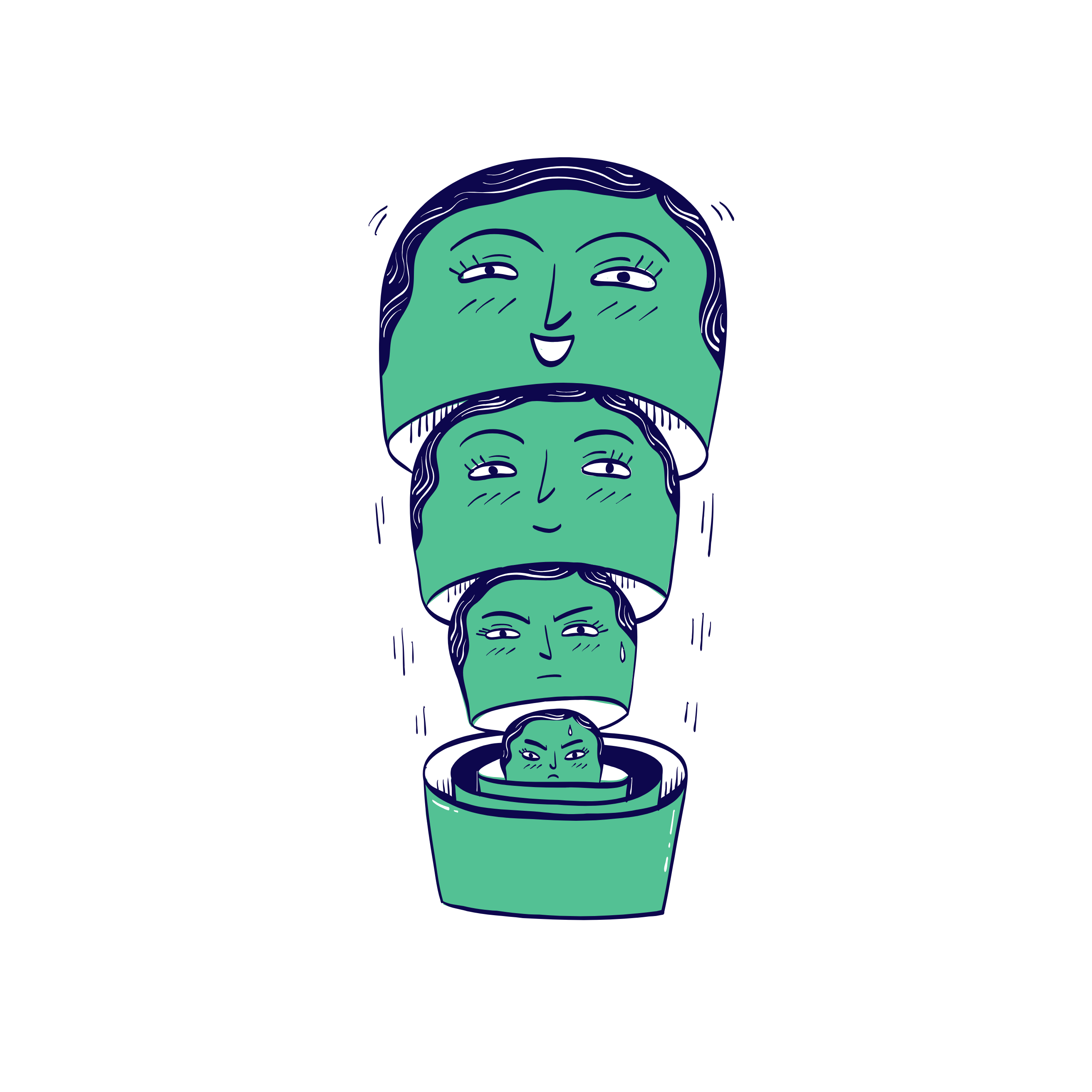
You know the story of your life. You know what you’ve been through, who raised you, where you were hurt, and which experiences shaped you. And yet, there can be fears, reactions, or sensations for which it’s hard to find a clear beginning in your personal story.
Vigilance that’s hard to calm. A great fear of loss even when life is stable. A feeling that everything could disappear. Difficulty enjoying success. Guilt that appears precisely when life gets better. Sometimes it’s the very sentences we say to ourselves again and again that reveal how deep this fear is: “In the end, everyone leaves me.” “I can’t let my guard down.” “If things get too good, something bad will happen.”
In his work on Inherited Family Trauma, Mark Wolynn suggests listening carefully to these sentences. Alongside the question of what happened to me, he is also interested in the question of what happened in the family I came from, and which events in family history might add context to what I’m feeling today.
For me, this possibility holds together curiosity and caution. The family story can add a significant layer to understanding our lives. It also leaves room for what we know about ourselves, what we learned within the relationships in which we grew up, and what we cannot know with certainty.
Mark Wolynn is the author of the book It Didn’t Start With You: How Inherited Family Trauma Shapes Who We Are and How to End the Cycle. A central part of his work is devoted to the possibility that unprocessed traumatic experiences in the family can continue to be present in subsequent generations through fears, patterns, relationships, and the language in which a person describes their world.
One of the central tools in his work is the Core Language Approach. Wolynn listens to the words, descriptions, and sentences that recur in the person, especially those that hold their deepest fear. He calls one of these components the Core Sentence, a short sentence that expresses the scenario the person fears most of all.
Such a sentence might be “I will be left alone”, “They will take everything I have from me”, or “Something terrible will happen to my children”. Wolynn suggests paying attention to this language and checking whether significant events in family history can add context to it. I find great value in this inquiry when we hold it as a possibility for observation. A sentence that recurs within me can open a door to the family story. It does not prove what lies behind it.
We tend to relate to such inner sentences as if they are a description of reality.
It’s interesting to pause before the content of the sentence and listen to its structure;
I can start with my own life. Perhaps I really did experience abandonment, perhaps I grew up with a parent I couldn’t lean on. Perhaps I was required to be responsible at a young age. My personal history deserves examination before I look for an answer in the generations that preceded me.
When the sentence still evokes curiosity, I can widen my gaze. Who in my family lost someone close? Who was forced to leave home? Who was left alone? Who lost money, status, or security? Who was required to hold an entire family together during a difficult time?
This is how family history joins the inquiry. It does not replace the story of my life.
The question “Who does this belong to?” is also familiar from systemic and constellation thinking. I love it precisely when it remains a question. Suppose the sentence that recurs within me is “I have to hold everyone.” I can first check how it lives in my life today. When do I act from within it? What happens in my relationships when I believe it? What is the price I pay when I hold responsibility that no one asked me to take?
Then I can look back. I might identify a mother who held an entire household alone, a grandmother who was forced to survive in harsh conditions, or a family in which weakness was dangerous. This history can give my sentence additional context.
“Who does this belong to?” does not have to end with the name of a person from the past. It can help me distinguish between what I am experiencing today, what I learned within the family, and what I am only speculating about regarding the generations that preceded me. This distinction is important to me. It allows working with the family story without turning speculation into fact.
We receive much more than genes from the family. We grow up within language, relationships, reactions, beliefs, silences, and ways of coping with the world. A child learns about life also from the way the adults around them live it.
A girl who grew up with a mother who is very afraid of loss can learn to be vigilant even without receiving an explicit lesson about the dangers of the world. In a home where money is tied to scarcity, shame, or anxiety, the children encounter this relationship again and again. A family that does not talk about pain still raises children within the relationships that formed around it.
These are real pathways through which family history can be present in the next generation. I wrote extensively here about the different ways in which intergenerational trauma can pass and affect subsequent generations.
Wolynn also connects his work to research on epigenetics and to the hypothesis that trauma may have biological transmission pathways between generations. The research in this field is interesting and developing, and its significance for a particular person is more limited than the story that can sometimes be built around it. One cannot infer from a person’s symptom that they are carrying in their body a specific trauma of their grandfather or grandmother.
Another example of how a historical experience can remain present within a family is found in the work of Yolanda Gampel. In an article about the Holocaust and the generations born after it, I look at family silence, memory, and the lives built in generations that did not experience the events themselves.
For me, family history is a layer that can be examined. It expands the picture without closing it.
When we say a sentence that holds a deep fear, the body can react even before we finish saying it.
Say quietly to yourself a sentence you know well, for example “In the end I will be left alone.” Notice the breath. The jaw. The shoulders. The soles of the feet.
Does a contraction appear, an impulse to move away, a desire to stop the sentence?
This reaction does not tell us what the origin of the fear is or from which generation it came. It tells us that the sentence is significant for us now.
From here we can begin to work.
The sentence “It didn’t start with you” can bring relief. A difficulty that seemed to me like proof that something in me is defective suddenly receives a broader context.
I want to add another movement to this relief.
Even when I identify a family pattern that preceded me, I am the one living it now. I am the one who is in my relationship, raising my children, making decisions, and responding to the people around me.
The past can help me understand where I came from, the present allows me to see what I am doing with what I brought with me.
For me, this is one of the significant possibilities in working with family history. I can honor what was, see those who came before me, and recognize the price they paid. From my place in the present, I can examine which ways of living still serve me and which I want to change.
Take a sheet of paper and write on it a sentence you find yourself saying or thinking again and again in moments of fear, pressure, or pain.
Try to write it exactly as it appears within you.
“I will be left alone.”
“I have to hold everyone.”
“If I let go, everything will fall apart.”
“I must not be weak.”
Read the sentence aloud and notice what happens in the body. Don’t try to explain it. Feel the soles of your feet on the floor and notice the breath.
Now place another sheet behind you and on it write “The family I came from”.
Stand again facing your sentence, with the family represented behind you. Check if something changes when you know it is there.
You can say:
“This is the sentence I carry today.”
Turn your attention for a moment to the sheet behind you and say:
“I am interested in what I received from you and in what I learned in my life.”
There is no need to decide what came from whom. There is no need to find an event that will explain the sentence. Stay for a few moments with what arises.
Now place a third sheet in front of you and on it write “My life today”.
Look at it and ask yourself:
How do I want to live today when this sentence is no longer my only answer?
Take one step toward the sheet.
Mark Wolynn’s work offers an interesting way to listen to the words we say again and again and to examine them within a broader family context. A sentence that seems very personal can open questions about people and events that were here before us.
I love this possibility precisely when it does not require us to find an explanation for everything.
We can know part of the family story and remain with parts we do not know. We can identify a similarity between my fear and the story of a person from the family without determining that one caused the other. We can recognize what we received and choose how we want to live with it.
“It didn’t start with me” can be the beginning of an inquiry. The question that returns me to life is: “What do I choose to do with this now?”

+
For people without a supportive family network.
We will reveal how the lack of a family network challenges and strengthens the couple's relationship, the high prices it exacts from you and your relationship.
Couples therapy will strengthen your sense of security and belonging, so you can be close without losing yourselves along the way.
Online / In-person clinic

+
Individual therapy is a safe space where you will rediscover your strengths, build inner confidence, and create a whole and meaningful life for yourself, just as you dream.
Online / In-person clinic
+
You are invited to enter a unique space: an interactive conversation with special GPTs I created – a first-of-its-kind tool that looks inward with you in the language and frequency of the systemic constellation.
If there is something unresolved in your relationship, family, or heart – the chat will gently meet you without trying to fix it, inviting a different, slow, precise, and quiet perspective. There is no need to understand, just to see and let it work.
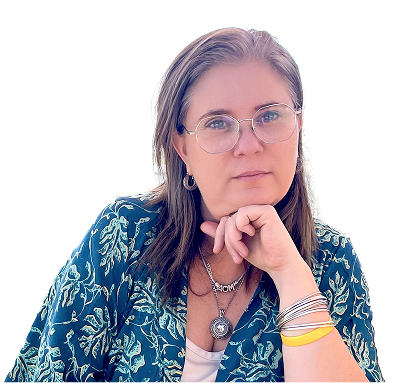
Expert in couples therapy for relationships without a supportive family safety net.
Developer of the Couples Constellation approach: a systemic-emotional therapy that brings the couple’s relational dynamics into contact with unspoken family patterns, alongside practical tools that enable movement, connection, and the creation of a deep partnership.



Let’s start with a brief introductory call, free of charge and commitment.
Sometimes, this small step changes everything.
The sessions take place
online via Zoom / face-to-face in Tivon, according to your choice