Home / The Parents Who Live Through Me: How the Holocaust Continues to Live in the Next Generations
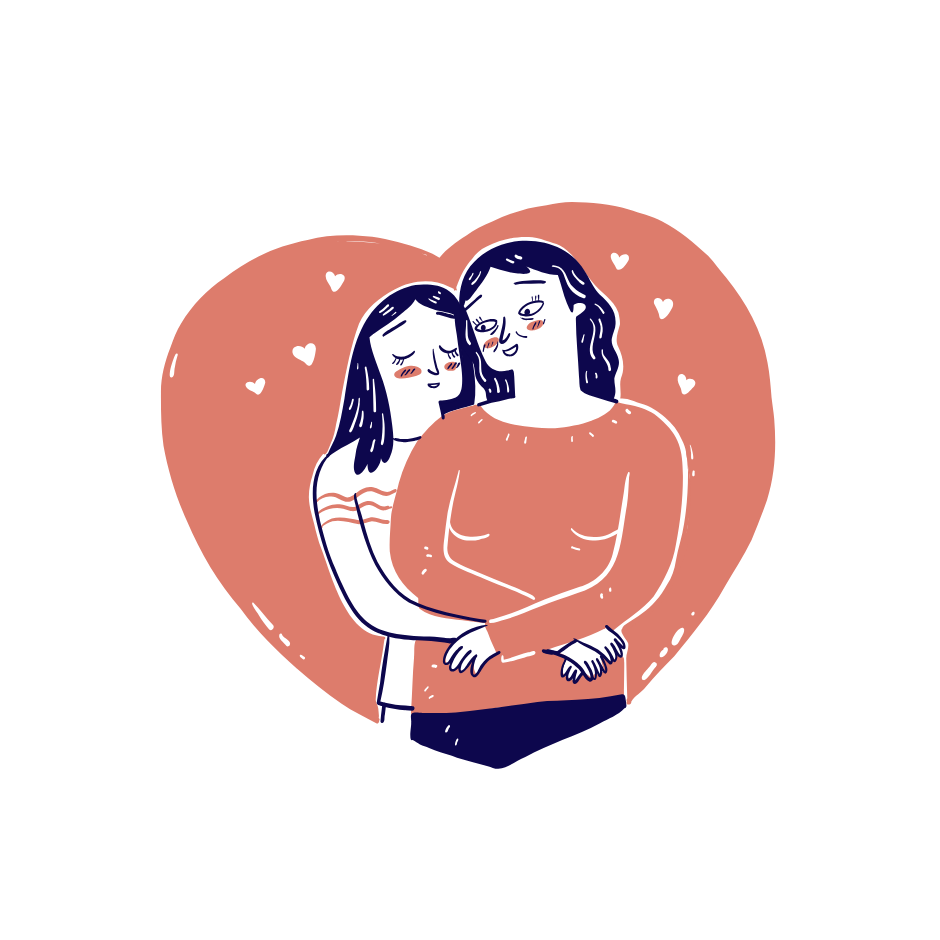
“The Holocaust suspended the meaning of our history. Its effects are revealed in the long term, scattered in space and time, in the form of radioactive fallout.” Yolanda Gampel
More than eighty years have passed since the Holocaust. Many survivors built new lives afterward, established homes and families, and had children and then grandchildren. Some told of what they went through, some barely spoke, and in many families the new life was built alongside a history that could not be left behind.
The children and grandchildren were born into this life. They were not there, and their story is not the story of the survivors. They grew up alongside parents and grandparents who carried memories of loss, persecution, hunger, separation, and survival. Even in families where almost nothing was said about what had been, the history was part of the home.
The intergenerational transmission of traumatic experiences is one of the questions that has occupied researchers and therapists for years, among them the Israeli psychoanalyst Prof. Yolanda Gampel. In her book “The Parents Who Live Through Me: Children of War” she uses a particularly powerful image for the lasting effects of historical trauma: radioactive fallout.
This image allows me to look at a question that also occupies me in my work with families: How can an event that happened before I was born be present in the emotional world in which I grew up?
For Gampel, the fallout describes the traces that extreme social violence can leave even in the lives of the generations born after it. In the context of the Holocaust she dealt with survivors, their children, and members of the third generation, and with the meeting between traumatic history and the lives of those who did not themselves experience the original event.
I love this image because it holds an important distinction. The child born after the war was not in the camp. The granddaughter did not lose her family in the Holocaust. Their story is not the story of those who were there, and yet they grow up inside a family that had to find a way to continue living after what happened. The distance between the generations does not erase the history. It changes the way it can be present.
In families of Holocaust survivors there were very different ways of talking about the past. There were homes where they told again and again, and there were homes where they barely spoke. The silence was sometimes a way to continue living, to protect the children, or to try to build for them a home as far as possible from the world the parents had lost.
Children learn their family through life itself. They know the things that arouse fear, the way people respond to separation, to scarcity, or to a child who is late coming home. They learn how much food needs to be saved, what the relationship to money is, how much you can trust other people, and what happens in the home when someone is afraid.
This is how a child can know very little about what their parents went through, and yet know very well the emotional world in which they grew up. The silence does not tell us exactly what passed from generation to generation. It invites us to take an interest in what the family learned to live around even without words.
Hypervigilance can save a person living in danger. The ability to make do with little can be vital in a time of scarcity. Suspicion, control, and clinging to family can take on an entirely different meaning in a world where people are persecuted, disappear, or are taken.
The next generation can grow up in a different reality, while some of the family’s coping strategies continue to be present. A girl can grow up in a safe home and learn that everything might disappear. A person can live in prosperity and feel that it is hard for them to throw away food or spend money. Someone can be surrounded by people who love her and discover that inside her there is a hypervigilance that does not calm easily.
Family history can add context here. A particular response does not prove that its origin is in the Holocaust, and not every difficulty of a member of the second and third generation is an expression of the trauma of previous generations. This distinction makes it possible to take seriously what happened in the family without turning the past into a total explanation for life in the present.
When we begin to know our family history, a fear that was hard to explain, a response that repeats itself, or a feeling that has accompanied us for years can receive a broader family context.
I can recognize what happened to my grandmother and examine with curiosity what from the family story resonates in my life today. I can see the fear my mother carried and notice the way fear appears in my life. Even when I identify a possible connection, I leave room for what I do not know.
Through family constellation I also take an interest in the relationships between the person and the family system from which they came. Images, feelings, and connections that arise in the work can open a possibility for observation. They do not tell us with certainty what happened in the past and do not prove that an event in a previous generation created a particular difficulty in a person’s life today.
I too know the feeling of loyalty to a family story that preceded me. For me, the possibility of looking at it with love and giving it a place, alongside the choice to live my life, was part of a movement of healing.
If I am free, someone will be left behind.
This sentence holds a deep tension. Inside a family where some of its people did not survive, or whose lives changed irreversibly as a result of war and persecution, the possibility of living a good life can also meet guilt, loyalty, and questions of belonging.
In one person guilt will appear when life becomes easier. In another it will be hard to enjoy, to succeed, or to take up space. Someone else may feel that the more they live differently from their parents or grandparents, the more they distance themselves from them.
What interests me here is a question of belonging and separation: Can I live differently from those who came before me and still feel that I belong to my family?
I can recognize the price that those who came before me paid, hold their story as part of my history, and choose how I want to live the life I was given. My belonging to the family does not require me to recreate its fate.
Each generation stands in a different place in relation to the historical event. The survivors carried the direct experience. Members of the second generation grew up alongside those who experienced it, inside families that tried to build a life after the catastrophe. Members of the third generation are at an additional distance from the event, and from there it is possible to take an interest both in what was told and in what remained outside the family story.
You can start from the known things: who was there, what happened to them, which stories were repeated at home, and which periods or people were barely mentioned. Alongside the facts you can also take an interest in the way the parents and grandparents continued to live after what they went through.
This observation gives family history its place. It makes it possible to recognize a past that was real and affected the people who raised us, and at the same time to distinguish between it and the life we are living today.
Choose a significant historical event that affected your family. This could be the Holocaust, a war, immigration, persecution, a great loss, or another event that changed the family’s life.
Take a sheet of paper and divide it into two parts. On one side write “What I know”, and on the other side “What I do not know”.
In the first part write only what is known to you: who was there, what happened, what was told at home, and which facts passed through the family. In the second part note the places that remained without a story: a person who was barely spoken of, a period you did not ask about, an experience that was mentioned in only one sentence, or a question that never received an answer.
Place the sheet in front of you and feel the soles of your feet on the floor. Look at both parts without trying to complete what is missing. There are things we know, and there are parts of family history that may remain unknown.
Now ask yourself:
What way of living did I learn inside this family, and does it still fit my life today?
I return to Gampel’s radioactive fallout. There is in this image a recognition of the power of the past to remain present long after the event itself. For families who lived through the Holocaust, wars, persecutions, and great losses, history is not just a chapter in a book. It was the life of the people from whom our lives came.
For me, recognizing the past means taking seriously the history into which I was born, acknowledging what is known to me, and leaving room also for what I will not know. I can see those who came before me and what happened to them, and alongside that turn myself toward the life that is before me.
The family past is part of my story, it does not have to be all of my story.

+
For people without a supportive family network.
We will reveal how the lack of a family network challenges and strengthens the couple's relationship, the high prices it exacts from you and your relationship.
Couples therapy will strengthen your sense of security and belonging, so you can be close without losing yourselves along the way.
Online / In-person clinic

+
Individual therapy is a safe space where you will rediscover your strengths, build inner confidence, and create a whole and meaningful life for yourself, just as you dream.
Online / In-person clinic
+
You are invited to enter a unique space: an interactive conversation with special GPTs I created – a first-of-its-kind tool that looks inward with you in the language and frequency of the systemic constellation.
If there is something unresolved in your relationship, family, or heart – the chat will gently meet you without trying to fix it, inviting a different, slow, precise, and quiet perspective. There is no need to understand, just to see and let it work.
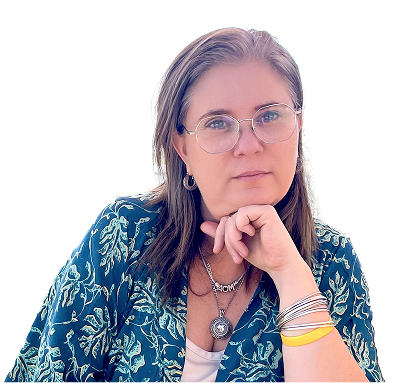
Expert in couples therapy for relationships without a supportive family safety net.
Developer of the Couples Constellation approach: a systemic-emotional therapy that brings the couple’s relational dynamics into contact with unspoken family patterns, alongside practical tools that enable movement, connection, and the creation of a deep partnership.


Let’s start with a brief introductory call, free of charge and commitment.
Sometimes, this small step changes everything.
The sessions take place
online via Zoom / face-to-face in Tivon, according to your choice