Home / Family estrangement: You can disconnect, you cannot erase belonging
Family disconnection and family estrangement are not the same thing. You can not speak with a parent for years and be at peace with the distance. You can also meet every holiday and feel that you don’t really have a place within the family.
Disconnection describes the state of the relationship: we speak or we don’t speak, we meet or we don’t meet. Family estrangement also touches on what happened in the relationship around the distance, the story each family member holds, and the place given to each person within the family system.
Sometimes I am the one who chose to distance myself. Sometimes the family distanced me. Sometimes both sides are convinced that the other is the one who disconnected. So alongside the question of who stopped speaking to whom, another question interests me: What happens to the sense of belonging when the family bond breaks?
Not everyone who is not in contact with their family is an estranged person. A person can stop contact following harm, reduce contact that does not respect their boundaries, or take distance from a relationship that exacts a heavy price from them. There are also disconnections that are built over years of conflict, disappointment, and attempts that did not succeed.
In other situations, the family is the one that distances itself. They stop inviting, a parent disconnects, siblings reduce contact, or additional family members join the disconnection. The very fact that there is no contact does not tell us how it was created, who asked for the distance, and what happened before it.
It also does not tell us on its own who is responsible for what. There can be a clear harm by one person to another, there can be an escalation that both sides participated in, and there can be a family story in which each person holds a different experience of what happened.
A family can distance a person even without explicitly telling them “You are no longer part of us.” The invitations stop coming, events take place without them, additional family members distance themselves, and over time they discover that they are outside the circle.
In certain families, one person receives over the years the role of the deviant, the rebel, the too-sensitive one, or “the problematic one.” Sometimes they challenge family norms or refuse to continue in the role given to them, and sometimes the picture is more complex. The very fact of being outside still does not tell us how the situation was created. On the black sheep in the family and on the price of being marked as deviant, I wrote here.
When the family is the one that distances me, there is a limit to what I can do. I can reach out, explain, offer conversation, or ask to repair. I cannot force another person to be in contact with me. I did not always choose the disconnection. I can choose how I live within it.
I can experience myself as someone who set a boundary after years in which they did not see her, and my mother can experience that same boundary as abandonment. I can remember a sentence that wounded me for years, and my brother can be convinced that I am taking it out of context. It is possible that we will never reach a shared version of what happened.
Two different versions are not necessarily two equal versions factually or morally. There are harms that happened, and there are situations in which one person’s responsibility is greater than the other’s. Differentiation does not require me to create symmetry where it does not exist.
It does invite me to examine myself. I can listen to your story without erasing mine, check if there is something in your words that I need to see about myself without accepting your entire interpretation, and acknowledge your pain without taking responsibility for all of it.
I can also bear the possibility that I will not succeed in changing the way you see me.
Sometimes taking responsibility also includes acknowledgment of guilt. If I harmed, humiliated, ostracized, or behaved in a way that hurt another person, my responsibility is to be able to see the harm and its consequences.
In other situations, the responsibility is divided differently. I can examine what my part was in the relationship, what I regret and what I would do differently today, without taking on myself actions and choices that are not mine.
Worthiness does not exempt me from self-examination. I can be worthy even when I discover that I was wrong. In the same measure, I can acknowledge the harm done to me without making myself responsible for it.
The goal is not to divide the responsibility equally. The goal is to see as directly as possible what is mine and what is the other’s.
Through the lens of family constellation, contact and belonging are not the same thing. Contact can draw closer, distance itself, shrink, and even stop. Belonging to the family of origin exists on another plane.
I am my parents’ daughter even if we do not speak. I am a sister even if my siblings do not invite me. I am part of the family into which I was born even if I am not part of its daily life.
The acknowledgment of belonging does not require me to renew contact, forgive, or give up a boundary. It allows me to acknowledge the fact: This is the family from which I came, and these are the relationships as they are today.
When I am the one who chose to distance myself, I do not need to erase the family in order to justify the distance. When I am the one who was distanced, I do not need the family’s agreement in order to acknowledge my place within it.
You can disconnect. You cannot change the fact that these are the people from whom I came.
I can acknowledge my mother as my mother and choose not to meet her. I can know that my brother is my brother and decide that the contact with him is not right for me. I can give the family from which I came a place in my story without letting it manage the life I am building today.
This is in my view the point of connection between family constellation and differentiation. The first invites me to acknowledge belonging and the place from which I came. The second helps me stay connected to myself within this relationship, choose boundaries, and take responsibility for my choices even when family members do not agree with me.
For those who live without family backing, this distinction also has practical meaning. A family can be a network of help, holidays, childcare, and the knowledge that there is someone to call when it is hard. When this network does not exist, we are required to build belonging and support in other places as well.
One of these places is the couple relationship. Precisely because it can become the central family backing, it is important that it not be required to carry alone everything that is missing. On the difference between the partner who is the family I built and the expectation that they will also be the family I did not have, I wrote here.
This exercise is not intended to decide whether it is right to renew contact. It also does not seek to create forgiveness or reconciliation. The goal is to look at the picture as it is and check what happens in the body when I acknowledge the place from which I came.
Place in the room a sheet representing the family from which I came, and another sheet representing me. Position them without thinking too much about the right distance. Stand in your place and look toward the family.
Pay attention to the body. To the breath, to the legs, to the desire to draw closer or distance yourself. There is no need to do anything with what arises.
If the sheet represents mainly your parents, you can look at it and say quietly:
“You are my parents. I am your daughter.”
Stay with this fact alone.
Then, if the sentence fits:
“From you I received life.”
There is no statement in this sentence about the quality of parenting you received. It does not cancel harm and does not demand gratitude for what was not given. It acknowledges the basic fact of life.
Now pay attention to the distance between you and say:
“The relationship between us is as it is.”
If there is currently a disconnection, there is no need to change it within the exercise. If you are the ones who chose the distance, let the distance be. If they distanced you, let this fact be as well.
Stay in your place and say:
“You are there. I am here.”
And after a moment:
“You belong. And I also belong.”
Stop here.
Do not add a promise to forgive. Do not say that you will release. Do not try to reach a certain feeling. Only check if you can stand in your place, see the family from which you came, and stay with what is.
It may be that the contact will renew, remain limited, or not renew at all. It may be that even in years we will hold completely different stories about what happened between us.
I can want them to see me and acknowledge that I have no control over the way they will see me. I can examine myself honestly, take responsibility for what belongs to me, and leave to others the responsibility for their choices.
I can set a boundary without erasing the family from which I came, and acknowledge belonging without giving up myself in order to be part of it.
The relationship between us can change and even stop. My place in the family from which I came does not depend on our succeeding in being in contact.

+
For people without a supportive family network.
We will reveal how the lack of a family network challenges and strengthens the couple's relationship, the high prices it exacts from you and your relationship.
Couples therapy will strengthen your sense of security and belonging, so you can be close without losing yourselves along the way.
Online / In-person clinic

+
Individual therapy is a safe space where you will rediscover your strengths, build inner confidence, and create a whole and meaningful life for yourself, just as you dream.
Online / In-person clinic
+
You are invited to enter a unique space: an interactive conversation with special GPTs I created – a first-of-its-kind tool that looks inward with you in the language and frequency of the systemic constellation.
If there is something unresolved in your relationship, family, or heart – the chat will gently meet you without trying to fix it, inviting a different, slow, precise, and quiet perspective. There is no need to understand, just to see and let it work.
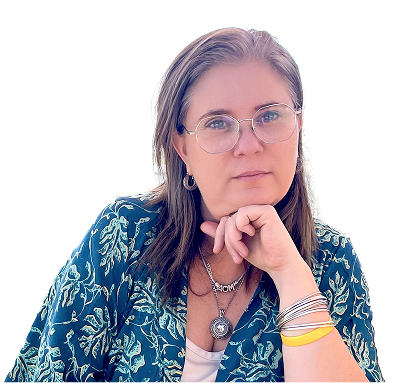
Expert in couples therapy for relationships without a supportive family safety net.
Developer of the Couples Constellation approach: a systemic-emotional therapy that brings the couple’s relational dynamics into contact with unspoken family patterns, alongside practical tools that enable movement, connection, and the creation of a deep partnership.



Let’s start with a brief introductory call, free of charge and commitment.
Sometimes, this small step changes everything.
The sessions take place
online via Zoom / face-to-face in Tivon, according to your choice