I read this poem as a couples therapist and think about people who learned already in childhood that a connection might require them to diminish parts of themselves. This is not necessarily a conscious decision. A child learns the boundaries of connection from what happens when they bring themselves into it: when they are angry, needy, resistant, different, disappointing, or asking for something the adults around them do not have the capacity to give.
From these experiences a deep learning about connection can develop: which parts of me are received here, and which parts I should put away to continue feeling I belong.
The Girl Who Learned Which Part of Her to Leave Outside
Children are dependent on connection with the adults raising them. Their options are limited. They cannot choose a different family or conduct an adult conversation about boundaries, needs, and reciprocity. So they learn to adapt themselves to the reality in which they are growing.
A girl can learn that her anger is received with difficulty at home, and gradually stop showing it. A boy can experience his needs as a burden and become independent long before his time. Another girl may discover that the way to keep the peace is to be the one who understands everyone. Thus the voice, the anger, the spontaneity, the need, the boundary, or the desire to be cared for and not only to care can receive less and less room.
These adaptations may be wise ways to preserve connection within the reality in which the child is dependent on the people around them. The child grows and the reality changes, while the way they learned to preserve connection through can remain. About the way we learn already in our first family what love is supposed to look like and what we are required to do to remain within it I wrote here.
When Autotomy Becomes an Image for the Relationship
Inside a romantic relationship we are again facing a person who is very important to us. Their opinion matters, their love matters, and closeness to them matters. Precisely because of this, the familiar movement of self-adjustment to preserve the connection can return.
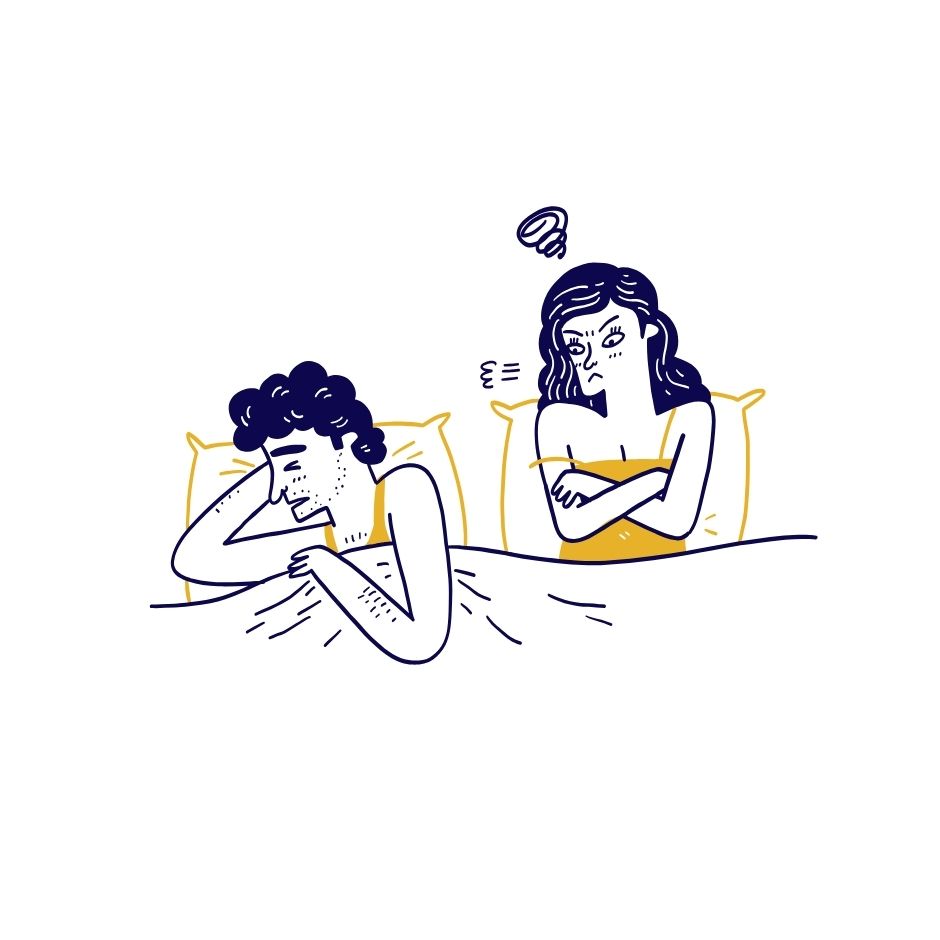
I know I want to say something and immediately check how he will receive it. I am angry and start explaining to myself why I actually have no reason to be angry. I want to set a boundary and already see the disappointment on her face. I need something and phrase the request so carefully that it is almost impossible to hear what I asked for.
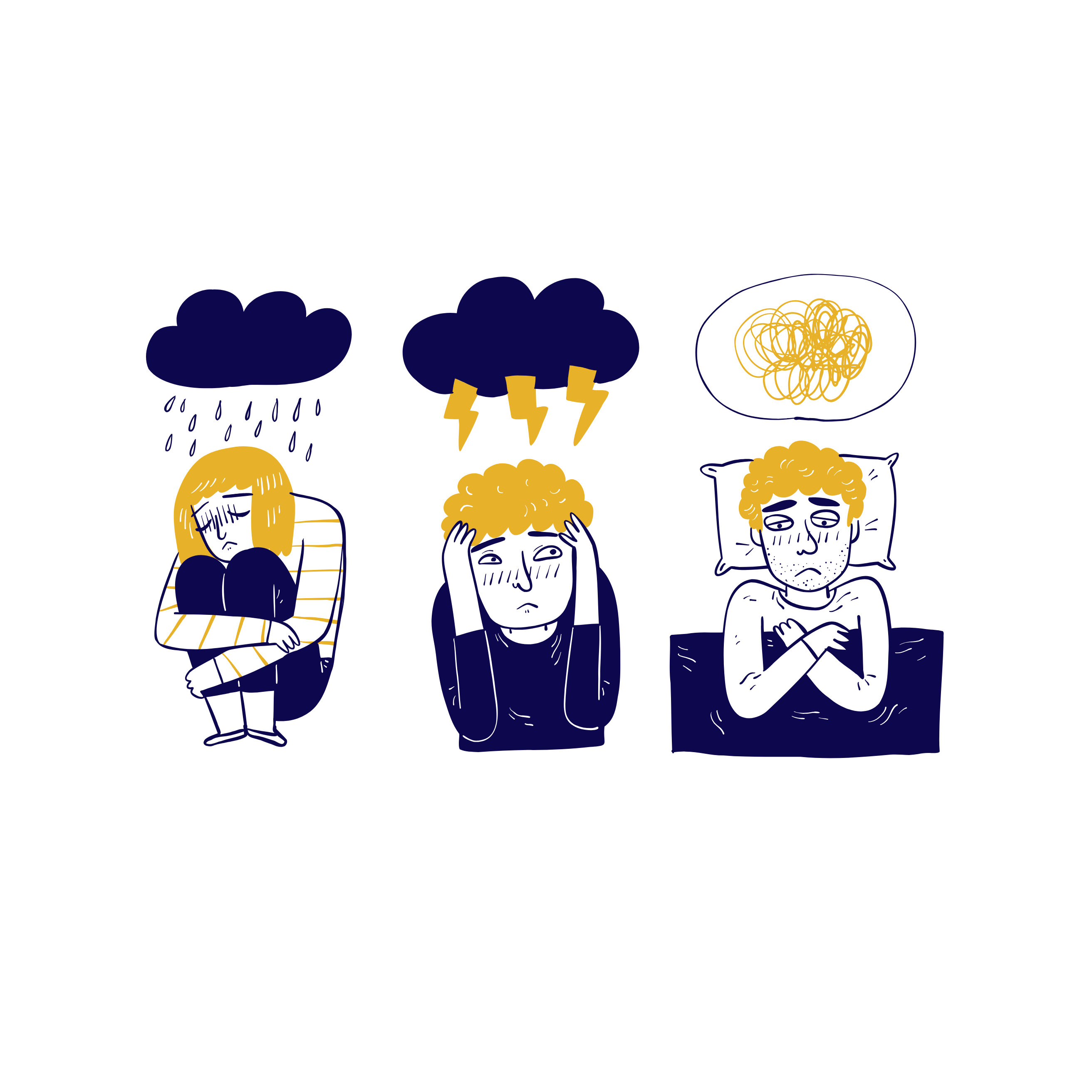
I can also be hurt, and instead of saying I was hurt become efficient, matter-of-fact, and distant. From the outside there can be a very quiet relationship here. From the inside I am shrinking.
Through Szymborska’s image it is possible to think about these moments as autotomy within the connection: the attempt to preserve what is dear to me by giving up parts of myself. This is not a clinical diagnosis. It is a way to look at a movement that occurs in certain people within significant relationships.
Not Every Compromise in a Relationship Is Giving Up Myself
A relationship requires compromises. Two people cannot always get exactly what they want. I can choose to go with you to a restaurant you love, change plans, take into account a difficult period you are going through, or decide that this time your need will take priority.
The difference is also in what happens to me inside the compromise. Am I choosing it? Does my desire continue to be worthy of space even when I chose not to fulfill it? Can I tell you what I want and bear the possibility that you will not agree? Is there room in the connection also for parts of me that are not comfortable for you?
When I give up from choice, I am still present inside the decision. When I erase the desire even before I dared to bring it to the connection, I am already paying a different price.
The Relationship Can Manage Perfectly Around My Disappearance
This is one of the painful points in my view. A relationship system can organize itself around the fact that one partner gives up again and again parts of themselves. One decides and the other flows, one brings a need and the other adapts, one says what bothers him and the other already knows how to prevent the next confrontation.
Over time both partners know their roles well. What began as a way to preserve the connection can become part of its structure. And then the person who adapted for years begins to bring more of themselves. Suddenly he has an opinion, she says no, he wants something else, and she is no longer willing to carry alone something she carried for years.
When this diminishment has already become part of the relationship, another struggle can also appear: I know I feel bad inside the connection, and yet I don’t know if I want or am able to leave it. I wrote about this complex place in I Know I Feel Bad in the Relationship, So Why Don’t I Still Know Whether to Leave?.
This change affects the entire relationship system. The partner may experience it as undermining the familiar arrangement and ask “What happened to you?” or “You never had a problem with this before.” And it may be that I truly never said I had a problem with it. That still doesn’t mean I didn’t.
The Price of Being Easy to Love
There are people who over the years have become very easy to love. They read the room well, know when to speak and when to be silent, sense when someone else is contracting and know how to soothe, adjust, understand, and give up. These can be highly developed interpersonal abilities, and they can also be part of a way I learned to preserve connection through.
The question that interests me is what happens to me while I am using them. If in order to feel secure in love I need to always be comfortable, calm, considerate, strong, or not too needy, I may continue within the relationship an old deal:
“I will leave part of me outside, and you will stay.”
For someone living without supportive family backing, the possibility of undermining the romantic relationship can take on additional weight. When the relationship is also a central source of home and belonging, the need to preserve it may intensify the tendency to adjust myself. About the burden created when a partner becomes the central source of belonging and security I wrote here.
Bringing Myself Back to the Connection
Here differentiation becomes significant for me. It allows me to take into account the person I love and continue to be in connection also with myself. It does not say that every desire of mine must be fulfilled, and it also does not promise that my partner will love every part I bring.
Differentiation allows me to know what I feel, what I want, what matters to me, and what my boundary is, and to bring all of these to the connection even when your response is different from the one I hoped to receive. This is significant work for someone who learned that connection is preserved through adjustment.
When I begin to give more room to parts I previously diminished, I may also meet the thing I tried to protect myself from: the possibility that you will be angry, that you will be disappointed, that you will not understand me, or that you will want something else. I can see you angry and stay with myself, hear that you are disappointed and check myself without rushing to erase my desire, and be close to you without handing you the responsibility to decide who I need to be to be worthy of love. I wrote here about the possibility of being in deep relationship with another person and continuing to hold myself within it as well.
The Question Is Not Only Whether I Am Loved
In couples therapy it is possible to focus on the question of whether the partners love each other. I am also interested in another question: Who can I be inside this love? Is there room for my voice, my boundary, my anger, my need, and my difference?
I want to check whether I can bring more of myself to the connection even when this presence requires both of us to meet something new. This question is especially significant for someone who learned to preserve connection through self-diminishment. About the connection between romantic closeness and the old places that awaken precisely facing the person we love I wrote here.
To Grow from the Remnant That Survived
I return at the end to Szymborska and to the possibility “to grow as much as possible from the remnant that survived.” For me as a couples therapist, this is perhaps the most important movement this poem allows us to look at: what once helped me preserve myself and the connection does not have to determine how much of me will be present in every connection I build going forward.
I can honor the adaptations I learned to make. They tell something about the way I preserved myself within the reality that was. In adulthood I have more options, more choice, and more capacity to bear the fact that a person I love may be different from me, be angry at me, or be disappointed in me. And then the question changes. Alongside the desire for the connection to remain, I can also ask: How much of myself do I want to bring with me to the connection I am building today?