Home / Why is it that the person who loves you the most triggers your oldest pain?
He can love you deeply, and yet a single sentence from him can hurt more than a similar sentence from someone else. She can be the person you feel most at home with, and yet her glance, her silence, or a small withdrawal can touch a place almost no one else can reach.
The more meaningful the relationship, the more there is to lose. The person I love holds something for me that a stranger does not: the possibility of choosing me, seeing me, staying with me, wanting my closeness. That is why fears can arise within love—fears that formed long before we met the person standing before us today.
We seek safety, closeness, and belonging in an intimate relationship. This closeness can also touch places where we learned in the past that love might involve disappointment, uncertainty, adaptation, or the fear of losing the connection.
Our earliest relationships taught us long before we knew how to name what we feel. Through relationships with those who cared for us, we learned how closeness feels, what happens when we need someone, how others respond when we cry, get angry, or ask for something, and what happens when we are different from what is expected of us.
A girl can learn that to preserve closeness, it is better to be good, considerate, and not burdensome. A boy can learn that it is safer not to need, because need brings disappointment. In another home, love can be very present and at the same time also criticism, boundary intrusion, long silences, or instability.
Within the family, we learn both what love is and who we need to be in order to feel we have a place in it. This learning becomes part of how we approach close relationships, even when our lives today are very different from the home where we grew up.
I wrote here about how we learn at home what love is and what beliefs about relationships we continue to bring into our partnerships.
It is easier to remain steady with someone we do not have much to lose with. When the relationship matters to me, what happens within it has a different meaning. If I learned that people I love might disappear, your distance can hurt me especially. If I grew up feeling I had to prove my worth, your disappointment in me can sound inside me like a verdict. If I learned that needs burden others, I may find it hard to ask you for something and remain steady even when your answer differs from what I hoped to receive.
The person with whom I want to feel safest can touch my deepest fears. For some of us, this fear manifests precisely in the urge to withdraw when the relationship becomes meaningful. I wrote here about fear of closeness and the question of why we can want love and at the same time recoil from it.
Partners also hurt each other, disappoint, withdraw, miss each other, and sometimes cross boundaries. So I want not to turn every pain that arises in the relationship into a story about childhood. Our history joins what is happening in the relationship and can influence the meaning we give it.
From what we learned about relationships, rules can form inside us that we never voiced aloud.
These can become deep expectations we bring into the relationship, from what we learned about the conditions under which we can feel loved and safe, and then the partner receives a role in a contract he never signed: he is supposed to prove that this time I will not be abandoned, to know in advance what I am missing, not to disappoint me where I have already been disappointed, to give me safety precisely where I struggle to feel secure.
This weight can be especially great when we do not have a supportive family backing and the relationship becomes a central source of home and belonging. I wrote here about the place where the partner begins to carry also what was missing in the family we came from.
And when he does not succeed in filling this role, we may find ourselves reacting not only to what he did, but also to the meaning his action received inside us.
My partner wants an evening to herself. For her, it is a request for space.
Inside me, she can meet an old rule: “When someone wants to distance from me, I no longer matter to them.”
I tell my partner about something that hurts me and he does not respond in the way I hoped.
Inside me, another contract can appear: “Someone who loves me should know how to soothe me.”
The shift from the event to the meaning can be very fast:
The pain is real, the meaning we give it is worth examining. I can ask myself:
When a relationship touches an old wound, the person standing before me now can blend for a moment with someone from whom I learned something about love in the past.
The experience can be very similar, except that the person before me today is a different person. He has his own intentions, his own boundaries, his own vulnerabilities, and his own way of being in relationship. To meet him as he is, I want to be able to see both the similarity to what I already knew and the difference.
If my partner hurts me today, it is important that I can see the hurt. If he loves me in a way that differs from how I learned to expect love, it is important that I can see that too. The distinction allows me to meet the relationship I am actually in.
A partnership includes dependence. We need each other. We want love, touch, loyalty, consideration, listening, and presence. In my view, differentiation does not require us to be people who need no one. It allows me to recognize my need and bring it into the relationship as an adult. I wrote here about the possibility of being in deep relationship with another person and continuing to hold myself within it as well.
I can say “I need closeness right now” and hear that you also have a need for space. I can be hurt by you and examine what happened between us before I turn the hurt into proof that you do not love me. I can ask you to see me, and at the same time remain in contact with myself. My worthiness does not depend on your approval, and your importance to me does not disappear because of that.
This is how two people can be very meaningful to each other, without one taking responsibility for fixing the other’s entire life.
Choose a quiet place and lay two representations on the floor. You can use sheets of paper, cushions, or two simple objects.
On the first, write:
And on the second:
There is no need to decide in advance who is in the second representation or what event it represents.
Leave the wording open.
Stand facing the representation of your partner.
Look at it and notice what happens in the body.
Does a desire to move closer or withdraw arise? What happens to the breath? Does a sentence, feeling, or image come up?
Move to the second representation.
Stand facing “What I know from closeness in the past.”
Notice what appears, without searching for an explanation and without trying to solve anything.
Stay there for a few moments.
Now step back a bit so you can see both representations.
Notice the distance between them, your gaze, and the feeling in the body.
Return to stand facing the representation of your partner.
If the sentence feels right for you, say quietly:
You can add:
Stay there another moment and notice if anything changes in the distance, the breath, the gaze, or the feeling in the body.
The exercise invites you to experience the difference between the person you are with today and what you have already learned about closeness.
There is no need to arrive at a particular explanation or to find a person from the past standing behind the experience.
Differentiation within a relationship allows me to hold two important truths: you are meaningful to me, and I remain responsible for myself.
I can want you to stay and learn to bear also moments when you need distance. I can want you to understand me and know that even someone who loves me will not always understand. I can say I was hurt and remain curious about what truly happened between us.
I can see my wound without making you the one who created it, and I can see you as you are today, together with my boundaries, needs, and pain. This way, closeness can hold more than the two stories we brought with us. It can become a meeting between two people who continue to learn each other and themselves.
The person I love can touch places that others barely reach, because I have given him a place that others do not receive. There is meaning to his gaze, his words, his closeness, and also his distance.
Pain that arises within love can tell me something about what is happening between us today, and also open a question about what I already know from closeness. I can see what this love stirs in me, without making you the one who hurt me and without giving up what I need from you today. The more I succeed in seeing you as you are, the more I can also meet myself as I am today.

+
For people without a supportive family network.
We will reveal how the lack of a family network challenges and strengthens the couple's relationship, the high prices it exacts from you and your relationship.
Couples therapy will strengthen your sense of security and belonging, so you can be close without losing yourselves along the way.
Online / In-person clinic

+
Individual therapy is a safe space where you will rediscover your strengths, build inner confidence, and create a whole and meaningful life for yourself, just as you dream.
Online / In-person clinic
+
You are invited to enter a unique space: an interactive conversation with special GPTs I created – a first-of-its-kind tool that looks inward with you in the language and frequency of the systemic constellation.
If there is something unresolved in your relationship, family, or heart – the chat will gently meet you without trying to fix it, inviting a different, slow, precise, and quiet perspective. There is no need to understand, just to see and let it work.
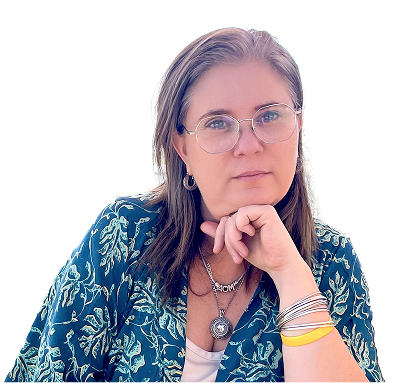
Expert in couples therapy for relationships without a supportive family safety net.
Developer of the Couples Constellation approach: a systemic-emotional therapy that brings the couple’s relational dynamics into contact with unspoken family patterns, alongside practical tools that enable movement, connection, and the creation of a deep partnership.


Let’s start with a brief introductory call, free of charge and commitment.
Sometimes, this small step changes everything.
The sessions take place
online via Zoom / face-to-face in Tivon, according to your choice