Home / Getting into the same fight over and over? The drama triangle that manages your relationship
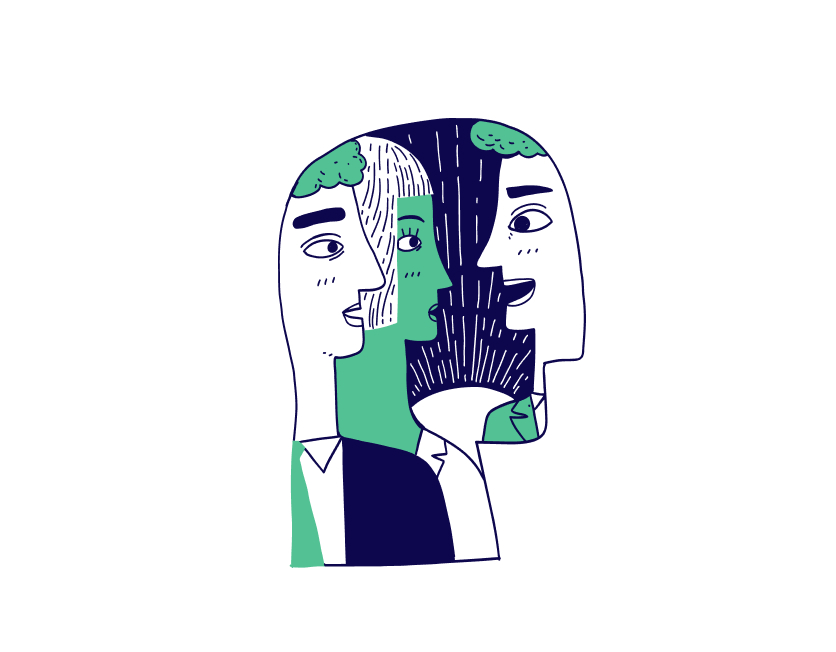
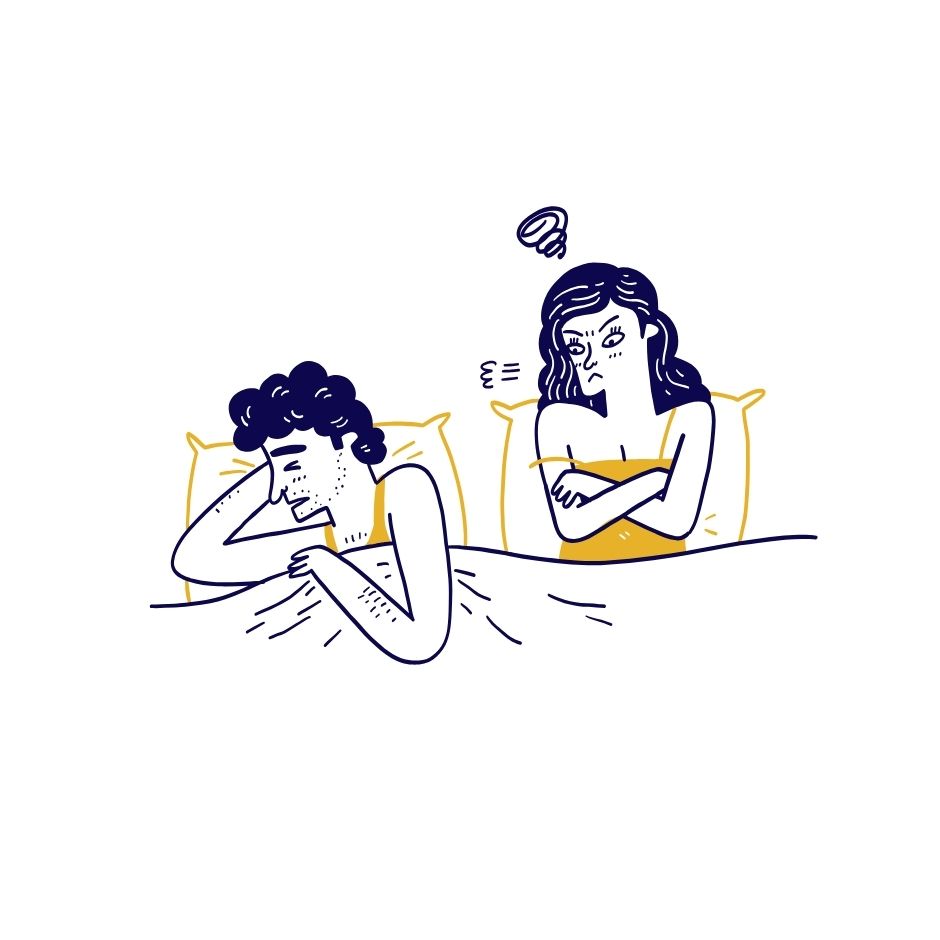
Yesterday you fought about the kids. A week ago it was money. Last month the fight started because one of you was on the phone while the other was trying to talk.
The topic changes, and yet at some point a familiar feeling creeps in: we’ve been here before.
You might even be able to predict what will happen. Who will push harder, who will shut down, who will try to explain, who will say “Forget it, there’s no point talking to you,” and who will rush to solve the problem so the tension will finally end.
This is one of the interesting things about recurring fights in relationships. We think we keep coming back to the same issue, when in fact we may be returning to the same positions and the same sequence of reactions.
One of the maps that can help us understand this movement is the drama triangle in relationships, based on the model developed by Stephen Karpman.
Psychiatrist Stephen Karpman introduced the drama triangle in 1968 as part of transactional analysis theory. He described three positions people can move between within charged interactions: persecutor, victim, and rescuer.
Karpman emphasized the shifts between roles. A person can start an interaction in one position and find themselves shortly after in another. That’s why the triangle interests me less as a way to categorize people and more as a map that lets us observe the movement happening between them.
You can read Stephen B. Karpman’s original article, Fairy Tales and Script Drama Analysis, here.
The labels “persecutor,” “victim,” and “rescuer” can sound harsh. These are positions within a model, not definitions of our personality.
It’s especially important to distinguish between the “victim” position in the triangle and a person who has actually been harmed. When violence, threat, coercion, control, or abuse is present, responsibility for the harm belongs to the person causing it. The drama triangle is not a tool for distributing equal responsibility in situations where responsibility is not equal.
In other couple conflicts, the model can help us identify how one reaction meets another and how a familiar sequence forms that’s hard to stop.
A persecutor position can sound like this:
In this position my attention is directed mainly at you: why you’re behaving this way, what’s wrong with what you did, and what you need to change so I can feel differently.
Behind a reaction like this can be anger, hurt, fear, helplessness, disappointment, or an unmet need. For each person the story can be different. I prefer to be curious and check what’s happening there, rather than assume in advance that I know.
The question that interests me is what happens to me the moment I move from expressing my position, need, or boundary to trying to manage the person in front of me.
There’s a difference between saying “It’s hard for me when I’m left alone with all this responsibility. I want us to think together about how we divide it” and “You can’t be trusted with anything.”
Both sentences can hold great distress. In the first I’m telling you something about me and what I need. In the second I’m telling you who you are.
The victim position can sound like this:
In this position there can be a strong experience of helplessness. It seems my ability to influence what’s happening between us is mainly in the hands of the person in front of me.
The pain I feel can be very real. Alongside recognizing the pain, I can check what is still in my hands. I can say what hurt me, ask for something directly, set a boundary, and choose how I want to act even when the person in front of me continues to think or behave in a way that doesn’t suit me.
When I recognize these possibilities again, I return to myself some of the power and choice I have within the relationship.
The rescuer can initially look like the person trying to preserve the relationship. They calm, explain, fix, give in, take on another task, try to prevent the next fight.
Care, support, and giving are an important part of a relationship. The distinction lies in the place where help becomes responsibility I take for the emotions, choices, or roles of the person in front of me. I can support you when things are hard for you, listen, help, and be by your side, and leave with you what belongs to you. When this boundary blurs, the rescuer may work very hard within the relationship and gradually accumulate anger and frustration: “I did so much for you. I gave in, held on, solved things. How can you still not be satisfied?” — and at that moment the rescuer may shift to a persecutor position.
This is one of the important points in Karpman’s model: the positions can switch quickly.
Imagine one partner comes home and sees the kitchen was left as it was in the morning.
He started in a persecutor position and moved to the rescuer position. Now he’s tidying the kitchen in anger.
Now he experiences himself as powerless within the dynamic.
Within a few minutes both moved between several corners of the triangle. That’s why the question “Which of us is the persecutor and who’s the victim?” interests me less. I want to understand the sequence: what am I doing, how do you react, what does your reaction stir in me, and where do I move from there?
From a systemic perspective, a couple fight is a sequence of actions and reactions that influence each other.
I push harder so you’ll understand and you pull away so you won’t feel attacked.
The more you pull away the more I experience loneliness and increase the pressure.
The more I increase it the more you shut down.
At some point a cycle forms that feeds itself.
The systemic view leaves personal responsibility with each partner while at the same time allowing us to see the sequence created between them. When I identify my part in the cycle, I can start to check where my possibility to act differently lies.
The topic we’re fighting about is still important. You can fight about dishes in the sink and feel that no one sees how much I carry. You can fight about money and experience that I have no influence on our life. You can fight about time on the phone and meet pain around the place I have in your life.
When the load grows, we may stop talking about the thing the fight started from and start reacting to each other’s reactions. That’s where the pattern becomes stronger than the topic.
The family we grew up in is the first system where we encountered closeness, anger, boundaries, dependence, separateness, silence, reconciliation, and conflict.
One person grew up in a home where it was important to talk immediately about every difficulty. Another learned that the safest way to get through a storm is to pull away. Someone learned to quickly identify what everyone needs and try to restore calm. Someone else discovered that to be heard he needs to raise his voice.
From a systemic and constellative perspective, we can be interested in what is familiar to us from the system we came from and check which positions, ways of relating, and divisions of responsibility became familiar to us.
We can ask:
Familiarity with the story I came from can expand my choice. I can recognize something very familiar and still choose how I want to act within my relationship today.
Differentiation adds to the drama triangle model a question that interests me very much in working with couples: Can I stay in contact with you, hold my position, and bear the fact that you may think, feel, or choose differently from me?
When I’m in a persecutor position, I can return to myself and ask what I want, what matters to me, and how I want to bring that into the relationship.
When I experience myself as powerless, I can recognize my pain and check what is in my responsibility and choice.
When I move to rescue, I can stay caring and close and leave with you the responsibility that belongs to you.
Worthiness adds another layer here. I can make mistakes, get angry, get confused, and discover I’ve entered again a pattern I already know, and still hold my value. From this place I can take responsibility, see where I caused harm, and choose how I want to act now.
My change doesn’t depend on my partner leaving the triangle first. I can start to change my position even when the person in front of me is still in theirs.
Take three sheets of paper and write on them: Persecutor, Victim, Rescuer.
Place the three sheets on the floor at some distance from each other. There’s no need to measure or create an exact triangle. Place them where it feels right to you.
Choose together one topic of a fight that recurs between you.
Each of you will stand near the representation that feels like the position you tend to reach within this fight. Each chooses their own place, without deciding for the other where they stand.
Stay there for a moment and notice.
If during the fight you move to another position, move now to the other representation as well. Check the movement as it’s familiar to you: where do I start, where do I move to, and what happens in the space between us when I change places.
Stay with what you see. The goal is to meet your couple map from the outside: which positions you take and how you move between them within the familiar fight.
At the end, both of you step out of the representations and look at the three sheets from outside.
Notice what you can see now, when you’re no longer standing within one of the positions.
When the same fight comes back again and again, it’s easy to see it as proof that something in the relationship is stuck. It can also be treated as information.
The fight shows us where we become sensitive, which position we tend to move to when tension rises, how our reaction meets the person in front of us, and how their reaction affects our next step.
The moment we manage to see the sequence, the space of choice also expands. Next time we may still argue about the kids, about money, or about the dishes left in the sink. The topic doesn’t have to disappear.
Change begins when I can identify my place within the dance, stay in contact with myself and with the person in front of me, and choose how I want to act from there.

+
For people without a supportive family network.
We will reveal how the lack of a family network challenges and strengthens the couple's relationship, the high prices it exacts from you and your relationship.
Couples therapy will strengthen your sense of security and belonging, so you can be close without losing yourselves along the way.
Online / In-person clinic

+
Individual therapy is a safe space where you will rediscover your strengths, build inner confidence, and create a whole and meaningful life for yourself, just as you dream.
Online / In-person clinic
+
You are invited to enter a unique space: an interactive conversation with special GPTs I created – a first-of-its-kind tool that looks inward with you in the language and frequency of the systemic constellation.
If there is something unresolved in your relationship, family, or heart – the chat will gently meet you without trying to fix it, inviting a different, slow, precise, and quiet perspective. There is no need to understand, just to see and let it work.
Expert in couples therapy for relationships without a supportive family safety net.
Developer of the Couples Constellation approach: a systemic-emotional therapy that brings the couple’s relational dynamics into contact with unspoken family patterns, alongside practical tools that enable movement, connection, and the creation of a deep partnership.



Let’s start with a brief introductory call, free of charge and commitment.
Sometimes, this small step changes everything.
The sessions take place
online via Zoom / face-to-face in Tivon, according to your choice