Home / Why couples without family support systems argue differently
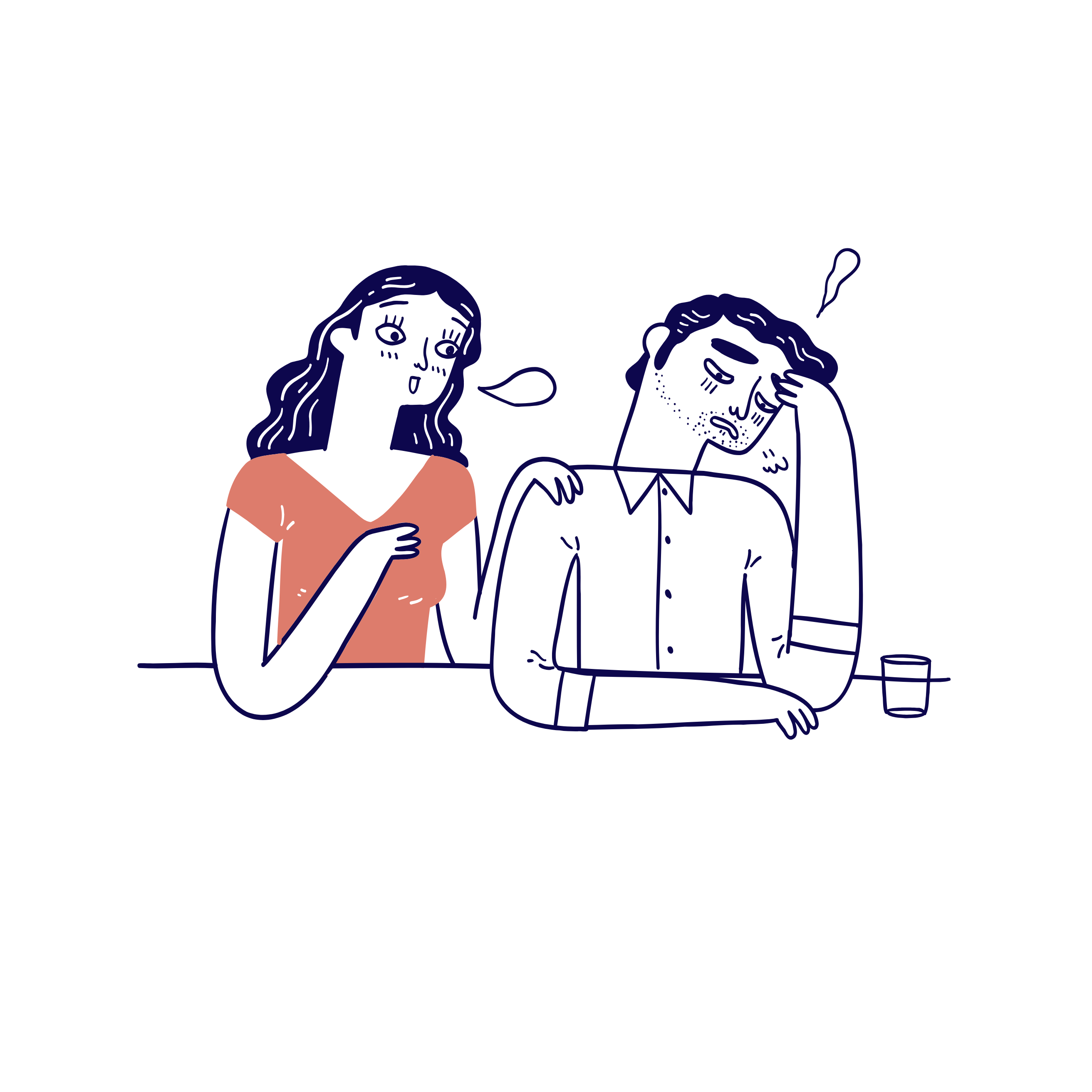
Couples argue. About money, about the kids, about dividing household tasks, about time, about sex, about who said what and in what tone. And yet, the same argument can feel completely different when there’s a family you can lean on behind the relationship and when there isn’t.
I meet couples without family support systems who don’t necessarily argue more than other couples. They argue out of a different kind of burden.
When there are fewer people to call, fewer places to go when things are hard, less help you can ask for, and less sense that there’s another system behind us that we belong to, a larger part of life drains into the relationship, and then even a small argument can meet a big place.
When I talk about couples without family support systems, I’m not only referring to couples who are disconnected from their families of origin. There are couples whose parents have passed away. There are those who live far from family. There are families you’re in contact with, and yet you can’t lean on them in moments of overload. There are family relationships that involve criticism, interference, competition, hurt, or instability. And there are people who chose to distance themselves from their family of origin in order to protect themselves and the family they built. What all these situations have in common is that the couple lives with less backup.
A family support system isn’t just someone who will take the kids for two hours. It’s also knowing there’s someone else to call, another home you can go to, another relationship in which you are known and belong.
When some of these resources aren’t available, partners are required to hold more on their own. That doesn’t mean something is wrong with their relationship. It’s the systemic reality they live in.
Imagine two couples going through a hard week. In both homes the kids are sick, both partners are working, the house is upside down, no one is sleeping enough, and on Thursday an argument breaks out over who was supposed to buy groceries.
For one couple, grandma picked up the kids twice this week. One of the partners talked to their sibling on the way to work. On Saturday they’re going to lunch at the parents’ house.
For the second couple, these options don’t exist. There’s no one to take the kids for a few hours, no meal someone else prepared, no other home you can go to, and no close person who knows the story and can hold part of the burden for a moment.
Both couples argued about the groceries, and they didn’t arrive at the argument from the same place. This is an important distinction, because it’s very easy to look at the second couple and think they need to learn to communicate better, be more patient, or stop arguing over nonsense. I want to first understand how much weight this couple is carrying.
From a systemic perspective, a relationship doesn’t exist in empty space. It’s part of a network of connections—families, friends, community, work, and other sources of support and belonging. The more limited this network, the more partners may find themselves leaning on each other both practically and emotionally.
Fatigue stays inside the home. Worry stays inside the home. Questions about the kids stay inside the home. Financial burden, decisions, holidays, illnesses, vacations, crises, and also the need for someone to see how hard it is for me—all come again and again to the same relationship.
The Gottman approach also pays attention to the impact of stresses originating outside the relationship on what happens inside it. Work, money, kids, caring for family members, and other life pressures can enter the couple space and affect the way we meet each other.
The Gottman Institute offers couples a Stress-Reducing Conversation, Stress-Reducing Conversation, dedicated specifically to stresses originating outside the relationship. One partner shares what they’re going through, and the other listens to understand, shows interest, and expresses empathy, without rushing to give advice or solve the problem. You can read about the exercise in detail in The Gottman Institute’s article on the Stress-Reducing Conversation.
For couples without family support systems, this distinction interests me especially. When there are fewer other places where you can share the burden, the relationship may meet more of it. So inside an argument it’s worth checking whether we’re currently dealing with a problem that arose between us, or whether two people carrying a lot arrived at this couple moment with very little space.
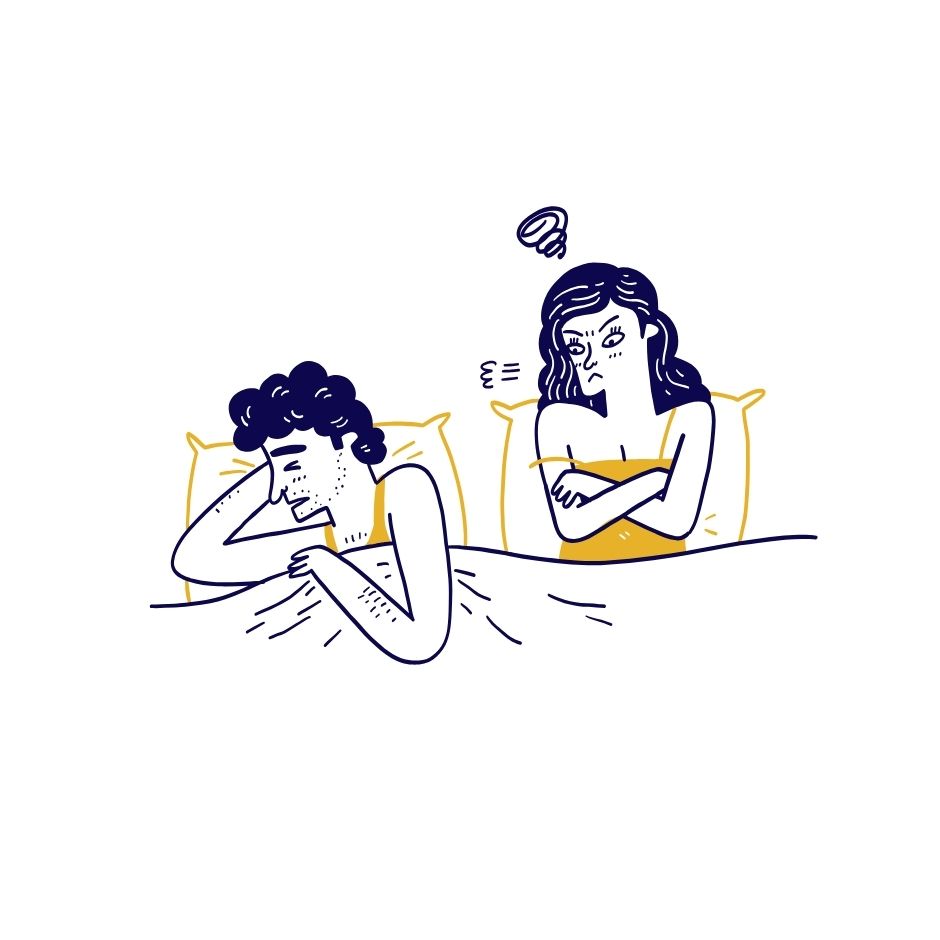
Inside this overload, an argument arrives:
The argument can start with an uncompleted task and very quickly reach a much deeper question: Do I have someone to lean on here?
When different arguments keep returning you again and again to the same positions and the same sequence of reactions, you can also look at the recurring pattern in couple arguments through the drama triangle.
In worthiness-based therapy, I’m interested in my ability to know I have a place in the relationship even when I’m not at my best. Even when I forgot, even when I didn’t respond to your request, even when you’re angry at me, even when I need something you can’t give right now.
When I have a more stable sense of worthiness, your disappointment can be painful and still remain disappointment. It doesn’t have to immediately become proof that I’m not good enough, that I always disappoint you, or that my place in the relationship is in danger.
For people who have experienced unstable belonging, rejection, disconnection, or a family relationship that came with heavy costs throughout their lives, I can check how such experiences meet them inside the relationship today. I don’t assume that everyone without a family support system feels this way. I am interested in the question of what happens to my worthiness when the couple relationship is under pressure.
Worthiness doesn’t guarantee it won’t hurt. It allows me to meet the pain without my entire worth standing trial alongside it. From this place, more capacity opens in me to also see the person in front of me, to recognize the hurt if there was any, and to take responsibility without erasing myself.
Differentiation meets another side of the same argument. It allows me to stay in relationship with you without losing myself, and to stay connected to myself without disconnecting from you.
When there isn’t much backup around the relationship, these questions can take on additional weight. If you’re one of the only people I really lean on, your disagreement may be harder for me to bear. If you’re the central person with whom I share my burden, your distancing during an argument may meet greater sensitivity in me.
The absence of a family support system doesn’t in itself indicate low differentiation. It can create conditions in which more ability is required of us to bear tension, difference, and distance inside a relationship that holds a lot for us.
Differentiation allows us to hold two truths at the same time: This relationship is very precious to me, and I am still a separate person within it.
Many couples come to therapy after they’ve already learned to talk differently. They’re familiar with the idea of speaking in the first person. They know it’s better to say “I feel” than “You always.” They’ve already tried to listen without interrupting, to set time for conversation, and to phrase requests instead of accusations.
All of these can be important tools, and yet, the moment I feel my place in the relationship is shaking, it’s hard to use them. If your anger is experienced by me as a sign that I’m about to lose you, I may react out of great panic. If I feel I must immediately solve your distress so the relationship will feel stable again, it will be very hard for me to simply listen.
In such situations I’m less interested in the question “How should you talk?” and more in the questions “What’s happening to each of you inside the argument?” and “What is each of you trying to hold in this moment?” From there we can also return to communication, this time from more stability and less panic.
Those considering reaching out for professional help and wanting to understand what happens inside the process can also read What couples therapy looks like and what’s important to know before you start.
The fact that we live without a family support system can explain part of the burden within which our relationship exists. It doesn’t determine how we’ll behave toward each other. Even inside great overload, I’m responsible for the way I speak to you. Even if I’m afraid of losing you, I’m responsible for threats, accusations, or attempts to control. Even if I feel flooded, I’m responsible for the way I take distance.
Differentiation and worthiness return us exactly to this point. I can understand where my reaction is coming from and remain responsible for what I do with it. I can see your pain without taking responsibility for all of it. I can ask you for something without turning your response into a measure of your love for me. I can recognize that our lives are overloaded and check what I want to bring to the relationship we’re building within them.
Recognizing the burden can increase our compassion toward ourselves and each other, without diminishing responsibility. For me, this is one of the important axes in working with couples without family support systems.
There’s also a boundary here that’s important for me to maintain between two related topics. The burden created when there’s no support network around the couple is one thing. The expectation that your partner will also fill places that remained missing in your family of origin is another. I expanded on this distinction in the article My partner can’t be the family I didn’t have.
This exercise is best done at a relatively calm time.
Take a sheet of paper and divide it in two. On one side, write together: What we hold as a couple.
These can be kids, livelihood, home, caring for parents, decisions, holidays, illnesses, emotional support, free time, crises, and anything else occupying you during this period.
On the other side, write: Where we have additional support.
Write people, friends, family members, community, frameworks, paid help, and any other place where part of the burden can be held.
Now look at the page. Without comparing yourselves to other couples and without deciding which of you does more, check together: How much are we holding right now, and how much backup is really available to us?
Each of you chooses one thing you’re currently carrying and talks about it for a few minutes. The other side listens, shows interest, and asks questions aimed at understanding. At this stage, they don’t need to offer a solution or take on the task of fixing the situation.
You can say:
“I see how heavy this is for you. I’m here with you.”
After the sharing, the person who spoke can ask themselves: What am I asking now from the person in front of me, and what from this burden remains my responsibility?
There’s a meeting here between three lenses I use in couple work: the turning toward and responding to each other emphasized in the Gottman approach, the worthiness that allows me to bring my difficulty and know it has a place, and the differentiation that allows us to be close inside the difficulty without one of us having to take on what belongs to the other.
You can finish with another question:
Is there something we’re holding today only inside the relationship, and we could build another source of support for it outside?
Backup doesn’t have to be only the family we were born into. Friends, community, meaningful relationships, frameworks, and professional or practical help can become over time part of the support network we build around our lives.
When a couple without a family support system reaches a period with more arguments, it’s easy to start thinking something in the relationship has broken. I want to add another question before that conclusion: What is this couple holding right now?
It may be that there’s a difficulty between you that requires work. It may be that there are hurts you need to take responsibility for, boundaries you need to set, and patterns that no longer fit you. Inside all of this, there are also the conditions in which you live.
When we manage to see them, we can stop measuring the relationship only by the number of arguments and start understanding the system within which they occur. From there we can build more worthiness inside the relationship, more ability to remain two separate and close people, and also more backup outside the relationship.
A relationship can be a deep place of belonging, love, and leaning. When it isn’t required to be the only source for all of these, more room opens in it to be a relationship.

+
For people without a supportive family network.
We will reveal how the lack of a family network challenges and strengthens the couple's relationship, the high prices it exacts from you and your relationship.
Couples therapy will strengthen your sense of security and belonging, so you can be close without losing yourselves along the way.
Online / In-person clinic

+
Individual therapy is a safe space where you will rediscover your strengths, build inner confidence, and create a whole and meaningful life for yourself, just as you dream.
Online / In-person clinic
+
You are invited to enter a unique space: an interactive conversation with special GPTs I created – a first-of-its-kind tool that looks inward with you in the language and frequency of the systemic constellation.
If there is something unresolved in your relationship, family, or heart – the chat will gently meet you without trying to fix it, inviting a different, slow, precise, and quiet perspective. There is no need to understand, just to see and let it work.
Expert in couples therapy for relationships without a supportive family safety net.
Developer of the Couples Constellation approach: a systemic-emotional therapy that brings the couple’s relational dynamics into contact with unspoken family patterns, alongside practical tools that enable movement, connection, and the creation of a deep partnership.






Let’s start with a brief introductory call, free of charge and commitment.
Sometimes, this small step changes everything.
The sessions take place
online via Zoom / face-to-face in Tivon, according to your choice