Home / What does couples therapy look like and what is important to know before starting?
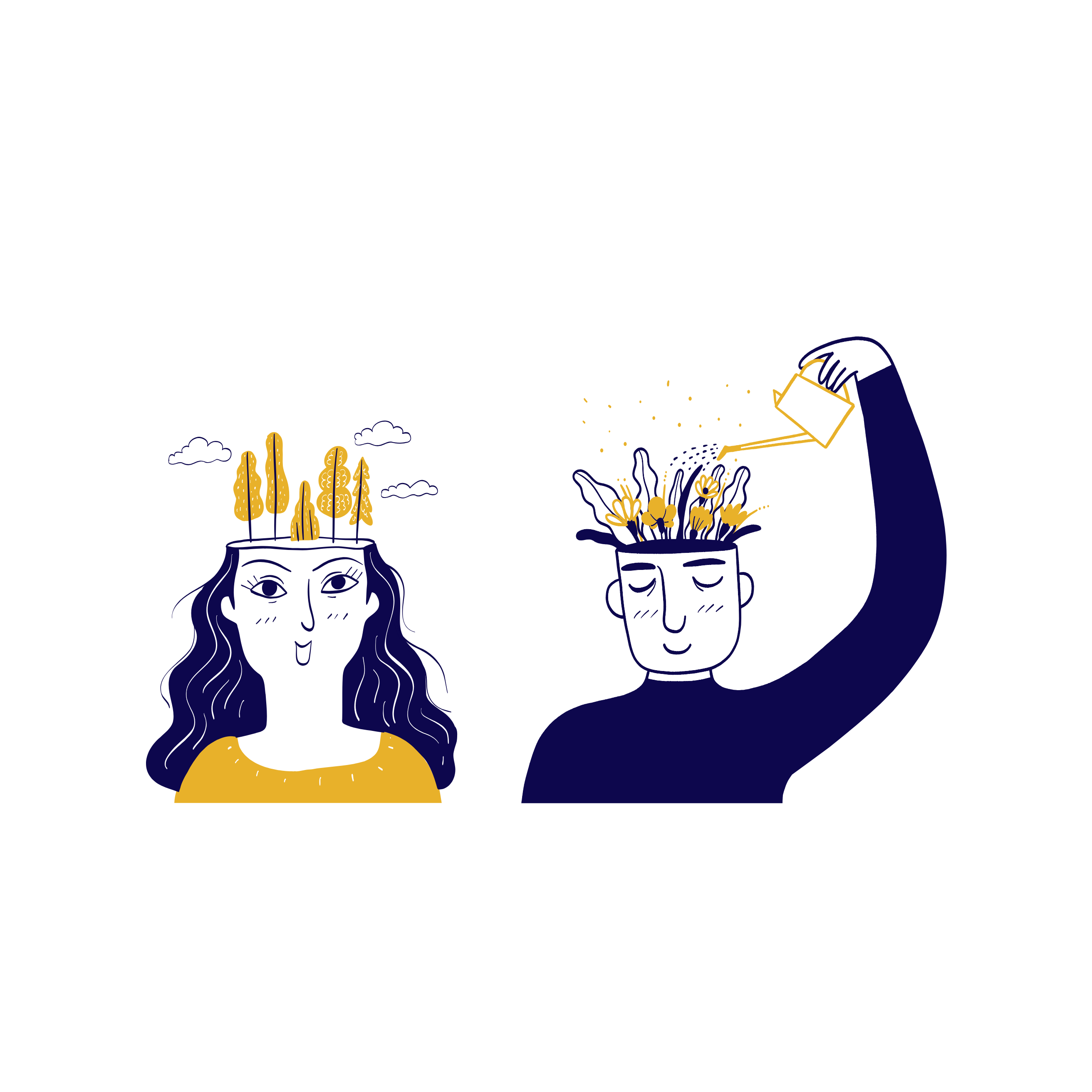
Many couples want to know what couples therapy looks like before they decide to reach out. Others arrive after a long period in which they tried to solve the difficulty themselves. They talked, fought, made peace, tried to talk differently, and promised that this time they would manage not to end up in the same place again. For a certain period things even improved, and then came another argument about raising the children, money, families of origin, sexuality, division of responsibility, or shared time, and that familiar dynamic returned.
At this stage the thought arises: maybe it’s time for couples therapy.
Alongside the hope that something can change, questions also arise. What happens in the first session? Does the therapist decide who is right? Do you need to tell the entire history of the relationship? How long does couples therapy last? And how do you begin a process when one partner wants to come and the other is less certain?
I want to open the door to the therapy room a little and explain how I see a couples process, what happens in it, and what I think is important to know before starting.
It is possible to turn to couples therapy long before the relationship reaches a deep crisis.
Couples come for different reasons. There are those who feel that the fights have become more frequent or harder. Other couples have almost stopped fighting, because along the way they also stopped talking about the things that really matter. Others feel distance, erosion, a decline in intimacy, or difficulty returning to one another after hurt.
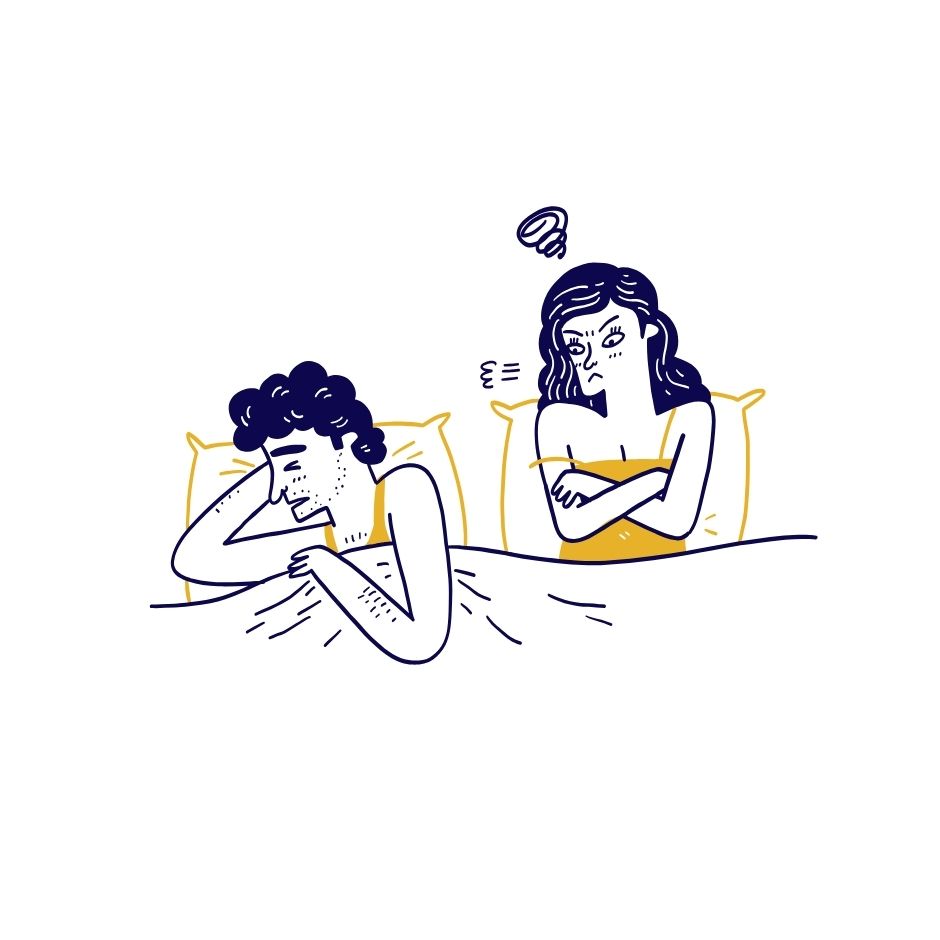
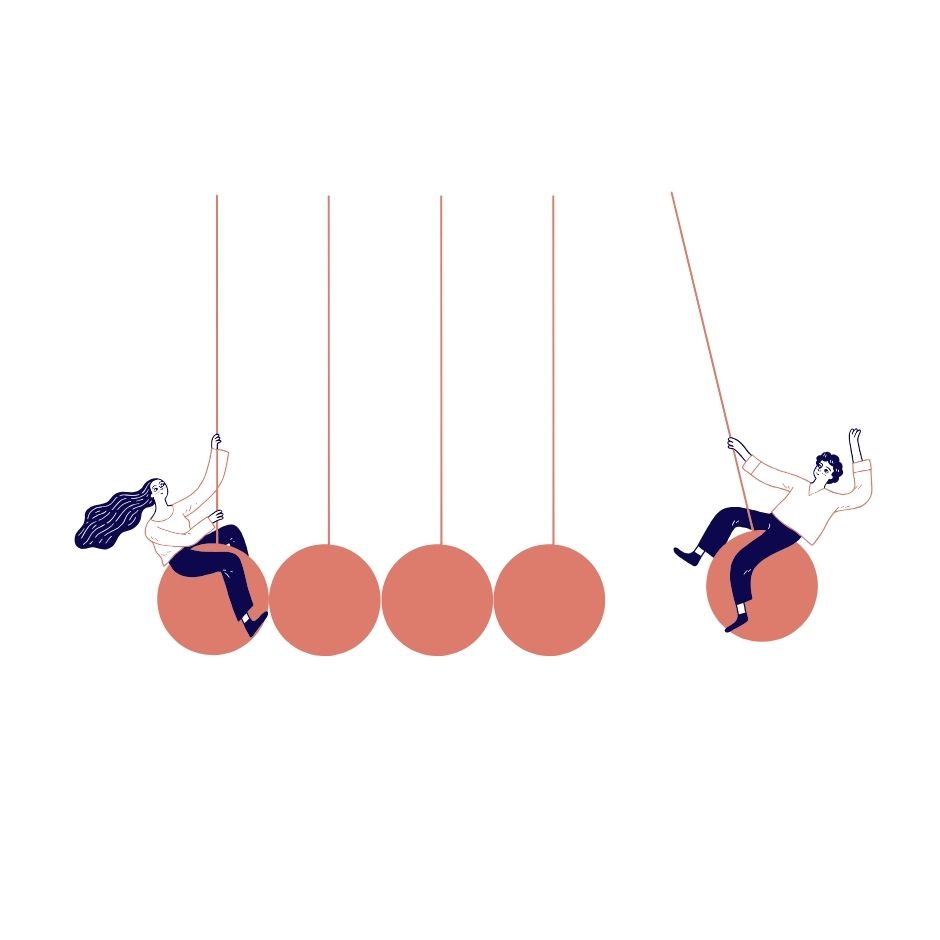
Many couples reach out around disagreements in raising the children, relationship with families of origin, money, division of burdens, sexuality, trust, or periods of change. The topic they argue about is important, and within it you can sometimes identify a dynamic that repeats itself: the more one pushes to talk, the other withdraws. The more one criticizes, the other defends. The more one asks again and again for confirmation that he is loved, the other feels he needs more space.
In therapy we are interested in what is occupying you and also in the way each of you participates in what is created between you. When we manage to identify our part within the couple pattern, the space in which we can influence and choose differently also expands.
For me, the way we begin is already part of the work.
At the beginning of the process I want to understand what brings you, what each of you is asking to change, and what you would like to create in your relationship. It is also important to me that you get to know me and the way I work and can check whether it suits you.
Both partners can arrive with very different definitions of the problem. Two people live in the same relationship, and each of them experiences it from his own point of view.
One can say: “We can no longer manage to talk.”
The other can say: “I try to talk. He just shuts down.”
Already within these two statements something of the couple dynamic is present.
In the first sessions I want to know your couple story: how you met, what drew you to one another, what you built together, when the difficulty you describe began, and what you have already tried to do to cope with it.
I also listen to what is happening between you in the room. Who speaks and who is silent? What happens when one of you is hurt? How do you respond when the person facing you thinks differently? To what extent do you manage to remain curious about his experience even when it is different from yours?
The way you are together in the session teaches us a great deal about the relationship itself.
One of the concerns I meet before therapy is that the therapist will take sides. That one partner will feel she understands him, and the other will find himself again in the position of the guilty one.
My role is to help you see more clearly what is happening between you. Within that there is also room for responsibility. There are situations in which it is important to call a behavior by its name and set clear boundaries, and responsibility within a relationship is not always divided equally.
In many couple conflicts I am interested in what each of you does within the dynamic. What do you do when he withdraws? What happens to him when you try to get closer? What do you do when you feel criticized? How does she respond to your defensiveness?
When you can see the cycle, you can also begin to identify the place where each person has a choice.
The question “How do I want to act in the face of what is happening between us?” returns to each partner something of his ability to influence the relationship.
Partners arrive at therapy with different degrees of desire and confidence in the process. One can be the one who searched for a therapist, read, called, and scheduled, and the other arrives more reserved, worried, or simply not convinced that couples therapy will help.
Doubt also receives space in the room. You can talk about the fear of therapy, about previous experiences, about the fear of being blamed, or about the feeling that the very act of coming to therapy says something difficult about the state of the relationship.
I am not looking for the same degree of enthusiasm from both of you. I am looking for a willingness to enter the room together, bring two points of view, and honestly examine what is happening between you and what each of you wants for the relationship.
In my work I relate to the couple relationship itself as the focus of therapy.
Each partner has an inner world, history, needs, boundaries, and pain of his own. I want to give space to each of you and at the same time be interested in what you create together.
We examine where you manage to meet, where each of you struggles to stay connected to yourself within the relationship, and what happens when your needs, desires, and positions are different.
Mature partnership requires closeness and leaning, and also the ability to be two separate people. Two people who can love one another without thinking, feeling, or wanting the same thing all the time.
This is a question worth asking every couples therapist before beginning the process, because there are different approaches to the work.
In my work the couple sessions take place in the presence of both partners. Even when personal material arises, we are interested in the way it meets the person facing you and the relationship you are building together.
Transparency is part of the work. It allows us to meet directly what is happening between you and keep the therapeutic space as a space that belongs to both of you.
In the family in which we grew up we first encountered closeness, anger, requests, boundaries, dependence, separateness, and love. Familiarity with the family story can help us understand something of the ways each person brings with him into the relationship.
This can be seen clearly around raising the children. Two parents can love the child equally and hold completely different views about boundaries, authority, independence, or responsibility. Each of them brings with him something of what he learned in the family in which he grew up, alongside the parent he is asking to be today.
This is also true regarding money, intimacy, division of roles, holidays, and relationship with the extended family.
The systemic and constellative view of the relationship allows us to examine what each person brings with him into the relationship and where an old story meets a situation that is happening now. Familiarity with the past expands understanding, and from there we return to the present and ask: “What of what I learned is also suitable for the life I am building today, and what do I want to choose to do differently?”
This way the past receives its place in the story, and the choice remains in the present.
Two concepts that accompany my work are differentiation and worthiness.
Differentiation is connected to the ability to be in deep relationship with another person, stay in my position, and bear the fact that the person facing me may think, feel, or want differently. I can hear that you are disappointed in me and remain attentive to what is important to me. I can say what I want even when you think differently. I can take responsibility for the way I behaved and leave you with responsibility for your feelings and choices.
Worthiness is connected to the way I hold my value even in moments when it is difficult for me, when I make a mistake, or when the person facing me is disappointed in me. From this place I can look at the way I conduct myself within the relationship: How do I speak when I am angry? How do I ask for what I need? How do I set a boundary? Can I see that I hurt, take responsibility, and try to repair?
Understanding where a certain response came from is important. Alongside it is the question of how I want to act today.
I can recognize that I behaved in a way that is not worthy in my eyes and still remember that I am worthy of love. My value allows me to meet my mistakes with honesty, learn from them, and choose differently next time.
The question “Who do I want to be within this relationship even when the person facing me remains in a position different from mine?” accompanies much of the couple work.
Couple conflict also takes place in the body.
You can know intellectually that your partner asked for time to think and feel at the same time your stomach contracting. You can want to stay in the conversation and feel in your body a strong urge to leave the room.
I am interested in what is happening in the body and in emotion during the encounter. We learn to identify the emotion, notice where it is experienced in the body, and gradually expand the ability to stay with it at a pace that can be borne.
The more a person is able to bear more of his emotional experience, the larger space of choice opens before him. Anger can be present without immediately determining how I will speak. Fear can be felt without deciding for me what I will do.
The couple work continues also outside the therapy room.
Your life together takes place at home, with the children, on the way to work, in the evening after a long day, and in the moment when one of you says a sentence that immediately activates the familiar pattern.
I can invite you to observe certain things between sessions or practice a new way to meet a situation that repeats itself. I am interested in what you discover about yourselves within the attempt.
Even when you intend to respond in a new way and find yourselves returning to the familiar pattern, we have material to work with. We can examine what arose, what was difficult to bear, and what possibility you would like to develop for next time.
Gradually, what is built in the therapy room begins to be available also within your shared life.
From my experience in the clinic, in most cases it is possible to complete a meaningful process of couples therapy within four to six months. The length of therapy varies from couple to couple and depends on the reason you came, the state of the relationship, the depth of the difficulties you bring, and the willingness of both of you to work also between sessions.
I see couples therapy as a process that has direction and purpose. We want to understand the patterns that run the relationship and develop new possibilities in moments when the familiar pattern arises.
For me, a meaningful sign that a process is approaching its end is the feeling that you have enough understanding and ability to continue this work on your own.
Change in couples therapy can appear long before the fights disappear.
You can identify it in the way you are within the conflict. You notice earlier the cycle you entered, manage to stop an automatic response, talk about a charged topic without the conversation falling apart in the same way, or return to one another faster after hurt.
Progress can also appear in the ability to bear more difference. My partner can think differently from me without my immediately experiencing the difference as a threat to the relationship. I can hear criticism without falling apart from it or attacking back. I can bring a need more directly and also listen to the answer I did not hope to receive.
The familiar pattern may still appear. The difference is that you already have more possibilities available to meet it.
Couples therapy can create a meaningful possibility for change when the partners are willing to look at the relationship and at their part within it.
Couples arrive at different points. For some the love exists and they are asking for a new way to cope with conflict. Others want to rebuild trust or intimacy. There are also couples who arrive at a time when one of them is no longer certain whether he wants to stay.
The work begins with an honest meeting with the state of the relationship and an examination of what each of you wants and what can be built from here.
For many couples the movement is drawing closer and renewed building of the relationship. For others the process brings clarity regarding the continuation of the relationship. In both cases, the ability to see the relationship more clearly allows decisions to be made from more awareness and responsibility.
It is worth clarifying how the therapist sees her role, what the first sessions look like, what her position is regarding individual sessions during couples therapy, how she relates to secrets between partners, and how she works when partners arrive with different desires regarding the process.
It is also important to pay attention to your experience in the meeting. Do both of you have space? Is the therapist able to hold complexity? Do you understand what you are working on and where the process is headed? Does the meeting help you see also the places where you have the ability to influence?
Meaningful therapy allows you to feel seen, and at the same time meet things that are difficult to see alone.
If you are considering couples therapy, I would begin with three questions:
“What relationship do we want to build?”
“What do I want to be different between us?”
“What am I willing to examine in myself in order to allow this change to happen?”
The third question is especially important to me. It is natural to arrive at therapy when we know well what we would like our partner to understand or do differently. Alongside the requests we have of him, the couple work invites each person to turn part of the gaze also toward himself.
There the possibility begins to open to do something new.
In my view, couples therapy is a space in which you can pause and look together at what is happening between you, outside the fast pace of the argument itself.
In the room we learn to recognize the patterns you developed, what each person brings with him, and the way you respond when the relationship becomes challenging. This understanding returns us again and again to your life now: what arises in me, what is in my responsibility, and how I want to meet the person facing me.
I want you to leave therapy when you know your relationship and yourselves within it better, and with the ability to continue cultivating the relationship also after the therapeutic process ends.
The question that interests me at the beginning of the journey is simple: “What relationship do we want to build, and what is each of us willing to bring in order to create it?”

+
For people without a supportive family network.
We will reveal how the lack of a family network challenges and strengthens the couple's relationship, the high prices it exacts from you and your relationship.
Couples therapy will strengthen your sense of security and belonging, so you can be close without losing yourselves along the way.
Online / In-person clinic

+
Individual therapy is a safe space where you will rediscover your strengths, build inner confidence, and create a whole and meaningful life for yourself, just as you dream.
Online / In-person clinic

+
You are invited to enter a unique space: an interactive conversation with special GPTs I created – a first-of-its-kind tool that looks inward with you in the language and frequency of the systemic constellation.
If there is something unresolved in your relationship, family, or heart – the chat will gently meet you without trying to fix it, inviting a different, slow, precise, and quiet perspective. There is no need to understand, just to see and let it work.
Expert in couples therapy for relationships without a supportive family safety net.
Developer of the Couples Constellation approach: a systemic-emotional therapy that brings the couple’s relational dynamics into contact with unspoken family patterns, alongside practical tools that enable movement, connection, and the creation of a deep partnership.







Let’s start with a brief introductory call, free of charge and commitment.
Sometimes, this small step changes everything.
The sessions take place
online via Zoom / face-to-face in Tivon, according to your choice