Home / Forgiveness in relationships: A language of connection, not just of pardon
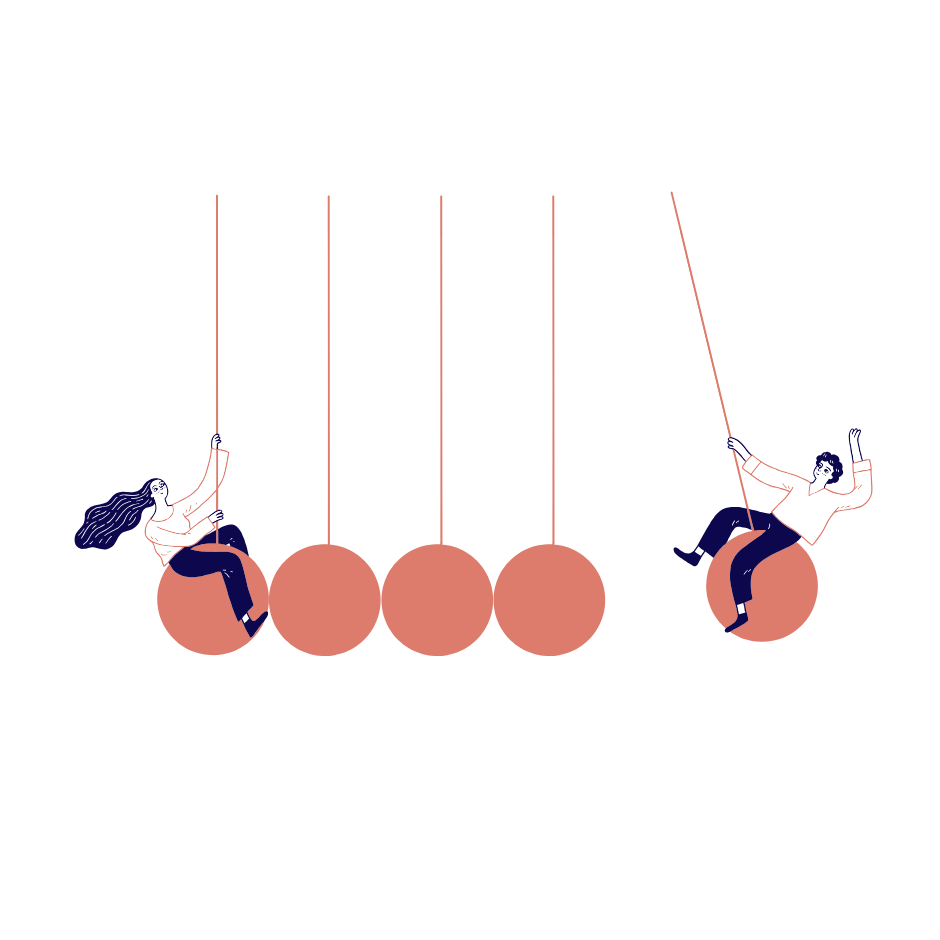
I don’t remember the first time I asked for forgiveness from someone I truly loved, but I remember well that I didn’t know how to do it, because in the home where I grew up, there were no conversations of repair. Only silences that felt heavy and unspoken.
My mother’s silences were not quiet—they were punishment in the form of “I’m not talking to you.” I felt it like a boycott against me, making me feel undervalued and dismissed. When I was offended, or cried, or dared to rebel, only one thing was required of me: to apologize. It was a one-way process—the child apologized to her parents. The parents themselves, the adults, never apologized to us, the children. My interpretation then was that an adult doesn’t apologize to a child because it’s an act of humiliation.
There were no apologies between them either, but there were grudges and calculations—dynamics of power, emotional cessation, and covert vindictiveness. In my parents’ house, I learned that forgiving means ceasing to resist and that asking for forgiveness signals that I have lost, which shaped my understanding of family relationships and forgiveness.
The wounds of our childhood do not fade in adulthood; they continue to reside within us, even in our romantic relationships; they reorganize. The greatest difficulties in a relationship are often a direct continuation of the wounds of our childhood, when the words that were not said then haunt us in the here and now. Thus, each partner brings with them an unspoken story of vulnerability, anger, withdrawal, or silence. When the wound is pressed (usually by the person closest to us), we will return to the familiar movements:
In relationships based on dependence, forgiveness is required too quickly:
“Say you’re sorry.”
“Well, do you forgive me?”
“Let’s move on.”
In fact, true forgiveness is only possible when there is a stable internal space, when I can feel myself even when I have hurt or been hurt. When my identity remains intact despite my mistakes, and I can take responsibility without shame or shrinking into appeasement, I feel more confident and secure.
When this happens, forgiveness is not just an emotion; it is a systemic movement that brings recognition, sets boundaries to create safety, and invites repair—not through demand, but through internal agreement. For such forgiveness to occur, three basic conditions are required:
Ability to recognize the harm without justifying it: “It doesn’t matter if I meant to or not. I saw that I hurt you.“
Ability to feel myself even when I apologize or forgive: “I don’t lose my values or myself within the forgiveness.“
Understanding that forgiveness does not erase the past, but allows for a different future, helps us feel hopeful and patient: ‘I don’t forget—I just don’t hold onto it anymore.’“I don’t forget—I just don’t hold onto it anymore.”
It is a process that occurs not only within the person, but between people, and that is what makes it so delicate and so powerful.
Forgiveness between people who grew up without forgiveness is an act of intergenerational healing.
Those who grew up in toxic homes learn to identify forgiveness with humiliation. They confuse taking responsibility with loss of value, between genuine reconciliation and flattery. Therefore, when they begin a process of forgiveness in a relationship, they are actually creating a movement that never happened in their family. It’s no wonder it’s so difficult, and no wonder it’s so healing…
If it’s hard for you to ask for forgiveness, maybe you are the first in your system to do so. Taking this step can be a powerful act of change, helping you feel more in control of your healing process.
If it’s hard for you to forgive, maybe you never received genuine forgiveness-an experience that involves acknowledgment, empathy, and healing, not just forgetting or excusing.
If you are afraid to forgive, maybe within your system, forgiveness was always a concession, not a choice.
It doesn’t have to be that way. You can learn a different kind of forgiveness-one that acknowledges pain and offers hope for healing. Forgiveness that does not deny the pain—but sees it. Forgiveness that does not silence it—but restores its place.
If you or you are experiencing difficulty returning love to the relationship after being hurt, if forgiveness gets stuck, if the pain returns again and again, it is not a sign that the relationship is not good.
It’s a sign that something in the systemic movement needs a look.
The meetings I offer open up exactly this space: to see, to understand, to feel—and to move again, safely and with support.

+
For people without a supportive family network.
We will reveal how the lack of a family network challenges and strengthens the couple's relationship, the high prices it exacts from you and your relationship.
Couples therapy will strengthen your sense of security and belonging, so you can be close without losing yourselves along the way.
Online / In-person clinic

+
Individual therapy is a safe space where you will rediscover your strengths, build inner confidence, and create a whole and meaningful life for yourself, just as you dream.
Online / In-person clinic
+
You are invited to enter a unique space: an interactive conversation with special GPTs I created – a first-of-its-kind tool that looks inward with you in the language and frequency of the systemic constellation.
If there is something unresolved in your relationship, family, or heart – the chat will gently meet you without trying to fix it, inviting a different, slow, precise, and quiet perspective. There is no need to understand, just to see and let it work.
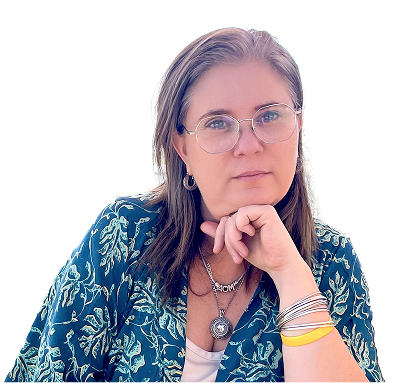
Expert in couples therapy for relationships without a supportive family safety net.
Developer of the Couples Constellation approach: a systemic-emotional therapy that brings the couple’s relational dynamics into contact with unspoken family patterns, alongside practical tools that enable movement, connection, and the creation of a deep partnership.

Let’s start with a brief introductory call, free of charge and commitment.
Sometimes, this small step changes everything.
The sessions take place
online via Zoom / face-to-face in Tivon, according to your choice