What Is a Toxic Relationship?
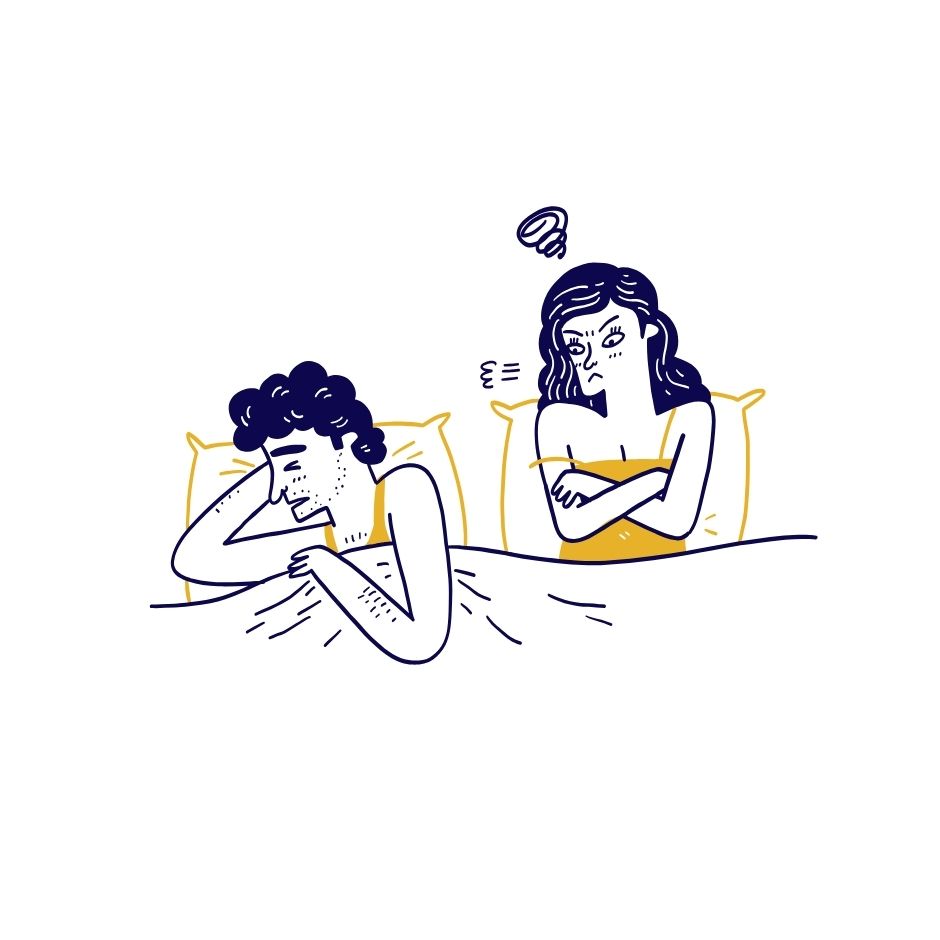
The term “toxic relationship” has become very common, and sometimes is used to describe almost any difficult relationship. Couples go through periods of distance, anger, jealousy, poor communication, and mutual hurt. Partners say harsh things, shut down in conversation, become defensive, and behave in ways they’ll later need to take responsibility for. Relationship difficulty, even when very painful, doesn’t in itself indicate a toxic relationship.
In this article I use the term to describe an ongoing relational pattern in which the security, freedom, sense of worthiness, or self-trust of one partner is gradually eroded.
The couple relationship affects both people living within it. Over time you can see whether it allows both to remain present and whole, or whether one of them learns to preserve the relationship through ongoing self-reduction.
1. You Start Doubting What You Saw, Heard, and Felt
Two people can come out of the same conversation with different memories. Each saw a different part, heard a different tone, and interpreted the event through their own inner world. A difference between versions is a natural part of a relationship between two separate people.
A different pattern forms when your experience is repeatedly dismissed. You say you were hurt and are told you’re too sensitive. You remember a sentence that was said and are told you made it up. You try to describe an event and the conversation quickly shifts to what’s wrong with your perception.
Gradually the doubt moves inward:
- “Maybe I really understood it wrong.”
- “Maybe I’m exaggerating.”
- “Maybe the problem is me.”
When this repeats over time, your self-trust can erode. You no longer need someone to undermine your experience from the outside, because you’ve learned to do it yourself.
Gaslighting is a term that requires precision in itself. Disagreement, denial, or different memory aren’t necessarily gaslighting. In a separate article I’ll address gaslighting in relationships and families and the way such a pattern can undermine a person’s trust in their perception of reality.
2. Criticism Turns into Mockery, Humiliation, and Belittling
Criticism can exist within a relationship. You can be angry at your partner’s behavior, say you were hurt, and ask for change. When you talk about a specific action, you can still meet the person behind it.
- “What you did hurt me” refers to behavior.
- “You’re just unbearable” defines the whole person through the behavior.
Barbs, mockery, contemptuous imitation, and repeated comments about your body, intelligence, parenting, friends, or ability to manage in the world accumulate. At some point you’re no longer just dealing with criticism of something you did. You’re busy defending your very worth.
The distinction between complaint about behavior and criticism of a partner’s personality also appears in research and the work of the Gottman Institute on couple communication patterns. Mockery, sarcasm, contemptuous imitation, and an attitude of superiority are described there as expressions of contempt, a particularly destructive pattern in couple relationships.
Worthiness doesn’t mean everything I do is worthy; I can make mistakes, hurt, behave in a way I regret, and take responsibility. Even then I remain a person of value. The ability to hold both these truths allows repair. You can see the action soberly without turning it into a definition of the whole person.
3. Your World Keeps Shrinking
Control doesn’t always appear as explicit prohibition. It can start with questions about a certain friend, displeasure when you go out without him, criticism of your family, a harsh reaction when you come home late, a demand to know where you are, or a need to explain why you want time to yourself.
Each event by itself can receive an explanation. The accumulation tells a different story. You see fewer people, avoid things you love, give up in advance on decisions that will provoke opposition, and invest more energy in preventing your partner’s reaction.
Close relationship includes consideration and mutual dependence. We change plans for each other, adjust ourselves, and sometimes also give things up. Differentiation allows me to be very connected to you and remain a whole person, with my own desires, connections, thoughts, and boundaries.
When the price of belonging to the relationship is growing surrender of separateness, the closeness itself begins to change.
4. You’re Repeatedly Required to Prove There’s No Reason to Suspect You
Jealousy can appear even in good relationships. It can express fear of loss, previous breach of trust, or insecurity. The feeling itself isn’t the problem. The responsibility for what we do with it is another matter.
When jealousy turns into interrogations, checking messages, demands for reports, accusations, or attempts to control who you’re allowed to be in contact with, the responsibility for calming the fear gradually passes to you. You shrink your life to prevent him from feeling what’s hard for him to bear.
You can understand your partner’s fear and recognize his pain without taking responsibility for regulating every emotion that arises in him.
You can say: “I understand you’re afraid. I’m willing to talk with you about that fear. I’m not willing to live under interrogation.”
I can see you, be affected by you, and consider you.
I can also stay connected to my boundary when it disappoints you.
Both movements can exist together.
5. Responsibility for the Relationship Rests Mainly on You
You’re the one who initiates conversations, apologizes first, tries to understand what he meant, reads, learns, suggests therapy, and changes again the way you speak. During a crisis you try both to calm him and to get the relationship back on track.
A relationship isn’t symmetrical at every moment. Illness, loss, overload, professional crisis, or a difficult emotional period can cause one partner to carry more for a certain time. A living relationship isn’t a ledger where both sides must give exactly fifty percent every day.
Over time both partners need the ability to meet their part in the dynamic. Responsibility can move between them. Each can see the impact of their behavior even when convinced they have an excellent explanation for what they did.
The sentence “I hurt you” doesn’t require me to agree with your entire interpretation of what happened. It expresses an ability to see that my behavior had an impact on you and to stay for a moment with that impact.
One person can change the way they participate in the dynamic. They can stop pursuing, rescuing, defending, or giving up on themselves. Your partner’s responsibility for his behavior he cannot take in his place.
6. When You Bring a Boundary or Hurt, the Conversation Turns into a Trial Against You
You can learn a lot about a relationship in the moment when both partners want different things. You say no. Ask for time. Share that you were hurt. Hold a different opinion.
Disagreement can be very unpleasant. Your partner can be offended, angry, and disappointed in you. Your boundary doesn’t require him to like it, and his disappointment doesn’t require you to give it up. This is one of the complex tasks within a close relationship: to stay in the relationship even when the person I love isn’t giving me the response I wanted to receive from them.
A worrying pattern forms when difference, boundary, or disagreement repeatedly meets punishment, prolonged silence, mockery, intimidation, threat of separation, or reversal of the conversation so that in the end you’re apologizing for the very fact that you raised the difficulty. Over time you can learn that to preserve the relationship it’s better to stay silent. The quiet may reduce friction between partners, and at the same time increases your distance from yourself.
7. You No Longer Recognize Yourself Within the Relationship
Relationships change us. We learn to consider, be flexible, develop, and give up certain things for the sake of shared life. The change itself isn’t a sign that something went wrong.
The direction in which you’ve changed is important information! Perhaps you’ve become more cautious. You think a long time before every sentence, explain yourself even before being asked, check again and again whether there’s room for your anger, or are busy managing the reaction of the person facing you.
A large part of your energy is directed at reading the room: what’s his mood, what will trigger him, when is it good to talk, how much can you ask, and what will happen if you refuse.
When attention is repeatedly directed outward, it’s harder to hear what’s happening inside: Who are you becoming within this relationship?
Why Is It Hard to Identify a Relationship That Hurts You When You’re Living in It?
A relationship isn’t composed only of the moments when it’s difficult. It contains shared history, love, children, sexuality, good memories, periods of closeness, promises, hope, and years of life built together.
A person can be hurt within a relationship and still love their partner. They can see very well beautiful parts in the person who hurts them. This contradiction is part of the human complexity of close relationships.
The story we came from also affects what’s familiar to us. Someone who learned in childhood to read well the mood of the adults around her may arrive at adulthood with high sensitivity to changes in the person facing her. Someone who experienced belonging as something requiring adjustment may struggle to identify the moment when adjustment turns into ongoing surrender of herself. This is a possibility for examination, not an automatic explanation for everyone who stays in a harmful relationship. The past can help understand why a certain way of participating in a relationship became familiar. In the present you can see what it costs you and how you want to act now.
For someone living without stable support from their family of origin, the couple relationship can carry additional weight of belonging, security, and sense of home. I wrote about this movement extensively in the article “My Partner Cannot Be the Family I Didn’t Have”.
Toxic Relationship or Difficult Relationship Crisis?
In a relationship crisis two people can hurt each other very much and still maintain the possibility for responsibility and repair. One shares they were hurt, and the other is able at some point to be interested in what happened to them. Both can examine their behavior without giving up their experience and without immediately erasing the other’s experience.
In a harmful pattern, this space keeps shrinking. Difference, boundary, and disagreement repeatedly turn into an arena of control, punishment, humiliation, or undermining. Responsibility remains permanently with one side, or one partner is required to give up their experience in order to restore quiet to the system.
The ability to repair is no less important than the intensity of the conflict. A couple can fight intensely and still be able to return, see the hurt, take responsibility, and build a different way. When this possibility barely exists, something deeper in the relational pattern requires attention.