Home / “Mom, I need a power hug”: How to stay close to a teen who is starting to pull away
I am a mother to three adolescents: a son who is almost 19, a 17-year-old son, and a 14-year-old daughter. My home knows adolescence well in all its forms: the need for separateness and autonomy, the testing of boundaries, the doors that close, the noise, and also the moments when they return and draw near.
I first wrote this article about seven years ago, when my eldest son was 12. At that time our relationship went through a crisis. He did not want me to come close to him, he pulled away from my touch, and at a certain point I also distanced myself from him. The physical distance was part of a larger distance that formed between us.
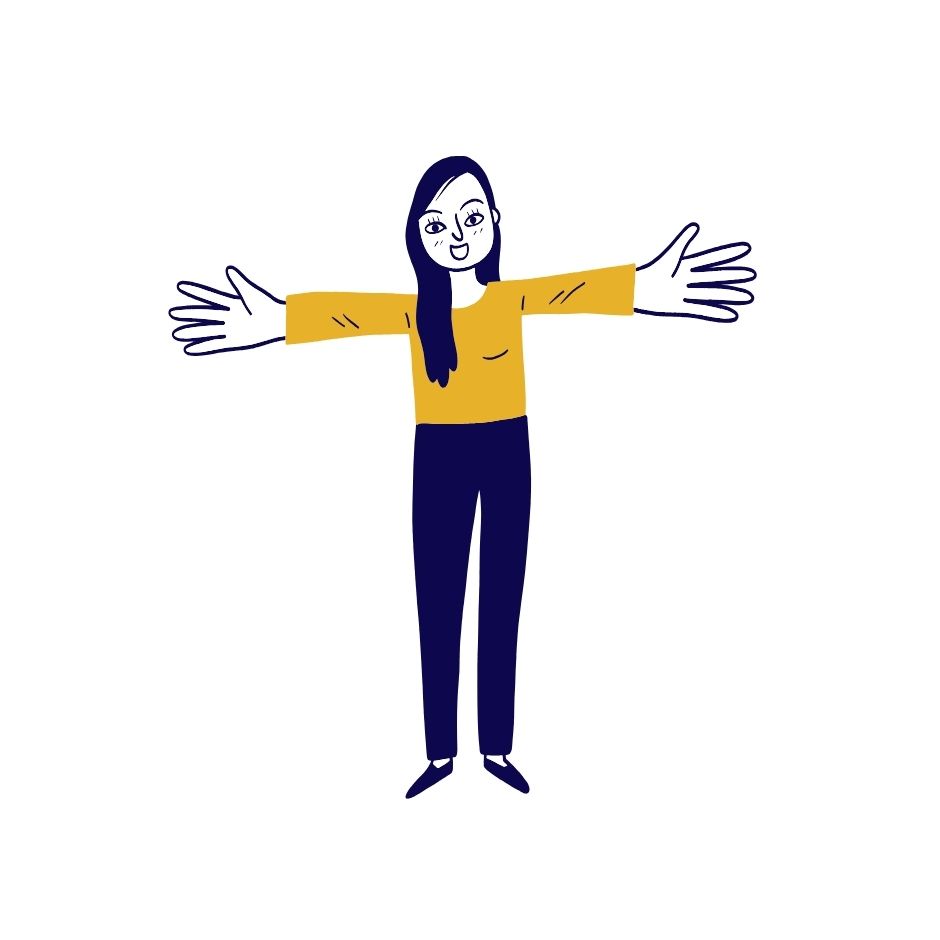
Within the process of restoring our relationship we began practicing hugging. Not a hurried hug on the way out of the house. We stopped for a few moments and stayed together within the touch. Over time the hug took on a place of its own in our connection, and my son gave it a name: “power hug.”
Today that child is almost 19. Seven years have passed since then, and I look at that practice differently. I see the things I have learned since then as a mother to three adolescents and as a therapist: about touch and about boundaries, about the need of adolescents to separate from us without losing us, and about our ability as parents to offer closeness and leave in their hands the choice whether to draw near.
The hug was part of a broader process of restoring our relationship. Within it, it became a private language of closeness, one that allowed us to say without words: “I am here with you.”
One of the changes parents can encounter in adolescence is a shift in children’s attitude toward touch. The daughter who once climbed on you on the couch can suddenly move your hand away. The son who once ran to you for a hug can recoil when you try to kiss him near his friends.
When I look at my three adolescents, I see how much each of them has a different way of asking for closeness and space. One child may ask for a lot of touch, another very little, and the same child can move between different periods from a great need for closeness to a desire for space.
Adolescence includes significant movement toward separateness. Our adolescents develop their own identity, opinions, relationships, privacy, and boundaries. Their relationship with their body also changes. The body that for years was a very natural part of parental care becomes more and more private territory that they want to decide about.
A teen can love us, need us, and want to know we are there for them, and at the same time ask for more privacy and physical space. For me as a parent, a significant question arises from this: “Can I remain a close mother even when my child is currently asking me for more distance?”
The teen’s distance can stir worry in us. We want to know what is going on with them, to make sure the connection between us is okay, and to feel that they still need us. From this worry we may draw closer: ask, check, try to talk, enter the room, or offer touch.
They, for their part, may feel they need more space and pull away. Their pulling away increases my worry, and I try again to get close. This can create a cycle in which each of us intensifies, without meaning to, the other’s response.
Recognizing the cycle allows me to look at my part in it. I can remain available for connection, offer closeness, and leave my child space to choose how and when to draw near.
Touch can express affection, comfort, and closeness when it is wanted. If I offer a hug and my teen says “no,” moves their body, or signals in another way that the touch is not right for them, I stop. Respect for their boundary is part of the connection I want to build with them.
You can ask “Want a hug?” or open your arms and wait for a response. If the answer is “not now,” I want to be able to accept it.
My ability to hear their “no” allows them to know that their “yes” also truly belongs to them.
Their boundary does not take them out of connection with me. They can not want me to touch them now and still be my child, love me, and need me in other ways. Their “no” can stir in me longing, hurt, or fear that the connection is growing distant. These are my feelings to meet.
Embarrassment and laughter also give me information. If they laugh and stay in the hug of their own will, we can laugh together. If their body pulls away, we release. If they say “Mom, enough,” we stop. The boundary is also part of the connection.
In our home the power hug was born from my relationship with my eldest son. This is the name he gave to the hug that gradually became a familiar moment in which we could stop, draw near, and be together without needing to talk immediately about what happened.
The idea is reminiscent of Thich Nhat Hanh’s hugging meditation: to direct attention to the encounter itself. When we hug, we can be for a moment within the hug instead of already thinking about the next thing we need to say, ask, or solve.
With a teen there is no need to turn the hug into a therapeutic event. When they choose to draw near, I can simply be with them in that moment.
The power hug was very significant in the relationship with my son, within a broader process of restoring the connection. The process required me to look at the way I responded to him, at my expectations of him, at the places where his behavior activated me, and at my ability to remain his mother even when the encounter between us was complex.
You can hug a child a lot and remain distant from them. A teen can also want very little touch and maintain with their parents a deep, respectful, and close connection. The quality of the connection is also revealed in the child’s ability to ask for closeness when they need it, to end it when they have had enough, and to know that the connection remains even after the hands separate.
This is the broader meaning that “power hug” has for me today.
Parenting adolescents happens in the encounter with the child who is in front of us today, and it can also meet the story from which we came. We bring with us the way we were hugged or not hugged, the place the body and privacy had at home, and the way they responded to us when we pulled away.
A teen’s pulling away can meet in me a place that knows rejection. My desire to be close to my children can also connect to an old internal promise: “In my home it will be different.” The past can help me understand the intensity of my response; in the present I meet the child who is in front of me and check what they need from me.
I wrote more about the way what we learned in the family we came from enters the relationships we build in adulthood in the article “The Orders of Love: You love each other. So why is it so hard for you together?”
You can stop in front of the child’s pulling away and ask: “What of this pain belongs to our connection today, and what does it meet in me from the relationships in which I grew up?”
This distinction leaves more room for choice for me and more freedom for them.
The following two exercises meet the two movements that exist in relationships with adolescents: the moment when the child chooses to draw near and the moment when they ask for distance.
Offer a hug and leave the teen the choice. You can ask “Want a hug?” or open your arms and wait.
When they choose to draw near, stay a few moments within the hug without rushing to talk or find out what happened. Notice the breath, the soles of the feet on the floor, and the touch between the two bodies.
You can hold within you:
On the in-breath: “I am here with you.”
On the out-breath: “I can be here without solving.”
On the in-breath: “You are my child.”
On the out-breath: “I allow you to be yourself.”
When the teen releases their hands, moves their body, or says “that’s enough,” you release as well.
Ending the hug is part of the practice: to be in closeness and to know how to release it.
When the teen does not want the closeness you are offering, stop before you try to get close again. Notice what is happening in the body: the breath, the pressure in the chest or belly, the tension in the jaw, the urge to enter the room, ask another question, or try again.
Ask yourself:
What am I feeling now?
What am I asking my child to give me in this moment?
Can I leave them choice and remain available for connection?
If their answer to a hug is “no,” you can say simply:
“Okay. I’m here.”
That is also connection.
There is something very beautiful about a hug: two bodies draw near and still remain two bodies. In my eyes, there is in this something that recalls the kind of connection we seek to build in relationships as well.
This is one of the ways I think about differentiation: the ability to be very close to another person and remain two separate people. We can lean and remain connected to ourselves, draw near and keep our boundaries, pull away and know that the place with the other person is preserved.
A teen gradually needs more space to discover who they are, and at the same time they can continue to feel they have a stable place in the connection with their parents. They can close the door and remain my child. They can not want me to hug them now and still need me. They can choose things I would not choose for them and know that the connection between us is able to hold the difference.
I can hold within me the sentence:
“I remain your mother when you are close to me. I remain your mother even when you close the door.”
When I wrote the original article, my son was 12 and we were in the middle of the process. Today he is almost 19, and I can look back and see that the power hug remains for me much more than a memory of a practice we did together. It reminds me of something I learned about parenting adolescents.
Closeness does not always need words, and pulling away is not necessarily a loss of connection. A teen can need us very much and want more space from us at the very same time. Our role is to learn to recognize the language in which the child in front of us is asking for connection now, even when it is different from the language in which they asked for it when they were small.
With my eldest son, one of those languages was the power hug. There were days when he came to me loaded and said: “Mom, I need a power hug.” Other times I asked: “Do you need a power hug?” If he wanted, we hugged. I did not rush to find out what happened and did not use that moment to extract words from him. After a while he would turn his head toward me and say: “Thanks, that’s enough.” Then I released.
Over the years there were also couch hugs in front of the TV, good-morning hugs, and a hug from the side with one arm that it seems to me said: “You know what, Mom, you’re actually okay.”
Today I am a mother to three adolescents, and I know that each of them teaches me something different about closeness. Each has a different rhythm, different boundaries, and a different way of telling me they want me beside them. I want to be a mother who is able to recognize the way each of them draws near and to honor also the way they separate.
The hug can open a conversation, and it can be all that is needed in that moment. There will also be moments when there will be no hug at all.
The power hug taught me much more than how to hug my child. It taught me to offer closeness and leave it in both our hands.
I am here. You are my child. The connection between us can hold both closeness and distance.

+
For people without a supportive family network.
We will reveal how the lack of a family network challenges and strengthens the couple's relationship, the high prices it exacts from you and your relationship.
Couples therapy will strengthen your sense of security and belonging, so you can be close without losing yourselves along the way.
Online / In-person clinic

+
Individual therapy is a safe space where you will rediscover your strengths, build inner confidence, and create a whole and meaningful life for yourself, just as you dream.
Online / In-person clinic
+
You are invited to enter a unique space: an interactive conversation with special GPTs I created – a first-of-its-kind tool that looks inward with you in the language and frequency of the systemic constellation.
If there is something unresolved in your relationship, family, or heart – the chat will gently meet you without trying to fix it, inviting a different, slow, precise, and quiet perspective. There is no need to understand, just to see and let it work.
Expert in couples therapy for relationships without a supportive family safety net.
Developer of the Couples Constellation approach: a systemic-emotional therapy that brings the couple’s relational dynamics into contact with unspoken family patterns, alongside practical tools that enable movement, connection, and the creation of a deep partnership.



Let’s start with a brief introductory call, free of charge and commitment.
Sometimes, this small step changes everything.
The sessions take place
online via Zoom / face-to-face in Tivon, according to your choice