Home / Ho’oponopono in Relationships: Four Sentences That Can Change the Way We Fight
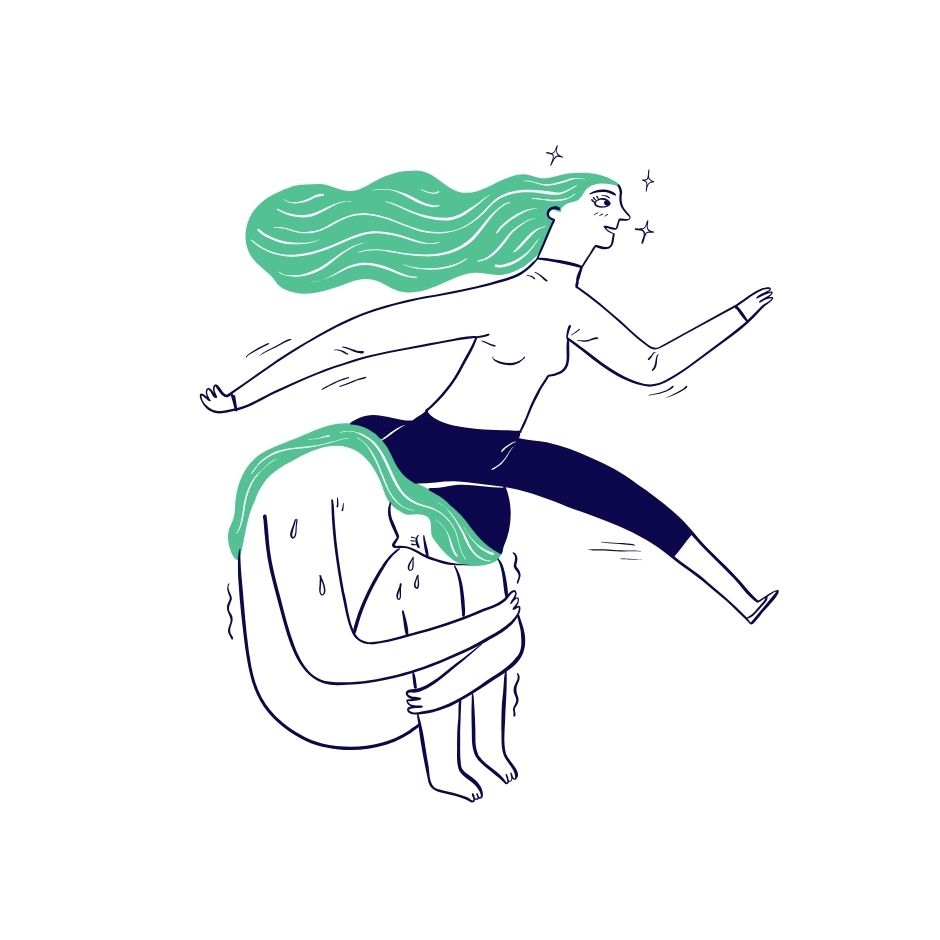
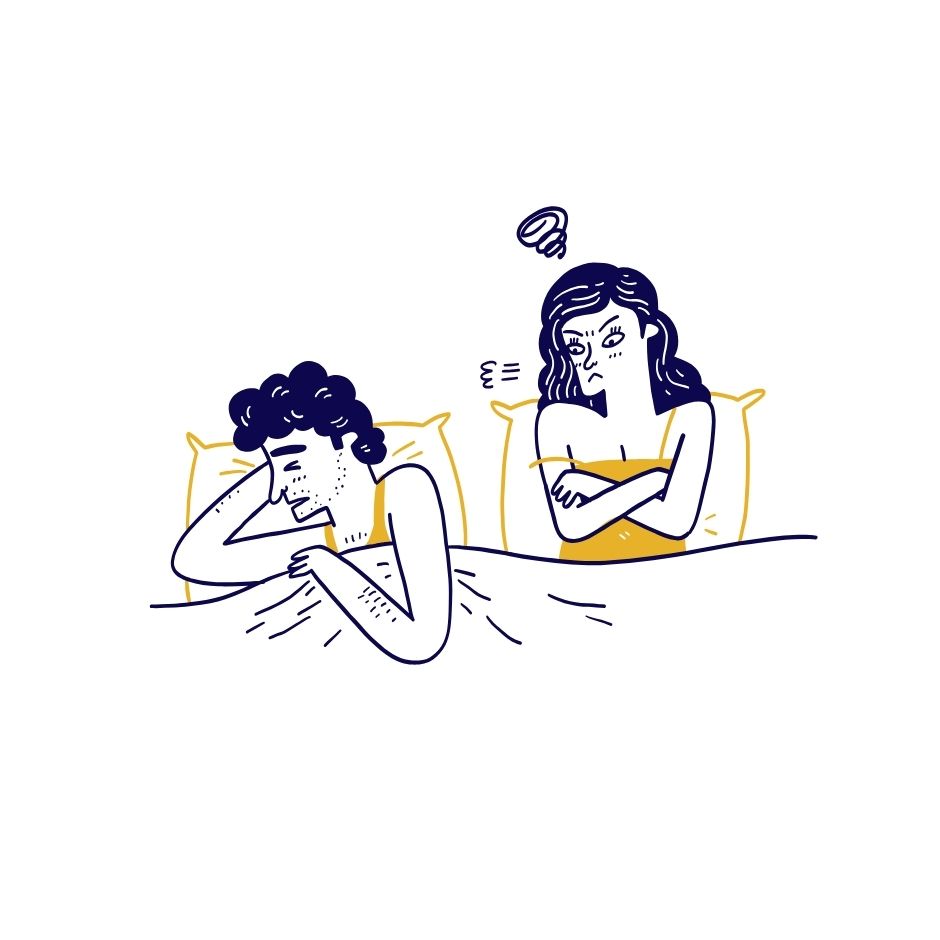
You think a clear boundary needs to be set with the child. Your partner thinks more space should be given. You feel he’s leaving you alone in the role of the parent who sets limits. He feels you’re dismissing his way of being a father.
Within a few minutes the conversation is no longer just about parenting. You’re trying to explain why it’s important to be consistent, he’s explaining why you’re being too strict, and each of you becomes more occupied with defending your position. Beneath the argument other questions are already present: Do you see me? Do you trust me? Is there room for my way? Are we really a team?
This happens in arguments about money, families of origin, division of household responsibilities, sexuality, or the time each person asks for themselves. We start with a specific topic, and the meaning we give to the other person’s behavior turns the conversation into something much larger.
Ho’oponopono offers four simple sentences:
“I’m sorry.”
“Please forgive me.”
“Thank you.”
“I love you.”
I don’t treat them as a formula meant to resolve conflict. What interests me is the possibility of using them to stop the struggle for a moment, turn my gaze inward, and check what my part is in what’s happening between us.
Ho’oponopono (Hoʻoponopono) is a process originating in Hawaiian tradition, designed to restore things to their proper place and create repair. In the traditional version it took place within families and communities and served to settle disputes and repair relationships.
In the twentieth century, Morrnah Nalamaku Simeona developed Self I-Dentity through Ho’oponopono®, an updated version of the process that can also be practiced individually. Anyone who wants to learn about the origin and development of the method can read about it on the official website of The Foundation of I – Self I-Dentity through Ho’oponopono®.
The modern practice is also associated with the four sentences “I’m sorry,” “Please forgive me,” “Thank you,” and “I love you.”
I like to think of these four sentences as four stopping points. Each one directs attention to something different happening within me and between us: my responsibility, the freedom of the person in front of me, the connection that exists even within the disagreement, and the way I want to behave toward someone I love.
Parenting is a distinct place where two family histories meet.
Each of us learned something different about authority, boundaries, freedom, responsibility, anger, discipline, and indulgence. One grew up in a home where boundaries were rigid. Another grew up in a home where there were almost no boundaries. One wants to give the children the freedom she herself needed, and another wants to give them the stability he lacked.
An argument about bedtime or screen time can take on a meaning far larger than the topic itself. “You don’t trust me as a father.” “You’re leaving me alone.” “There’s no room for my way in this house.”
Our response belongs to the present, and it also carries what we learned in relationships that preceded it. Looking at the family of origin can help us understand why a certain thing becomes so charged. This understanding does not replace our responsibility for the way we behave today.
The four sentences can create a small space between what arose in me and the next thing I do with it.
“I’m sorry” can be an especially difficult sentence when I’m convinced that the person in front of me also hurt me.
Taking responsibility does not require me to determine who is to blame for everything that happened between us. I can be interested in the part that belongs to me.
Maybe I’m sorry for the tone in which I spoke. Maybe for a sentence I said in order to hurt. Maybe I shut down, dismissed his words, or turned my fear into criticism.
I can see my behavior even when I’m still angry about your behavior. I’m responsible for what I do within the relationship, without taking on what belongs to you.
I expanded on the ability to stay in relationship without losing the boundary between my responsibility and the responsibility of the person in front of me in The Complete Guide to Differentiation in Relationships.
Asking for forgiveness can be a sincere acknowledgment of harm. It can also carry another, more hidden request: “Stop being angry at me so I can feel okay again.”
If I need you to forgive me in order to calm down, the person I hurt receives an additional role: to also take care of my discomfort with the harm I caused.
I can ask for forgiveness and leave you the freedom to still be hurt. You can be angry, need time, or not want to get close right now.
“Please forgive me” is a sentence I can offer. Forgiveness itself is not something I can demand.
I expanded on the difference between asking for forgiveness, taking responsibility, and repair in the article Forgiveness in Relationships: Why “Forgive Me” Isn’t Always an Apology.
“Thank you” can sound strange in the middle of a fight. I don’t use it to beautify what’s happening or to force myself to find something positive.
It can be an acknowledgment that even within the disagreement there is a person in front of me whom I want to continue seeing.
“Thank you for telling me what hurts you.”
“Thank you for staying in the conversation.”
“Thank you for telling me your truth even when it’s hard for me to hear.”
Gratitude does not require agreement. It widens the field of vision for a moment. The person in front of me is not just the position that’s irritating me right now. There is a connection between us that is fuller than this moment.
In the middle of conflict, the person we love can quickly become a problem to solve, a position to refute, or someone we need to convince.
“I love you” brings back into the conversation the relationship within which the disagreement is taking place.
Love does not require me to agree. It does not erase a boundary and does not obligate me to stay in the conversation under any condition. You can love and be angry. You can love and set a boundary. You can love and think differently.
Closeness also requires the willingness to bring into the relationship who I am without knowing in advance what the person in front of me will do with it. I wrote about the vulnerability in this movement in the article The Courage to Dare: Showing You Who I Am Without Knowing What You’ll Do With It.
For me, the interesting question is also how I want to behave toward the person I love precisely in the moment when it’s hard for me with them.
The four sentences bring me back again and again to the same boundary: what I can do, and what remains in the hands of the person in front of me.
I can be sorry. I cannot determine whether you will forgive.
I can thank you. I cannot determine whether you will want to get close.
I can say I love you. I cannot determine how you will receive that love in a given moment.
I can take responsibility for the way I spoke and say what matters to me. I cannot determine that you will be convinced.
The attempt to manage the other person’s response is especially tempting when the relationship matters to me. I want to know that everything is okay between us, that the anger will pass, that the distance will close. That’s precisely where the possibility can appear to do my part and leave the other person theirs.
This desire touches on a broader question of control and our difficulty accepting a life that doesn’t always organize itself according to our plan. I expanded on it in the article Life Won’t Follow Your Plan: Bert Hellinger on the Illusion of Control.
The constellations perspective invites us to also be interested in what becomes very familiar within the conflict.
When it’s especially hard for me to allow my partner to do things differently from me, I can check what meaning I’m giving to the difference between us. When his position feels like a threat to me, I can be interested in what exactly is threatened. When I feel I must convince him that I’m right, I can check what’s happening inside me with the possibility that he will remain in a different position.
This observation does not determine that my response “belongs to childhood.” It allows me to identify what I brought with me to the current encounter.
I can honor what I learned in the family I came from and examine whether this is also the way I want to operate in the family I’m building today.
There’s no need to turn the practice into a ritual. You can use it when you recognize that the conversation is moving away from the way you’d like to be in it.
Stop for a moment and feel the soles of your feet on the ground. Notice your breathing and what’s happening in your body. There’s no need to force yourself to calm down. Look for a bit more space between what you’re feeling and your next action.
Say quietly to yourself:
“I’m sorry.”
“Please forgive me.”
“Thank you.”
“I love you.”
Notice what happens with each sentence. Which one is easy for you to say? Which sentence brings up resistance? Does your body contract? Does a desire arise to explain, to get closer, to move away, or to immediately get a response from the person in front of you?
You can place a hand on your chest, open your palms slightly, or feel the weight of your body on the soles of your feet.
Then check:
What is my part in what happened between us?
What is not my responsibility?
What’s important for me to say?
How do I want to say it?
Am I willing for the person in front of me to respond differently than I hope?
Only then check if it’s right for you to return to the conversation.
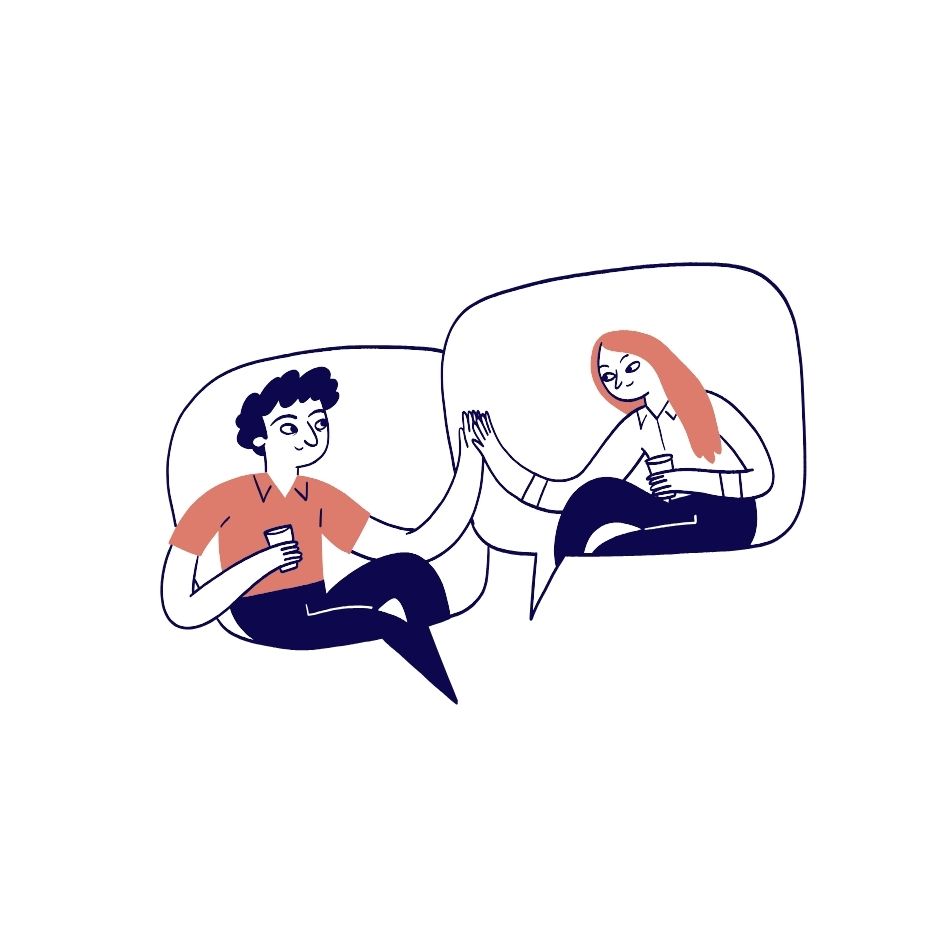
If this language works for both of you, you can also use the four sentences as four openings for conversation.
“What am I sorry for?”
“What would I like to ask forgiveness for?”
“What do I want to thank you for?”
“What do I want you to know about my love for you even within this difficulty?”
Each person is responsible for their own answers. No one is required to say what the other wants to hear.
The disagreement can remain even after the conversation. The goal is not to create agreement at any cost. You can come out of it as two people who still think differently, and with more clarity about the part each person wants to take on.
Ho’oponopono cannot replace honest conversation, boundaries, listening, or repair of behavior that caused harm. I find its value precisely in the pause it offers.
Before I continue to the next sentence in the argument, I can check what’s happening in me. See my part. Remember that there is a person in front of me who is separate from me, whose response is not in my control.
“I’m sorry.”
“Please forgive me.”
“Thank you.”
“I love you.”
The four sentences do not promise that the person in front of me will change. They can remind me that the choice of how I want to meet them is still mine.

+
For people without a supportive family network.
We will reveal how the lack of a family network challenges and strengthens the couple's relationship, the high prices it exacts from you and your relationship.
Couples therapy will strengthen your sense of security and belonging, so you can be close without losing yourselves along the way.
Online / In-person clinic

+
Individual therapy is a safe space where you will rediscover your strengths, build inner confidence, and create a whole and meaningful life for yourself, just as you dream.
Online / In-person clinic
+
You are invited to enter a unique space: an interactive conversation with special GPTs I created – a first-of-its-kind tool that looks inward with you in the language and frequency of the systemic constellation.
If there is something unresolved in your relationship, family, or heart – the chat will gently meet you without trying to fix it, inviting a different, slow, precise, and quiet perspective. There is no need to understand, just to see and let it work.
Expert in couples therapy for relationships without a supportive family safety net.
Developer of the Couples Constellation approach: a systemic-emotional therapy that brings the couple’s relational dynamics into contact with unspoken family patterns, alongside practical tools that enable movement, connection, and the creation of a deep partnership.




Let’s start with a brief introductory call, free of charge and commitment.
Sometimes, this small step changes everything.
The sessions take place
online via Zoom / face-to-face in Tivon, according to your choice