Home / How to neutralize the Four Horsemen of the Apocalypse in your relationship and improve communication and intimacy

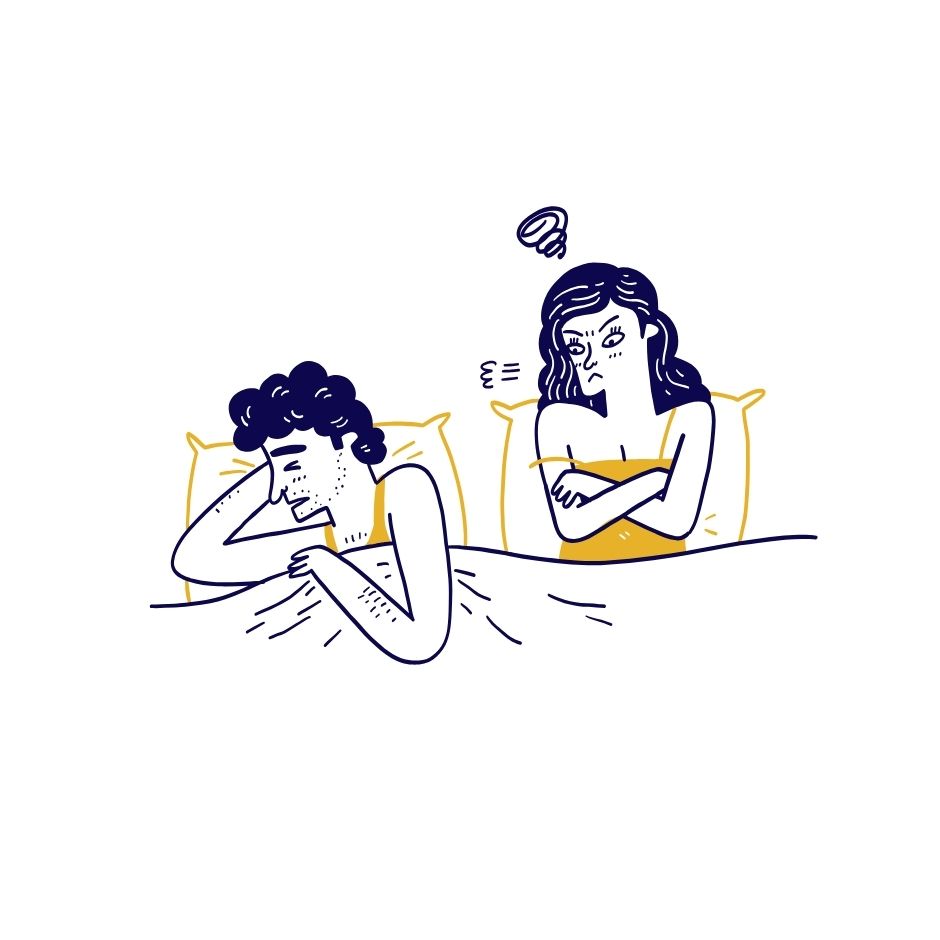
“You never think about me.” “Of course. Because you always know everything.” “What do you want from me? You do the exact same thing.” And then comes silence… one person is talking, and the other is no longer really in the conversation.
Fights are part of relationships. Even couples who have love, friendship, and closeness between them get angry, hurt, and disagree. The important question isn’t whether you have conflicts, but what happens to you within them—and what you start doing to each other when the tension rises.
From decades of research on couples, Dr. John Gottman and his colleagues identified four communication patterns linked to relationship instability: criticism, contempt, defensiveness, and stonewalling. Gottman called them “the Four Horsemen of the Apocalypse.” Later, the joint work of John and Dr. Julie Schwartz Gottman turned this body of research into a clinical model for working with couples.
The name is dramatic, but the idea is actually simple: within a fight, it’s worth paying attention not only to what we’re fighting about, but to the way we start treating each other. These four patterns can enter even relationships that have a lot of love. The work begins when we learn to recognize them in time and change the way we respond.
You can fight about money, children, sex, division of tasks, extended family, or a message that wasn’t sent on time. The content changes, but the conversation pattern can remain very similar. Within a few minutes, a conversation that started on a concrete topic turns into attack, mockery, defensiveness, or disconnection. The topic we started talking about almost disappears, and instead we’re busy defending ourselves from the person in front of us.
Each of the four horsemen also has an antidote—a different response you can learn and practice. And it’s worth noticing something else: what happened to me facing you just before the horseman appeared? What was hard for me to bear in that moment—your anger, the disappointment, the disagreement, the possibility that I was wrong, or the fact that I can’t control how you’ll react to me?
There’s an important difference between a complaint and criticism. A complaint refers to something that happened: “We agreed you’d call if you were running late, and I worried when I didn’t hear from you.” Criticism already tells your partner who they are: “You never think about anyone but yourself.”
You can deal with a complaint about a specific behavior. It’s much harder to stay open when we feel our character is on trial. Instead of talking about the dishes left in the sink, we’re talking about you being lazy. Instead of talking about being late, we conclude that you don’t care about me.
Criticism can become an attempt to achieve change through attack. I want something from you, and instead of expressing my desire, I try to make you change by making a statement about who you are. The more I need you to change so I can feel calm, the greater the chance my request will turn into criticism.
Instead of describing what’s wrong with your partner, you can talk about what happened, what you’re feeling, and what you need.
Instead of “You never help around the house,” you can say: “There are a lot of dishes left in the kitchen and I’m tired. I need you to help me put them away.” Instead of “You don’t care about me,” you can say: “I was hurt when you didn’t call. It’s important to me that you update me when you’re running late.”
This shift requires more than swapping words. It requires me to express a need without knowing in advance how the person in front of me will respond. I can ask you for something clearly, and you can still answer differently than I hoped. A real request leaves room for an answer I didn’t want to receive.
Contempt and criticism aren’t the same thing. In criticism I attack my partner’s character; in contempt, an attitude of superiority is added. Hostile sarcasm, mockery, name-calling, mocking imitation, eye-rolling, and a tone expressing scorn can all be expressions of it. The message is no longer just “You did something that hurt me,” but something closer to “I’m above you.”
Of the four horsemen, contempt is the pattern most strongly linked to divorce. So when it becomes a regular part of the couple’s language, it’s worth taking it seriously and not normalizing it as “It’s just our humor.”
The moment I hold you as small, stupid, weak, or flawed, my ability to be curious about what’s happening between us and to examine my part shrinks. Superiority can give a momentary feeling of power or righteousness, and at the same time it takes a heavy toll on the connection.
The antidote to contempt is built outside the fight too. It’s found in the way we talk about each other, in what we’re still able to appreciate, and in the ability to remember that the person making me angry right now is someone I love and chose to live with.
You can be very angry at someone and still speak to them as a person of value. If I was left alone with all the arrangements, I can say: “I was angry that I was left with all of this alone. I need us to divide this differently.” The anger can be very clear even without turning your partner into an inferior person.
For me, this is also a question of worthiness. My value doesn’t grow when I diminish you, and your value doesn’t disappear because you hurt or disappointed me. I can see behavior that hurt me, talk about it, and even set a boundary against it, without turning it into a definition of the person in front of me.
When I feel I’m being blamed for something that isn’t fair, a desire awakens in me to explain why I’m actually okay. That explanation can quickly turn into shifting the responsibility back to my partner.
“You didn’t call to say you were running late.” “Because I didn’t have a free moment. You know what kind of day I had. Why didn’t you call me?” From my perspective I provided an explanation; from my partner’s perspective, the thing she tried to say didn’t get any space at all.
Defensiveness can include excuses, self-justification, presenting myself as a victim, or counterattack. It’s especially understandable when I really feel attacked, and yet it almost prevents us from meeting the thing we started talking about.
Taking responsibility for my part doesn’t require me to agree with everything said about me. I can think that some of my partner’s claims are exaggerated, inaccurate, or said in a way that hurt me, and still find something within them I can acknowledge.
“You’re right, I should have let you know I was running late.” This sentence doesn’t say my partner is right about everything and I’m to blame for everything that happened. It says there’s something within what she’s saying that I’m able to see and take responsibility for.
To do this I need to be able to bear a moment when I was wrong, disappointed, or hurt, without turning that moment into a definition of my worth. Differentiation allows me to see my part without taking responsibility for the whole story and without waiting for you to acknowledge your part first. Responsibility isn’t blame, and it’s not surrender either.
Stonewalling looks different from the previous three horsemen. The person in front of me gradually disappears from the conversation. They stop responding, look away, turn to their phone, become busy with something else, or sit facing me in silence. From the outside it can look like indifference, punishment, or lack of caring.
Stonewalling is often connected to physiological flooding. When the system is flooded, the body enters high arousal and the ability to listen, process information, and manage a complex conversation is impaired. Silence can be very hurtful within a relationship, and it can also appear when the person is already struggling to stay present in the conversation.
The person who’s flooded needs distance to reorganize, and their distance can greatly increase the distress of the partner who wants to keep talking. The more one withdraws, the other may pursue; the more the other pursues, the first needs more distance. This creates a cycle where each person’s response increases the other’s distress.
When we’re flooded, continuing the conversation at all costs usually doesn’t move us forward. You can say: “I’m flooded right now and can’t continue the conversation well. I want us to stop and come back to talk after I calm down.”
The body needs time for the arousal to come down. A break of at least about 20 minutes can allow this, especially if you use the time to calm down and not to continue the fight in your head.
There’s a significant difference between a break and disappearing. The person asking to stop is responsible for making clear they intend to return to the conversation and to return at the agreed time. The other partner is required to allow this space. This way the break isn’t abandonment of the conversation, but a way to return to it when you can really be in it.
The map is simple: facing criticism—soft startup and a clear request. Facing contempt—respect and appreciation. Facing defensiveness—taking responsibility for my part. Facing stonewalling—stopping, calming down, and returning to the conversation.
We don’t need to panic every time one of the horsemen appears. What matters is the ability to recognize it earlier, stop the sequence, and choose a different response. Even within a couple pattern created between two people, each of us has responsibility for the way we participate in it.
Not every repair looks like a big apology. “Wait, I started badly. Can we try again?” “I don’t want to fight with you like this.” “I understand why you’re hurt.” Even shared humor, touch, or a sentence only the two of you know can stop the escalation and remind you that you’re still on the same side.
Within a fight we can be so busy with the hurt that we miss the moment when our partner is already trying to come back to us. Accepting a repair attempt doesn’t obligate me to give up on the issue or decide everything’s okay. You can accept the hand reaching out to you and continue talking about what still requires attention.
After you know the model, it’s very tempting to start identifying the horsemen in the person facing you. “There, now you’re being critical.” “That’s contempt.” “You’re stonewalling again.” This way even knowledge meant to help us see the pattern can become another way to prove to your partner what’s wrong with them.
The more useful question is: Which horseman am I bringing into the conversation right now? Am I attacking your personality instead of talking about what I need? Is contempt entering my voice? Am I busy proving I’m not to blame? Am I already flooded and not really able to stay in the conversation?
Turning my gaze to myself doesn’t exempt my partner from responsibility and doesn’t blur behavior that hurts me. It returns to me the part I can work on myself. You can deepen this question further through reflecting on the way we learned what love is and what we’re supposed to do to preserve it.
Think about your last fight and ask yourself: Which of the four horsemen appeared in me?
If it was criticism—rephrase what you wanted to say as a clear request.
If it was contempt—say what bothers you without diminishing your partner.
If it was defensiveness—find one small thing you can take responsibility for.
If it was stonewalling—think of the sentence you could say next time before you disconnect from the conversation: “I’m flooded and need a break. I want us to come back to talk about this later.”
That’s all. You don’t need to solve the fight now or analyze your relationship.
One horseman. One antidote. One response you can try differently next time.
The Four Horsemen don’t tell you whether or not there’s love in your relationship. They allow you to see what happens to the way you treat each other when the connection is under pressure.
Maybe next time you’ll recognize the moment a little earlier. Before the request turns into criticism. Before the anger takes on a tone of contempt. Before the need to defend yourself becomes defensiveness, or the flooding closes the conversation.
The really interesting question isn’t just which horseman entered between you, but who you choose to be toward each other the moment you recognize it’s already in the room.

+
For people without a supportive family network.
We will reveal how the lack of a family network challenges and strengthens the couple's relationship, the high prices it exacts from you and your relationship.
Couples therapy will strengthen your sense of security and belonging, so you can be close without losing yourselves along the way.
Online / In-person clinic

+
Individual therapy is a safe space where you will rediscover your strengths, build inner confidence, and create a whole and meaningful life for yourself, just as you dream.
Online / In-person clinic
+
You are invited to enter a unique space: an interactive conversation with special GPTs I created – a first-of-its-kind tool that looks inward with you in the language and frequency of the systemic constellation.
If there is something unresolved in your relationship, family, or heart – the chat will gently meet you without trying to fix it, inviting a different, slow, precise, and quiet perspective. There is no need to understand, just to see and let it work.
Expert in couples therapy for relationships without a supportive family safety net.
Developer of the Couples Constellation approach: a systemic-emotional therapy that brings the couple’s relational dynamics into contact with unspoken family patterns, alongside practical tools that enable movement, connection, and the creation of a deep partnership.





Let’s start with a brief introductory call, free of charge and commitment.
Sometimes, this small step changes everything.
The sessions take place
online via Zoom / face-to-face in Tivon, according to your choice