Home / Emotional White Noise in Relationships – What Does the Silence Between You Say?
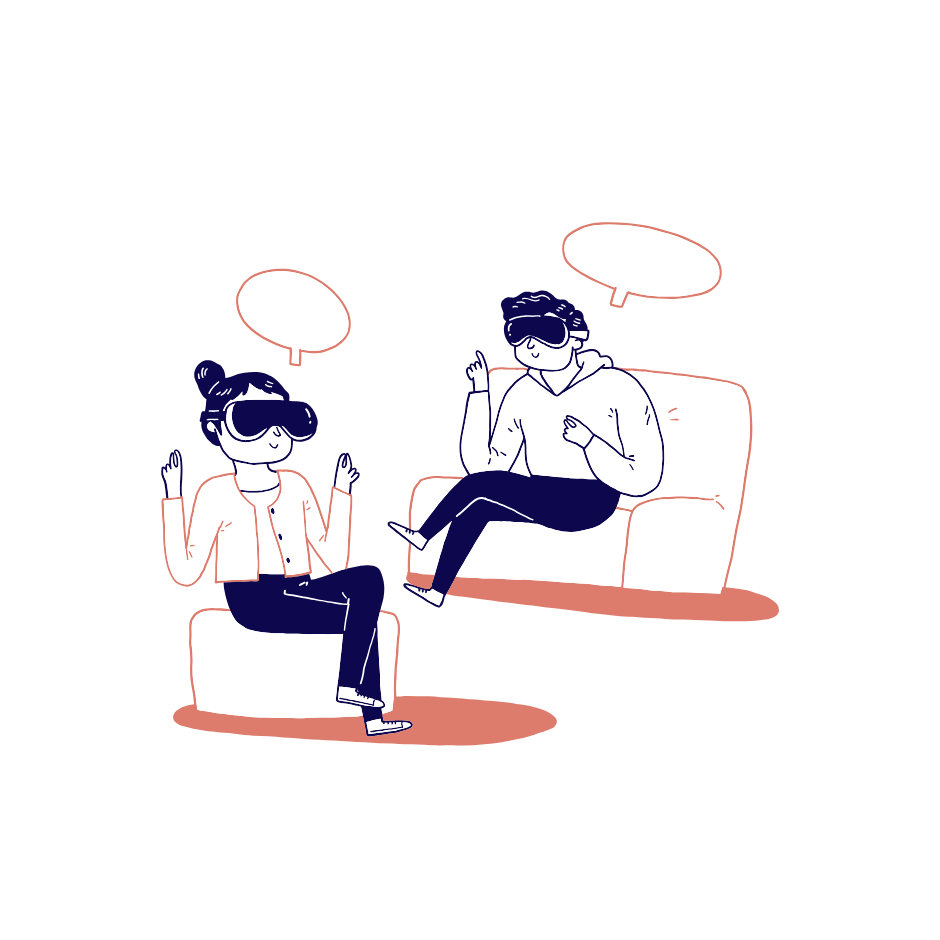
The house is functioning. You talk about the kids, work, groceries, carpools, and weekend plans. Maybe you even go out together sometimes. There’s no big crisis you can point to, and yet something that was once alive between you has gone quiet.
You can live like this for a long time. You can talk every day, run a family, and even get along pretty well, and within all that functioning, meet each other less and less. I call this emotional white noise: everything that keeps happening between us while the encounter itself is weakening.
Emotional white noise builds gradually. You keep talking, only some of the things that were once part of the relationship no longer reach it. I tell you less about what’s really on my mind. You ask less. I stop requesting something I’ve been disappointed by a few times, and you keep a thought to yourself that you assume I won’t want to hear.
Neither of us decided to distance. We learned over time which conversations get complicated, which requests end in disappointment, and which parts of ourselves are harder to bring to the encounter. Each person makes small adjustments, almost imperceptible, and life becomes quieter.
This silence can be pleasant. It can reduce fights and make shared life easier. The cost starts to become clear when we discover that to maintain it, we’ve brought less and less of ourselves to the relationship.
Quiet couples can be very close. They don’t need to talk constantly, analyze every emotion, or have a deep conversation every evening. You can sit together on the couch, work in the garden, or drive for an hour barely speaking and feel at home with each other.
So the number of conversations isn’t a good measure of closeness. I’m more interested in the movement that exists within the relationship: Am I still bringing something of myself to you, am I still curious about you, do I turn to you when I want closeness, and can I bring something you might not like to hear?
Silence that holds encounter feels different from silence that leans on caution.
No couple sits down one evening and decides: “From today on, we’ll only talk about things that don’t unsettle us.” This agreement forms without being signed.
I learn that a certain topic almost always ends in an argument, so I stop bringing it up. You learn that when you ask for more space I get hurt, so you stop asking and find space another way. I tell my friend about my disappointment instead of talking to you. You miss the touch we used to have and keep the longing to yourself, because you don’t want to feel rejected again.
Gradually, an agreement forms between us that can be phrased roughly like this:
“I’ll keep to myself what’s hard for you to meet, and you’ll keep to yourself what’s hard for me to meet.”
This is a very effective agreement if the goal is to reduce friction. It’s much less effective if we want to keep knowing the person living beside us.
You can talk a lot. The conversations just mostly deal with what needs to get done: who’s picking up, who’s buying, what’s happening with the kids, when are we arriving, and who needs a reply.
These conversations matter. Relationships and families need coordination and functioning. The question is what else exists alongside managing life, and whether the two people managing it still meet each other.
When the functioning as a couple itself starts to take the place of the encounter, it’s worth asking: Are you still a couple, or have you become excellent partners in running the household?
Maybe there’s something you want and no longer ask for. Something that bothers you and you no longer say. Maybe you’re keeping a thought to yourself because you’re sure your partner won’t like it.
A person doesn’t need to share every thought and every feeling with their partner. Privacy is part of a relationship between two separate people. I’m interested specifically in the things we leave out again and again because we struggle to bear what might happen if we bring them in.
“I know exactly what he’ll say.”
“There’s no point talking to her about this.”
“He’s like that.”
Years of shared life create deep familiarity, and familiarity can gradually turn into certainty. I no longer need to ask you because I’ve decided I know what you think, what you feel, and how you’ll react.
When I stop being curious about you, I meet more and more the image I’ve already built of you and less the person you are today.
I no longer turn to you for comfort, because I’ve gotten used to managing alone. I don’t tell you something joyful expecting you to get excited with me. I don’t try to make you laugh and don’t look for your gaze across the room.
Even anger can weaken at this stage. Not because the things that hurt have been resolved, but because the expectation that something between us will change has weakened.
In my view, this is one of the places worth pausing on. Disappointment still holds expectation within it. Indifference can already tell a different story.
If I bring myself to the relationship, I risk a response I can’t control. I can say I want more closeness and hear that you want less. I can share that I was hurt and discover that you see what happened differently. I can ask for something and get a no.
The silence spares us some of these encounters. It protects against disappointment, rejection, anger, and disagreement. It also lets me keep holding a certain image of the relationship without testing what will happen if I say out loud what I really want.
This is one of the reasons emotional white noise can exist for years. It’s not just a problem. To some extent, it’s also a solution we found.
Only this solution has a cost.
The way we respond to closeness, conflict, and exposure doesn’t necessarily begin in the current relationship. Someone who grew up in a home where emotions got little space may find it easier to manage than to ask. Someone who learned that anger threatens the relationship may invest a lot of energy in keeping the peace.
The family story can add a layer here. It can help me understand why a certain response feels so natural, or why disagreement specifically triggers a need to withdraw.
This understanding doesn’t finish the work. Today I’m already in a relationship I chose, and I can examine what I’m doing with the way I once learned to protect myself.
It’s easy to identify the places where my partner stopped turning to me. It’s harder to see my parallel movement.
I might be waiting for you to initiate closeness so I’ll know I matter, and meanwhile I’m not reaching out. I can hurt over the fact that you don’t ask what I’m going through and at the same time see that for months I’ve been answering “Everything’s fine.” I can feel that you don’t know me anymore and also check how much of myself I still let you know.
This reflection doesn’t make me responsible for both our distance. It returns to me the only part I have direct influence over: the way I exist within the relationship.
I can bring something of myself even without knowing in advance how you’ll respond. I can ask without promising myself I’ll receive. I can speak a truth about my experience without using it to determine who you are and what you feel toward me. This ability – to stay in the relationship and stay connected to myself – is a significant part of the ability to bring movement back to the relationship.
Closeness requires the willingness to be seen even when I don’t have full control over what I’ll meet in return.
Choose a quiet moment for yourself, before you open a conversation with your partner. Complete the following four sentences without trying to phrase them nicely:
Now read what you wrote and choose one thing you want to bring back to the encounter between you. Not as a test of your partner’s love and not to make them respond in a certain way. Bring it because you want that part of you to be present again in the relationship.
And then make room for the response you receive.
If you discover that the silence has already become the fixed way your relationship operates and that it’s hard for you to change this movement alone, couples therapy can create a space where you can begin to meet again what each of you stopped bringing to the relationship.
At the start of the article, the silence might have looked like the problem. After looking at it closely, you can see it’s telling something more complex. It also tells about the ways we found to live together without getting hurt too much.
I’m less interested in the question of how much partners talk. I want to know if they’re still willing to meet each other as separate people: to bring a desire, to hear a response, to discover that the person in front of them has changed, to bear disagreement, and to stay curious.
The house can keep functioning even without this encounter.
The question is how much of yourselves still comes home.

+
For people without a supportive family network.
We will reveal how the lack of a family network challenges and strengthens the couple's relationship, the high prices it exacts from you and your relationship.
Couples therapy will strengthen your sense of security and belonging, so you can be close without losing yourselves along the way.
Online / In-person clinic

+
Individual therapy is a safe space where you will rediscover your strengths, build inner confidence, and create a whole and meaningful life for yourself, just as you dream.
Online / In-person clinic

+
You are invited to enter a unique space: an interactive conversation with special GPTs I created – a first-of-its-kind tool that looks inward with you in the language and frequency of the systemic constellation.
If there is something unresolved in your relationship, family, or heart – the chat will gently meet you without trying to fix it, inviting a different, slow, precise, and quiet perspective. There is no need to understand, just to see and let it work.
Expert in couples therapy for relationships without a supportive family safety net.
Developer of the Couples Constellation approach: a systemic-emotional therapy that brings the couple’s relational dynamics into contact with unspoken family patterns, alongside practical tools that enable movement, connection, and the creation of a deep partnership.








Let’s start with a brief introductory call, free of charge and commitment.
Sometimes, this small step changes everything.
The sessions take place
online via Zoom / face-to-face in Tivon, according to your choice