Home / Othello Syndrome: When Does Jealousy in a Relationship Lose Touch with Reality?
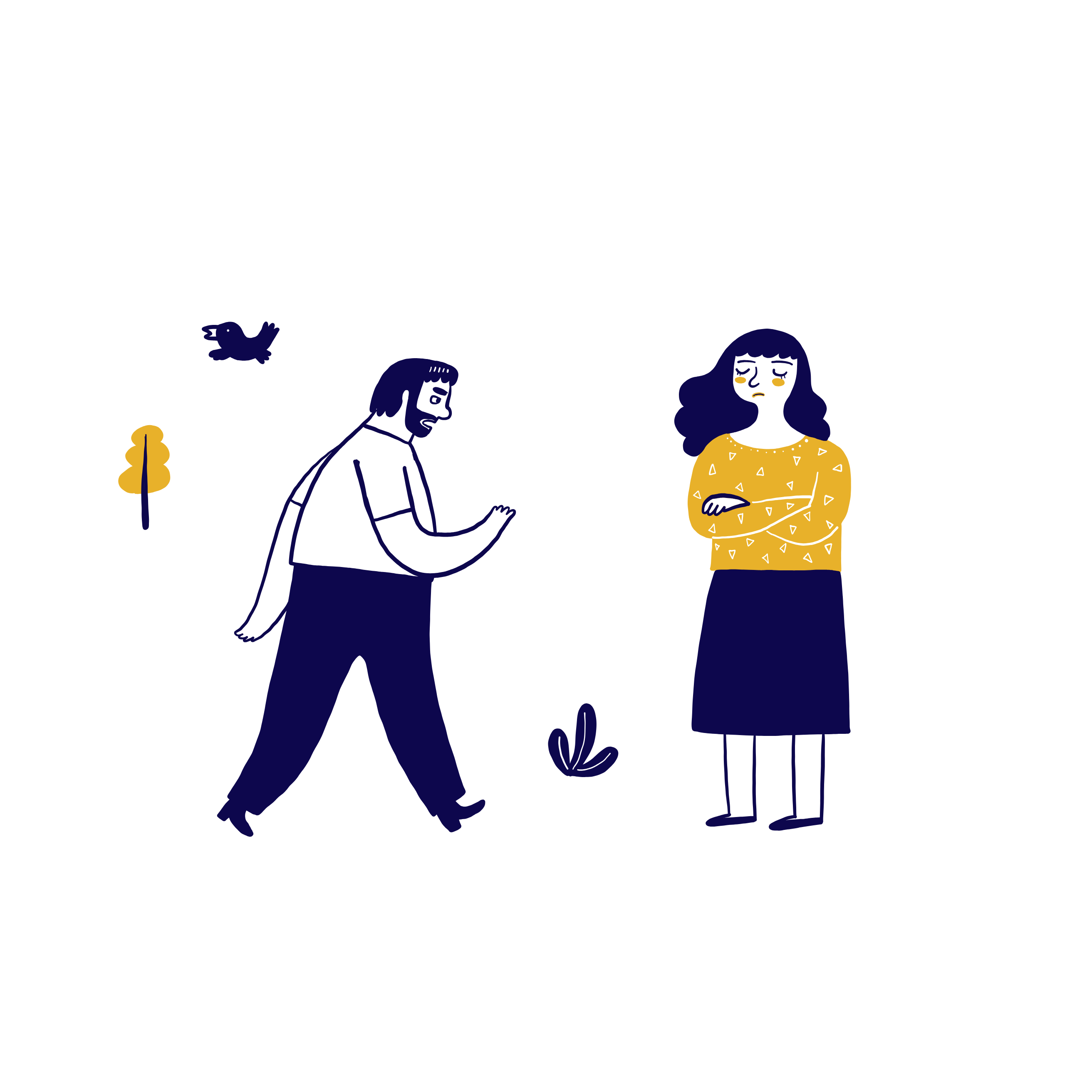
“Why did you delete the message? Who was with you when you left work? I saw how you looked at him. Don’t tell me nothing is going on. I know you’re hiding something from me.”
Jealousy can trigger anxiety, anger, a need for reassurance, repeated checking, and a deep fear of losing the person we love. Even intense and painful jealousy does not in itself indicate Othello syndrome. The difference is not only in the intensity of the jealousy. One of the important distinctions lies in the ability to check the suspicion against reality and to hold the possibility that my interpretation is not correct.
The term “Othello syndrome” is sometimes used in everyday language to describe a very jealous partner. Clinically, it is a different phenomenon, and this distinction is important both for understanding jealousy and for choosing the appropriate way to deal with it.
Jealousy appears within a relationship in which there is something precious that we fear losing. It can be triggered by a real event, a previous breach of trust, or a fear we bring with us into the relationship. Even when there is no infidelity, uncertainty can trigger very disturbing thoughts.
In jealousy that is not delusional, some degree of ability to examine the suspicion is usually preserved. A person can be very afraid and even convince themselves for a moment that something is happening, and still say: “I know I have no proof, and yet it’s hard for me to let go of this thought.”
There is also obsessive jealousy, in which the person may be flooded with recurring thoughts about the possibility that their partner is unfaithful and engage in repeated checking, and yet recognize that their suspicions may be exaggerated or unfounded. Intense jealousy, obsessive jealousy, and delusional jealousy are not the same thing, even when some of the behaviors look similar from the outside.
Othello syndrome is a form of delusional jealousy in which there is a fixed belief that one’s partner is unfaithful. The person may be convinced that infidelity is occurring without sufficient evidence and interpret neutral events or marginal details as proof reinforcing the belief.
The name is taken from Othello, the protagonist of Shakespeare’s play, who becomes convinced that Desdemona is betraying him. Clinically, it is more important to know that the phenomenon has been described in a variety of psychiatric, neurological, and medical conditions, and also in the context of certain medications and substances. A systematic review published in 2024 that examined 73 cases described in the literature found Othello syndrome in the context of primary psychiatric disorders, medical and neurological conditions, and medications or substances. To read the clinical review on Othello syndrome.
Therefore, a delusional belief in infidelity is not something that should be explained only through the state of the relationship, fear of abandonment, or past experiences. It requires comprehensive professional assessment.
Suppose a partner comes home late from work. A person flooded with jealousy might think: “I’m afraid she was with someone else. I know I have no proof, but the thought won’t leave me.”
In Othello syndrome, that same lateness may fit into an entire system of “evidence”: the clothes she wore, the way she put down her phone, a change in tone of voice, a car parked on the street, or a sentence she said a few days earlier. Information that contradicts the suspicion may itself receive an interpretation that supports it.
The distinction is not only in the intensity of the emotion. It is also related to the ability to consider that reality may be different from what I think it is.
For someone dealing with jealousy who can still observe it, discernment offers an important distinction: An emotion is a truth about my experience, and not necessarily a fact about the person in front of me.
If I’m afraid you’ll leave me, the fear is real. If something in your behavior triggered suspicion in me, I want to take the suspicion seriously. Alongside this, there is a difference between “I feel insecure in our relationship” and “You are cheating on me,” and between “When I saw that exchange, suspicion arose in me” and “That exchange proves you’re having an affair.”
Worthiness allows me not to cancel myself just because I don’t yet have an answer. Discernment allows me not to turn my experience into a verdict on you. I can take both myself and reality seriously.
Even jealousy that is not delusional can create a difficult relationship dynamic. One suspects and asks, the other explains. The explanation reassures for a short time, and then a new detail appears that brings back the doubt. Another question comes, another request to see the phone, and another attempt to gain certainty.
Gradually one becomes the investigator and the other the investigated. “If you have nothing to hide, why won’t you show me?” sounds like a logical argument within the anxiety. Proof can calm the current suspicion, and at the same time teach the system that every time anxiety arises, the partner is required to provide more proof or give up more privacy.
In discernment-based couples work, I am interested in the cycle created between the two partners. The jealous person can examine what they know, what they interpret, and what happens to them when they do not receive certainty. The partner can take the distress seriously without taking on infinite responsibility to calm it. Each has responsibility for their own behavior, and both have the possibility to see how their responses feed the pattern created between them.
Not every suspicion is projection and not every jealousy is the jealous person’s problem. People hide, lie, and cheat. After real infidelity, even neutral behavior can trigger alertness and suspicion, and in such a situation there is a breach of trust that needs to be met and there is responsibility for the one who hurt it.
It is not right to take a response to a reality of concealment or infidelity and immediately turn it into a problem of “jealousy.” Discernment helps me distinguish between what I know, what I feel, what I interpret, and what I still don’t know. This distinction makes it possible to speak more precisely about responsibility, repair, and the possibility of rebuilding trust.
When one’s partner is also one’s primary family support system, a threat to the relationship can take on enormous weight. The possibility of losing the connection can touch not only love but also home, belonging, and the question of who will be there for me. This reality can intensify fear of abandonment and jealousy, but it does not cause Othello syndrome and does not explain delusional jealousy.
I wrote about the special weight the relationship can carry in such a situation in the article My Partner Cannot Be the Family I Didn’t Have.
If you are dealing with jealousy or suspicion and are still able to observe what is happening, consider more than one possibility, and check reality, you can use a few questions. They are not intended to diagnose Othello syndrome or determine whether your suspicion is justified. They are meant to help you distinguish between what you feel, what you know, and what you are still trying to understand.
These questions separate emotion, information, interpretation, and responsibility. I can take seriously what I feel, seriously examine what is happening between us, and leave room also for what I still don’t know.
This article deals mainly with jealousy that can be observed, talked about, and worked with within a relationship. Othello syndrome is in a different place on the clinical map.
When there is a fixed belief in infidelity without sufficient evidence and the ability to consider other explanations is significantly impaired, it is important to seek appropriate professional assessment. A new or unusual appearance of such a belief, especially alongside cognitive, neurological, or behavioral changes, substance use, or medication change, strengthens the need for medical or psychiatric clarification. To read research on the clinical and neurological features of Othello syndrome.
Safety is also part of the picture. In the 2024 systematic review, violence was reported in 25 out of 73 cases included. Since these are cases published in the literature, it is not possible to conclude that this is the rate of violence among all people with Othello syndrome. The data does reinforce the need to take seriously threats, surveillance, control, interrogations, violence, or fear of a partner’s reaction. To read the systematic review.
When one of the partners fears for their safety, safety and professional assessment take precedence over regular couples work. If alongside the jealousy there are also patterns of control, fear, or constriction, I recommend you also read the article 7 Warning Signs of a Toxic Relationship: How to Recognize You’re Starting to Lose Yourself in the Relationship.
Jealousy can tell me that something matters to me very much. It can point to a fear of losing, a breach of trust, insecurity in the relationship, or something in my partner’s behavior that deserves examination.
My experience deserves listening. My interpretation deserves checking.
This distinction allows me to listen to myself more precisely: to take seriously what I feel, to examine what I think I know, and to bear also what is still not clear. As long as there is a possibility to check, to ask, and to hold more than one possibility, there is room for emotional and couples work.
When the possibility of checking reality itself is lost, the relationship should not carry this alone.

+
For people without a supportive family network.
We will reveal how the lack of a family network challenges and strengthens the couple's relationship, the high prices it exacts from you and your relationship.
Couples therapy will strengthen your sense of security and belonging, so you can be close without losing yourselves along the way.
Online / In-person clinic

+
Individual therapy is a safe space where you will rediscover your strengths, build inner confidence, and create a whole and meaningful life for yourself, just as you dream.
Online / In-person clinic
+
You are invited to enter a unique space: an interactive conversation with special GPTs I created – a first-of-its-kind tool that looks inward with you in the language and frequency of the systemic constellation.
If there is something unresolved in your relationship, family, or heart – the chat will gently meet you without trying to fix it, inviting a different, slow, precise, and quiet perspective. There is no need to understand, just to see and let it work.
Expert in couples therapy for relationships without a supportive family safety net.
Developer of the Couples Constellation approach: a systemic-emotional therapy that brings the couple’s relational dynamics into contact with unspoken family patterns, alongside practical tools that enable movement, connection, and the creation of a deep partnership.





Let’s start with a brief introductory call, free of charge and commitment.
Sometimes, this small step changes everything.
The sessions take place
online via Zoom / face-to-face in Tivon, according to your choice